


Swiss Brienz Carved Bear
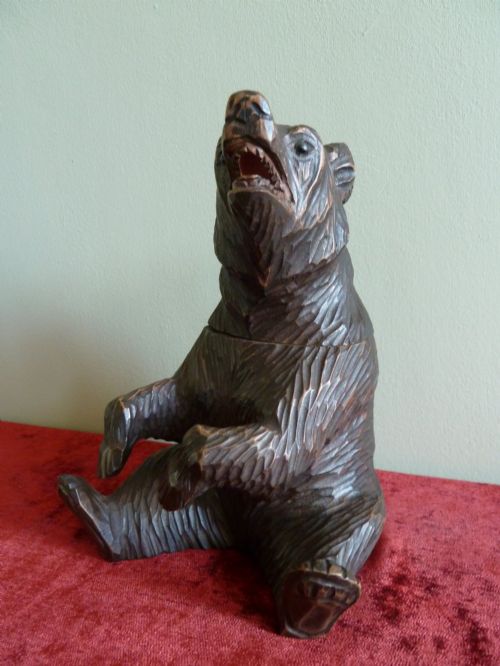
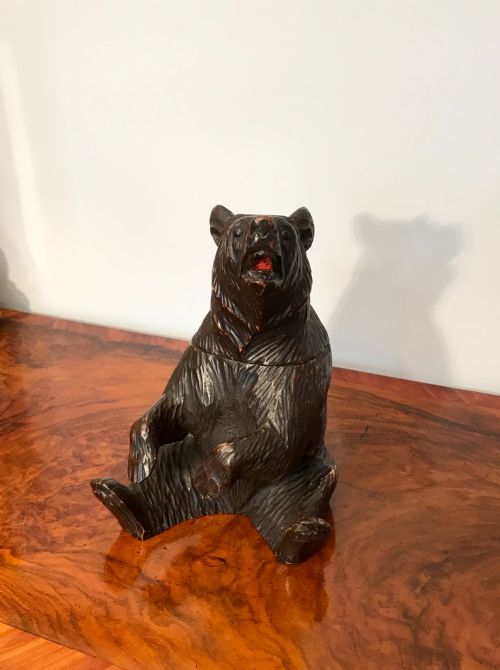
These Swiss brienz carved bear sculptures bring rustic animal forms into domestic spaces through detailed timber carving.
Swiss Brienz Carved Bear
A Swiss brienz carved bear represents the sculptural animal figures produced in the Bernese Oberland region during the Victorian era and the early twentieth century. Buyers encounter these pieces in forms ranging from small desk objects to large hall furniture.
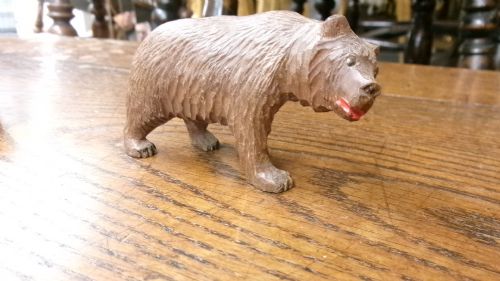
Most examples date from the nineteenth century and the Edwardian period, adhering to Black Forest and Swiss folk art traditions. Miniature figures and pairs of bears demonstrate the breadth of this regional carving tradition.
Materials and Carving Methods
Secondary elements include inset glass eyes and metal components fitted to functional items like tobacco jars and inkwells. Paint occasionally highlights specific facial details or interior compartments of the boxes.
The listings show items predominantly from the 19th Century, 1860, 1880, 1890, 1900, Edwardian, and 1920 periods.
Assessing Carving Quality
Quality rests upon the naturalism of the animal anatomy and the depth of the fur texturing across the timber. Superior examples display careful observation of bear posture and musculature rather than stiff or generic shaping.
Scale and utility also influence the standing of a piece, separating miniature decorative figures from large architectural hall stands. The integration of functional elements like lidded compartments or stick rings reveals the skill of the original maker.
The Swiss Brienz Carved Bear Glossary
- Black Forest
- A regional designation for nineteenth-century carved wooden animals and furniture originating in central Europe. The style is recognised by realistic animal forms and domestic utility.
- Linden Wood
- A pale hardwood favoured by Swiss and European carvers for its fine grain and ease of cutting. It accepts sharp detail without splintering.
- Humidor
- A specialised box designed to store tobacco while maintaining humidity. In this tradition, the container is carved directly into the body of an animal.
- Stick Stand
- A tall hall furnishing designed to hold walking sticks and umbrellas. Examples in this category incorporate carved bears holding vertical timber supports.
- Stud Eyes
- Inset glass or metal pins used to represent the eyes of carved animals. They provide a lifelike glint against the dark timber.
Swiss Brienz Carved Bear: Frequently Asked Questions
What is a Swiss brienz carved bear?
These pieces are wooden sculptures and carved objects originating from the Swiss woodcarving tradition associated with the Bernese Oberland. They depict bears in various poses and functional capacities.
Craftsmen produced them primarily during the Victorian and Edwardian periods as both decorative sculptures and useful household items.
How were these carved bear objects used?
Many examples served practical functions in nineteenth-century homes as tobacco jars, humidor boxes, inkwells, and condiment holders. Others functioned as substantial hall stands for walking sticks.
Smaller figures and miniatures served purely decorative purposes on desks, mantelpieces, and cabinets.
What woods were used for these carvings?
Carvers relied primarily on linden wood and walnut for their fine grain and workability. These timbers allowed artisans to carve deep fur textures and realistic facial expressions.
Secondary materials such as glass eyes and metal hinges appear on functional lidded containers and stands.
How do I date a carved bear?
Dating relies on stylistic markers, historical periods such as Victorian or Edwardian eras, and the complexity of the object. Nineteenth-century examples often display deep hand-carved fur and integrated hardware.
Functional context, such as tobacco storage, also points to nineteenth-century domestic habits.