


Swedish Style Painted Cabinet
A swedish style painted cabinet brings bright, restrained rustic charm to a room through centuries of Scandinavian craft and muted paint.
Swedish Style Painted Cabinet
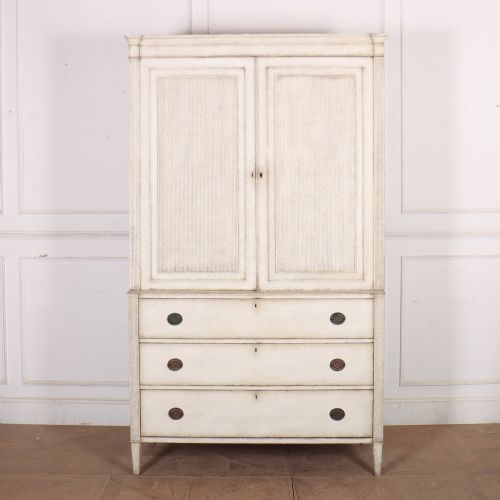
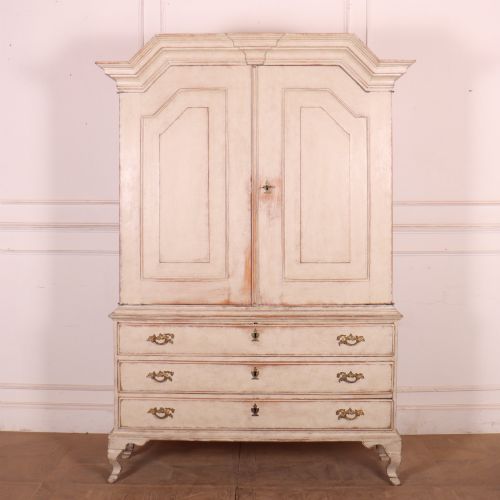
A swedish style painted cabinet encompasses functional storage pieces built across the eighteenth and nineteenth centuries, including linen cupboards, commodes, and bedside tables. These items reflect distinct regional aesthetics such as Gustavian and Scandinavian country styles.
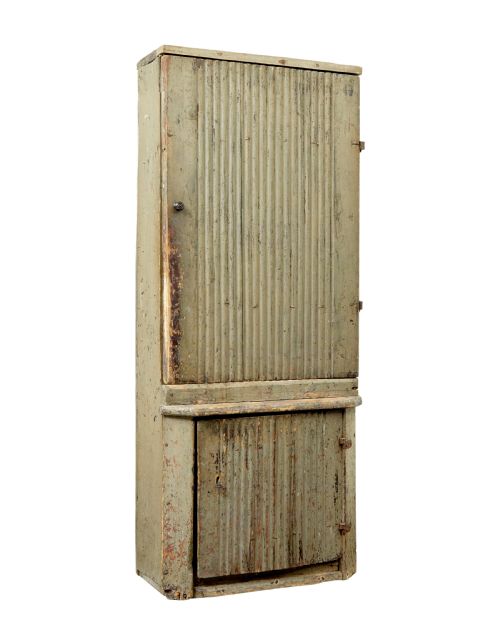
The inventory on this page relies heavily on pine and softwood structures finished in traditional painted surfaces, ranging from original scraped finishes to hand-painted treatments. Buyers frequently encounter upright linen cupboards and compact bedside pairs among the available forms.
Pieces span multiple decades within the nineteenth century alongside select eighteenth-century examples, maintaining the characteristic proportions and utility required for domestic storage. Cabinets with two doors and bureau bookcase variants appear alongside display cabinets and commodes.
What varies in quality
The character of the painted finish dictates much of the visual appeal, distinguishing pieces with untouched scraped historic surfaces from those with later redecoration. Original pigment layers that show honest patination hold particular distinction.
Proportion and decorative restraint set finer cabinetwork apart, particularly in Gustavian pieces where carved detailing remains subtle and balanced. The integrity of the underlying pine construction and the retention of original brass or iron fittings also influence the standing of each piece.
Listings feature pine and softwood cabinets spanning the eighteenth century through to nineteen twenty, finished in paint, glass, and brass.
The Swedish Style Painted Cabinet Glossary
- Gustavian
- The Swedish neoclassical style spanning the late eighteenth and early nineteenth centuries, known for restrained classical lines and pale painted finishes. It draws inspiration from French royal design interpreted through a Scandinavian lens.
- Commode
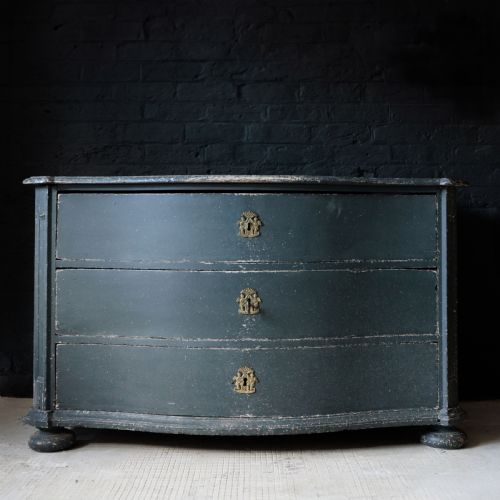
- A low chest of drawers or cabinet designed for domestic use, often featuring serpentine or shaped fronts in nineteenth-century examples. These pieces frequently serve as bedside or hallway storage.
- Enfilade
- A suite of pieces or a long sideboard arrangement designed to stand in a line, though here appearing as matched pairs of cabinets. They provide extended surface and storage capacity.
- Serpentine
- A curved shape for a furniture front that undulates outward in the centre and inward at the sides. This contour requires skilled carpentry on solid wood.
- Scraped paint
- A surface condition where layers of old paint are partially removed to expose the historical strata beneath. Collectors prize this honest record of age.
Swedish Style Painted Cabinet: Frequently Asked Questions
What rooms suit a painted cabinet?
These storage pieces fit comfortably in bedrooms, living areas, or hallways where their pale painted finishes help brighten smaller spaces. Linen cupboards and commodes provide practical concealed storage for everyday items.
Their restrained decoration allows them to sit alongside both traditional and contemporary interiors without dominating the room's scheme.
How do I care for the painted surface?
Maintenance requires only gentle dusting with a soft, dry cloth to protect the historic paint layers from abrasion. Avoid placing pieces in direct sunlight or near sudden heat sources that might dry out the underlying pine.
Wax or aggressive cleaning products should be avoided unless verified as appropriate for the specific nature of the paint finish.
Are these pieces from the eighteenth or nineteenth century?
The selection includes examples built across both the eighteenth and nineteenth centuries, with a heavy concentration of nineteenth-century pine pieces. Dates often reflect the period of origin noted by makers and dealers.
Earlier examples from the eighteenth century typically exhibit different proportions and structural wear compared to later nineteenth-century items.
What is the difference between Gustavian and country styles?
Gustavian pieces reflect neoclassical restraint with subtle carved details and formal symmetry influenced by French royal courts. Country styles lean toward simpler, more rustic construction suited to regional Scandinavian homes.
Both categories share the use of pine and painted surfaces, but differ in the formality of their ornamentation.