


Swedish Folk Art Coffer
A Swedish folk art coffer brings the rustic warmth of Scandinavian country interiors into a room, offering both practical storage and expressive historical ornament.
Swedish Folk Art Coffer
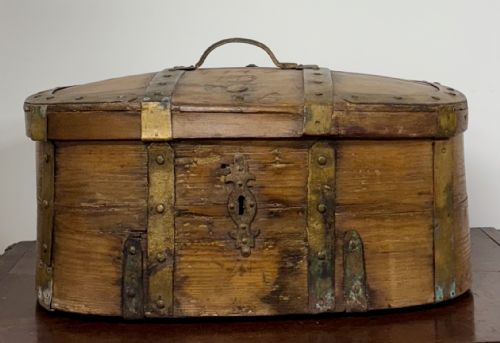
A swedish folk art coffer encompasses traditional storage pieces ranging from small table boxes to large marriage chests and dome-top trunks. The pieces seen here emerge primarily from the eighteenth and nineteenth centuries, reflecting rural Scandinavian craftsmanship.
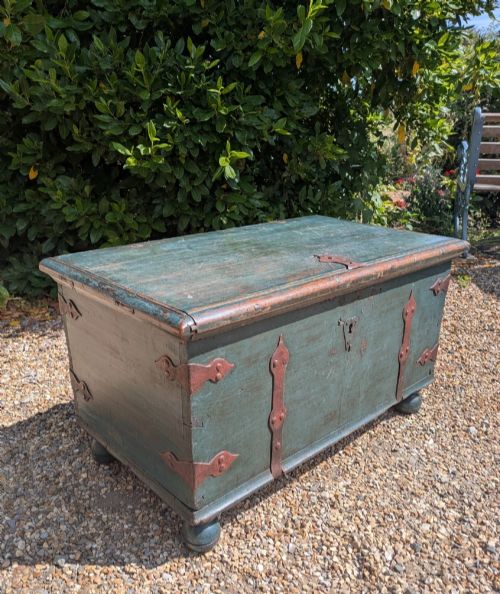
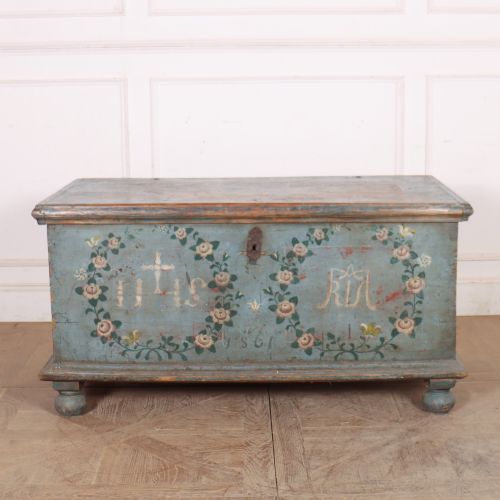
Makers constructed these storage pieces to hold textiles, valuables, and domestic supplies in remote farmsteads. The version most frequently encountered is the pine strong box or blanket chest, often finished with distinctive hand-painted decoration.
Materials and Technique
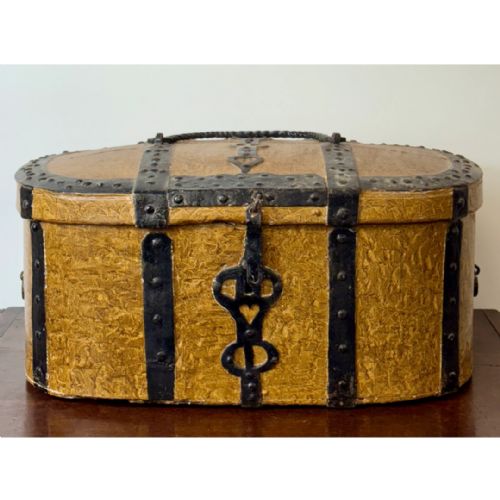
Local pine and occasionally oak provide the sturdy carcass for these chests, joined with traditional carpentry methods suited to regional workshops. Blacksmiths supplied hand-forged wrought iron and brass strapwork, hinges, and corner brackets to reinforce the heavy lids and corners.
Painters applied pigment mixed with oil or milk-based binders directly onto the wood, sometimes creating elaborate surface patterns including labyrinth motifs. The application of paint served both to protect the softwood underneath and to celebrate significant life events such as weddings.
The listings here span from the 18th century through the 19th century, featuring pine and oak construction adorned with pigment and wrought iron.
Evaluating Quality
The distinction between ordinary utility items and finer examples rests upon the preservation and complexity of the painted surface. Intact original pigment, clear brushwork, and well-executed folk motifs elevate a piece above simpler, plain-painted storage boxes.
Structural integrity also differentiates the range, particularly the survival of original hand-forged iron strapwork and operational wooden feet or stands. Pieces that retain their early surface patination without heavy later repainting command greater interest from collectors.
The Swedish Folk Art Coffer Glossary
- Coffer
- A heavy wooden chest traditionally used for storing valuables or documents. These storage pieces often feature reinforced lids and substantial iron hardware.
- Strapwork
- Ornamental metal bands fixed to the exterior of a chest for reinforcement and decoration. Blacksmiths shaped these iron strips by hand to secure the corners and lid.
- Dome top
- A rounded lid construction found on many traditional trunks and coffers. This curved shape helped shed moisture and provided extra internal clearance.
- Pigment
- Ground colour substance mixed with a binder to create the paint finishes seen on folk art pieces. Artisans utilised local mineral and organic sources for their hues.
- Marriage chest
- A specially decorated box commissioned to celebrate a wedding and store the bride's dowry. These pieces frequently display specific dates, initials, or symbolic folk motifs.
Swedish Folk Art Coffer: Frequently Asked Questions
What were swedish folk art coffers used for?
These pieces served as secure storage for valuable textiles, clothing, and household documents in rural Scandinavian homes. Large examples often functioned as dowry chests commissioned for weddings.
Over time, they also provided extra seating or table surfaces within modest farmhouses where space was limited.
How do I tell an 18th-century coffer from a 19th-century one?
Earlier eighteenth-century pieces often display restrained Baroque influences, simpler ironwork, or specific geometric patterns like labyrinths. Nineteenth-century examples tend to show broader variations in painted folk motifs and standardised box shapes.
Examination of the wood joints, tool marks, and pigment composition helps clarify the likely production period.
How should I care for a painted pine chest?
Keep the piece away from direct sunlight and steady heat sources to prevent the pine from drying out and the painted surface from flaking. Maintain stable indoor humidity levels.
Dust gently with a dry, soft cloth and avoid chemical cleaners that might damage the historic pigment layers.
What is a strong box?
A strong box is a smaller, heavily reinforced chest designed for securing currency, silver, or important documents. They usually feature robust wrought iron strapwork and reliable locking mechanisms.
Despite their compact size, their robust construction made them suitable for travel as well as secure home storage.