


Hand Painted Pine Trunk
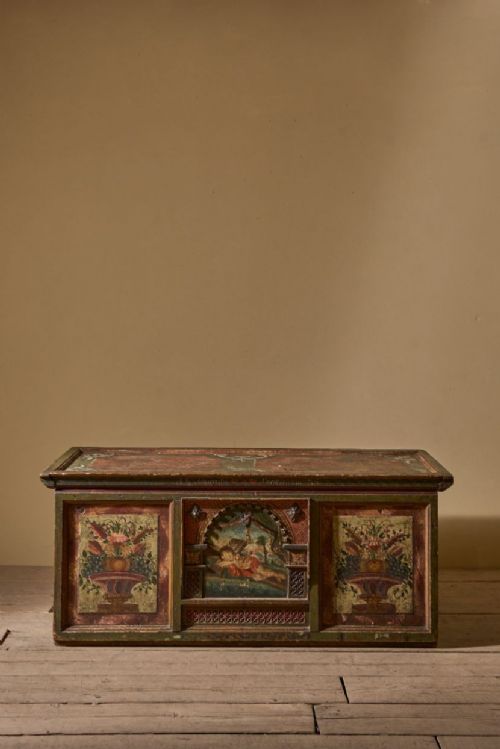
A hand painted pine trunk brings regional folk art and utilitarian storage together through bright pigments on soft wood.
Hand Painted Pine Trunk
When you examine a hand painted pine trunk, you are looking at domestic storage containers built from softwood and finished with decorative brushwork. These pieces take the form of blanket boxes, marriage chests, strong boxes and dome top coffers made for everyday household use.
The version you are most likely to meet on this page originates from nineteenth century Scandinavian workshops, alongside examples from alpine regions, Hungary, Spain and Romania. They appear in variations ranging from small tabletop boxes to large marriage chests intended to hold household linens.
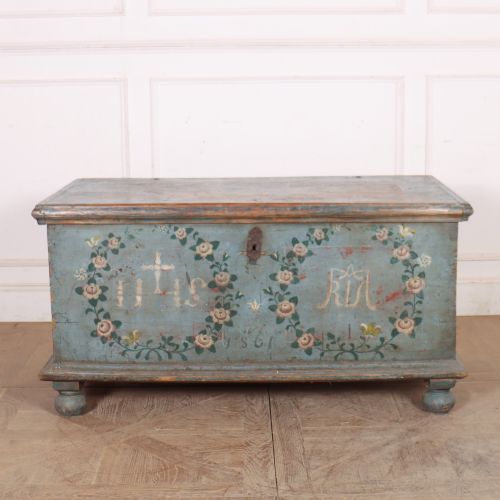
Makers constructed these items in rural communities where local painters applied mineral pigments directly to the wood surface. The decoration often records specific regional traditions, ranging from simple geometric borders to elaborate floral motifs associated with marriage chests.
How they were made
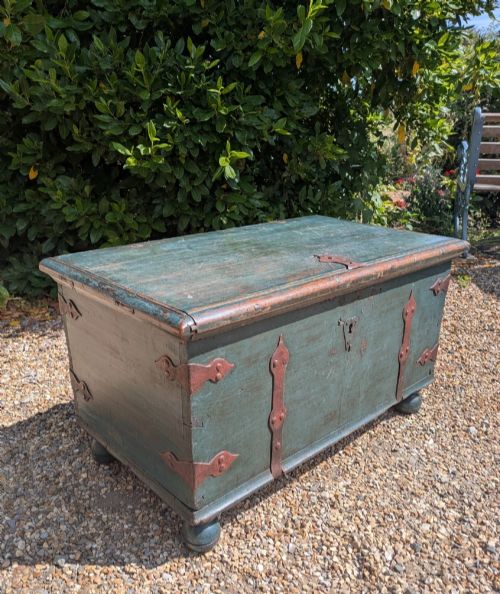
Carpenters built the carcase using local pine boards joined with dovetail or rebate construction, providing a stable foundation for the painted decoration. Smiths provided hand forged iron strapwork, hinges and brackets to reinforce the corners and lids of heavy coffers.
Painters applied pigment mixed from mineral sources over a primed or direct wooden ground. These finishes dried to matte surfaces that accepted wear over generations of domestic service.
The inventory includes nineteenth century pieces from Sweden, Hungary, Spain and Romania constructed from pine with iron hardware.
What varies in quality
The distinction between ordinary utility items and superior examples lies in the ambition of the painted surface and the crispness of the joinery. Stronger pieces display confident brushwork and coherent regional folk art motifs rather than crude or hasty decoration.
Preservation of the original pigment layer dictates the character of the piece. Surviving surfaces that retain their primary colour without extensive overpainting command greater interest among collectors.
The Hand Painted Pine Trunk Glossary
- Marriage chest
- A large storage box commissioned or decorated to mark a wedding, frequently inscribed with initials and dates. These pieces often feature the most elaborate folk art decoration on the box.
- Strong box
- A heavily reinforced small chest designed to secure valuables, typically fitted with robust iron strapwork and complex locking mechanisms. They served merchant and domestic needs alike.
- Dome top
- A curved lid construction that sheds water and prevents items from being stacked on top of the chest. This form appears frequently on nineteenth century Scandinavian coffers.
- Strapwork
- Flat strips of iron fixed across the corners and panels of a chest to reinforce the joints. Smiths shaped these bands by hand before securing them with iron nails.
- Mineral pigment
- Natural earth and rock compounds ground into powder and mixed with a binder to create durable paint. These substances provided the bright colours seen on traditional folk pieces.
Hand Painted Pine Trunk: Frequently Asked Questions
What went into a marriage chest?
Families used these large containers to store homespun textiles, bedding and garments accumulated for a wedding.
They kept household linens protected from dust and damp in rural homes before fitted wardrobes became common.
How do I clean a painted pine box?
Dust the surface gently with a dry, soft cloth to remove loose particles without disturbing the underlying pigment.
Avoid liquid cleaners, waxes or modern solvents that can soften historic distemper or oil based paint layers.
Where were these painted trunks made?
Rural communities across Scandinavia, the alpine regions, Hungary and Spain produced these storage pieces.
Local carpenters and itinerant painters decorated them using regional motifs passed down through generations.
How can I tell the age of a pine trunk?
Examine the construction marks, hand forged iron hardware and the composition of the paint layers.
Nineteenth century pieces show specific tool marks from manual saws and planes rather than modern power equipment.