



Iron Strapped Pine Chest
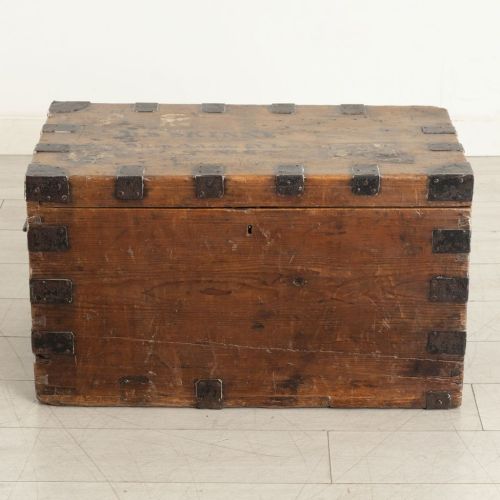
An iron strapped pine chest is a sturdy utilitarian container built from softwood and banded in metal for travel or secure storage.
Iron Strapped Pine Chest
When you search for an iron strapped pine chest, you find robust storage pieces designed for domestic utility and travel across the nineteenth and early twentieth centuries. The form spans plain dome top coffers, flat travel trunks and small strong boxes suited to domestic storage.
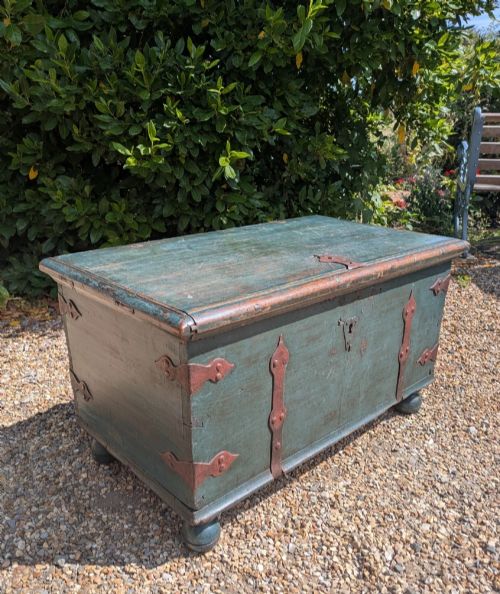
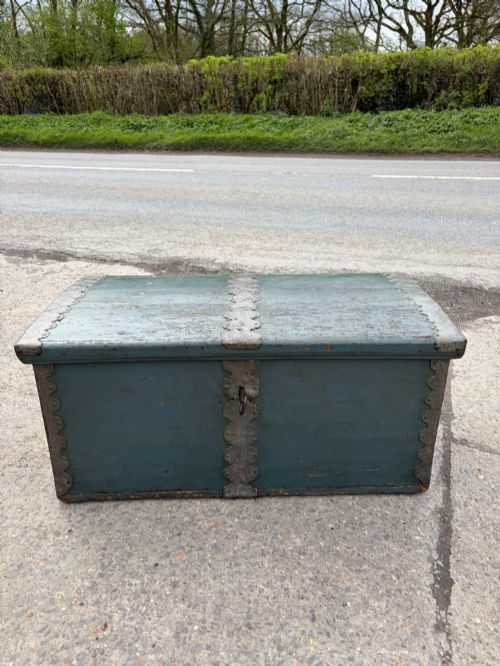
You are most likely to meet nineteenth-century examples on this page, particularly Victorian and Scandinavian country pieces. These items range from large painted dome top chests to smaller bound boxes featuring side lifting handles.
The aesthetic bridges rustic farmhouse and folk art traditions, often retaining original paint finishes beneath heavy metalwork. Each piece balances practical timber construction with utilitarian hardware built to endure heavy use.
How they were made
These chests combine solid pine boards joined to form deep rectangular or dome top bodies. The timber provides a lightweight yet resilient carcass capable of absorbing the knocks of transport.
Iron strapwork, hand forged brackets and metal binding reinforce the pine corners and lids. Working locks and side lifting handles are secured with rivets or nails to complete the functional hardware.
Iron Strapped Pine Chest Retail Price Guide 2026
Typical asking prices for iron strapped pine chest among the pieces listed under this phrase on Sellingantiques today, from the lower quarter to the upper quarter. They describe what is for sale here now, not the wider market.
Listings feature nineteenth-century and early twentieth-century pieces, spanning Victorian utility styles and Scandinavian country painted finishes in pine and iron.
What varies in quality
The distinction between ordinary utility boxes and finer examples rests upon the survival of original paint surfaces and hand forged iron details. Pieces retaining their early decorative schemes display greater character than stripped or later repainted boards.
Construction methods also set pieces apart, notably the integration of dovetailed corners, robust working locks and substantial strapwork. Superior examples exhibit well proportioned dome lids and intact hardware that ground the rustic aesthetic.
The Iron Strapped Pine Chest Glossary
- Dome top
- A curved lid construction designed to shed water during travel and provide extra internal capacity. This form is common on nineteenth-century Scandinavian and British country coffers.
- Strapwork
- Flat metal bands fixed across the exterior of a chest to reinforce the wooden joints and edges. It is usually formed from iron or wrought iron.
- Coffer
- A heavy wooden chest traditionally used for storing valuables or documents. These pieces often feature secure locking mechanisms and sturdy metal bindings.
- Strong box
- A compact storage chest built for security, typically fitted with heavy iron straps and a reliable lock. They were utilised for keeping important papers or coin.
Iron Strapped Pine Chest: Frequently Asked Questions
What were iron strapped pine chests used for?
These chests served primarily for travel, domestic storage and the secure keeping of household goods or personal belongings. Their robust construction allowed them to withstand the rigours of transit.
Over time, many transitioned from utilitarian cargo carriers to decorative furniture used for blankets, linens and general storage within the home.
How do I date an iron strapped pine chest?
Dating relies on examining the construction techniques, the style of the ironwork, and any surviving paint finishes. Nineteenth-century examples often display hand forged strapwork and traditional dovetailing.
Later pieces from the early twentieth century tend to feature simpler machine cut elements and different latch mechanisms, though rustic styles persisted.
Are painted pine chests authentic?
Many nineteenth-century pieces, particularly from Scandinavian regions, retained original decorative paint finishes that added colour to rural homes. Surviving schemes show natural wear and patination acquired over generations of use.
Distinguishing between early painted surfaces and later decorative layers involves looking closely at the craquelure, pigment fading and wear patterns around the hardware.
Where should I place a pine chest at home?
These versatile storage trunks suit hallways, bedrooms or living spaces where they provide both a decorative surface and generous internal volume. Their rustic charm anchors neutral interiors and country style rooms.
Keeping them away from direct heat sources helps protect the dry pine timber and preserves the integrity of any original painted or metal surfaces.