





Swedish Country Sideboard
These pieces are a swedish country sideboard, bringing practical storage and pale painted charm to modern rooms.
Swedish Country Sideboard
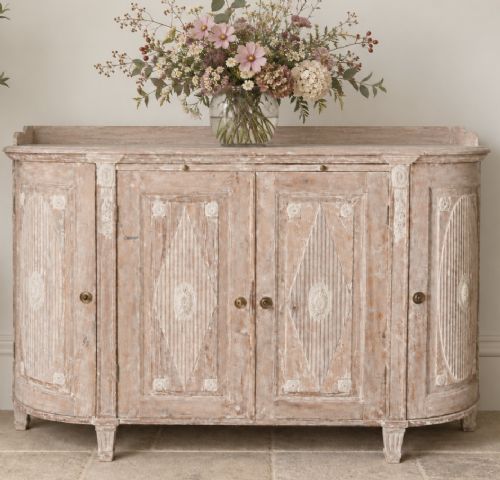
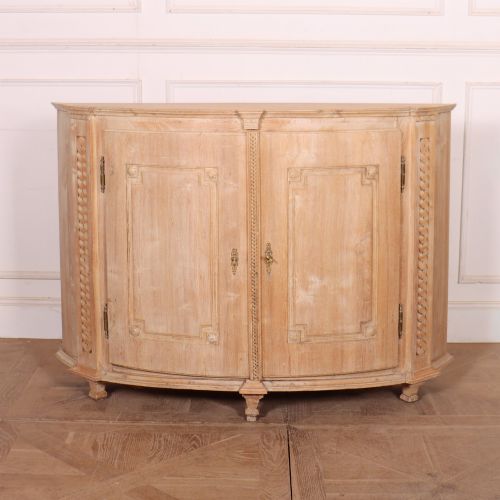
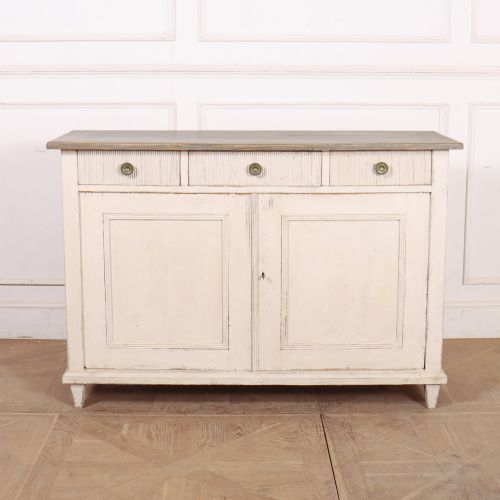
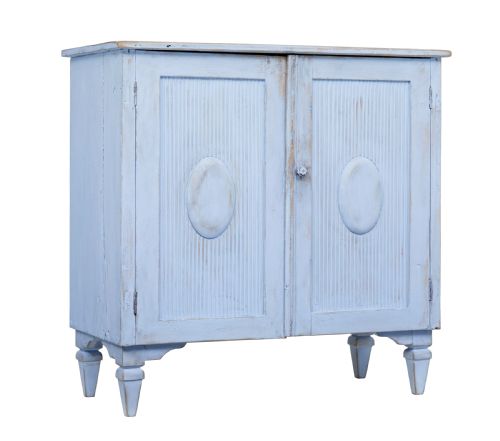
When you search for a swedish country sideboard, you are looking at substantial storage furniture originating from Scandinavian farmhouses and towns during the nineteenth century. The examples met on this page span from the middle of the nineteenth century up to eighteen ninety, taking forms such as cupboards, cabinets, enfilades, and workbenches. These pieces served domestic roles for linen, kitchenware, and provisions before finding a place in contemporary interiors.
The most common forms recorded in the evidence are painted pine cupboards and sideboards reflecting Scandinavian country and Gustavian styles. Alongside traditional timber constructions, the inventory includes specific variations like zinc-topped sideboards and miniature dressers. Each item carries the functional design typical of nineteenth-century rural Sweden, adapted for everyday utility.
How they were made
Makers constructed these pieces primarily from pine and softwood, relying on local timber harvested across nineteenth-century Sweden. Joinery was built to endure heavy daily use in domestic settings, utilising sturdy boards for doors, shelves, and frames.
Surface decoration relies heavily on paint, including original scraped paint and ragwork painted finishes that define the regional aesthetic. Hardware elements incorporate functional brass and iron fixtures, while certain specialised forms feature zinc tops for added workspace durability.
Swedish Country Sideboard Retail Price Guide 2026
Typical asking prices for swedish country sideboard among the pieces listed under this phrase on Sellingantiques today, from the lower quarter to the upper quarter. They describe what is for sale here now, not the wider market.
Listings feature nineteenth-century dates, specifically highlighting eighteen fifty, eighteen eighty, and eighteen ninety across various painted cupboards and sideboards.
What varies in quality
Quality in these items rests upon the survival and character of the surface decoration, particularly whether original painted finishes remain intact. Pieces retaining early scraped paint or deliberate ragwork techniques demonstrate superior aesthetic integrity compared to later repainted surfaces.
Construction details also separate examples, visible in the proportion of the cabinetry and the retention of period brass or iron fittings. The integration of materials, such as a well-fitted zinc top on an eighteen eighty sideboard, marks the distinction between standard utility items and finer workshop production.
The Swedish Country Sideboard Glossary
- Gustavian
- The neoclassical style patronized by King Gustav III of Sweden during the late eighteenth century, characterised by restrained proportions and pale palettes which influenced nineteenth-century country furniture.
- Ragwork
- A decorative paint technique using rags to manipulate layers of colour on wood, creating a mottled or textured finish typical of nineteenth-century Scandinavian surfaces.
- Enfilade
- A suite of rooms or a long cabinet featuring a series of connected doors or cupboards in a single line, providing extensive storage.
- Softwood
- Timber from coniferous trees such as pine, widely utilised across nineteenth-century Scandinavian furniture making for its accessibility and workability.
Swedish Country Sideboard: Frequently Asked Questions
What is a swedish country sideboard?
A swedish country sideboard is a nineteenth-century storage piece made from pine or softwood, typically finished with painted decoration. These items originated in Scandinavian homes for practical domestic storage.
Today, they function as decorative and functional storage units in dining rooms, hallways, and living spaces, offering generous capacity and characteristic pale painted finishes.
How do I date these pieces?
Dating relies on construction methods, timber selection, and stylistic markers recorded across the nineteenth century. Pieces often date from periods around eighteen fifty, eighteen eighty, and eighteen ninety.
Examining the type of paint, such as original scraped layers or ragwork finishes, also helps establish the age and historical context of the cabinet or sideboard.
Are these sideboards made of pine?
The evidence shows that pine and painted softwood form the primary structural materials for these nineteenth-century items. Local craftsmen utilised these accessible softwoods for everyday utility furniture.
Hardware components like brass and iron appear on doors and fittings, while specific variants incorporate metal or zinc tops for functional workspace use.
How do I live with a painted sideboard?
Living with these pieces involves appreciating their original painted surfaces, which bring texture and pale colour to modern interiors. They provide deep shelving and cabinet space for household storage.
Placement in rooms benefits from keeping them away from direct heat sources to preserve the nineteenth-century timber and historical paint layers.