

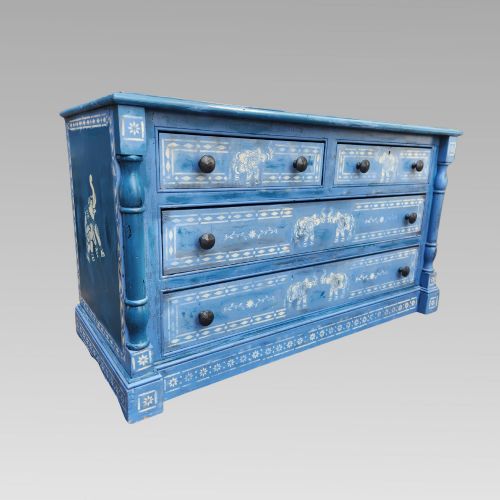


Blue Wooden Sideboard
A blue wooden sideboard brings robust storage and regional character into a room, combining painted surfaces with sturdy timber construction.
Blue Wooden Sideboard
A blue wooden sideboard encompasses a variety of storage and serving furniture finished in painted coats over timber frameworks. When you examine these items, you encounter pieces originating from the eighteenth and nineteenth centuries, spanning regional European and colonial workshops.
These items serve practical dining and hallway functions while offering distinctive decorative presence through surviving layered paint finishes. Each piece reflects the domestic storage needs of its period, adapted through local craftsmanship and traditional joinery.
Materials and construction methods
Makers built these pieces primarily using pine, softwood, and general timber, shaping boards with hand tools for everyday domestic use. Structural elements relied on traditional joinery techniques appropriate for casework and tables, ensuring durability across generations.
Surfaces received applications of paint, often in blue or ragwork finishes, alongside brass and iron hardware such as handles, hinges, and escutcheons. These painted layers weathered over time, creating the patinated surfaces characteristic of country and provincial furniture.
Blue Wooden Sideboard Retail Price Guide 2026
Typical asking prices for blue wooden sideboard among the pieces listed under this phrase on Sellingantiques today, from the lower quarter to the upper quarter. They describe what is for sale here now, not the wider market.
Listings feature pine, softwood, and timber items accented with brass and iron hardware across eighteenth and nineteenth-century periods.
Assessing quality and character
The distinction between pieces rests in the integrity of the original timber frame and the survival of authentic painted finishes. Examples showing undisturbed surface patination and period hardware command greater interest than those with later repainting or heavy structural intervention.
Proportion and regional detailing also separate standard utility items from more refined provincial expressions, such as serpentine fronts or distinct folk art motifs. The harmony between the original construction and the aged surface defines the overall character.
The Blue Wooden Sideboard Glossary
- Ragwork
- A decorative painting technique where rags or cloths are used to manipulate wet paint on a timber surface, creating textured patterns. This finish appears frequently on nineteenth-century Scandinavian cupboards.
- Commode
- A low chest of drawers or cabinet designed for domestic storage. Eighteenth-century examples often feature shaped fronts and regional provincial styling.
- Dresser base
- A lower cabinet or sideboard featuring drawers and cupboards, traditionally used in kitchens or dining rooms for food preparation and storage. They form a core part of traditional English country furniture.
- Serpentine
- A furniture front configuration featuring a curved line that is convex in the centre and concave at the sides. This contour appears on sophisticated eighteenth-century commodes.
- Washstand
- A small table or cabinet designed to hold washbowls and pitchers in bedrooms before indoor plumbing. Nineteenth-century pine versions often incorporate simple tiers or splashbacks.
Blue Wooden Sideboard: Frequently Asked Questions
What is a blue wooden sideboard?
A blue wooden sideboard is a storage or serving piece made from timber and finished with a painted surface. These items draw on regional traditions from across Europe and colonial workshops.
They encompass diverse forms including cupboards, buffets, and servers, unified by their painted wooden construction and historical domestic utility.
How do I date these pieces?
Dating relies on examining construction methods, timber types, and the composition of the painted surface. Eighteenth-century pieces often display hand-cut joinery and specific regional contours.
Nineteenth-century examples frequently utilise pine or softwood with distinct folk art or ragwork paint applications characteristic of rural workshops.
Where were these items made?
These pieces originate from various European countries including Sweden, France, Italy, Spain, Austria, and England. Each region developed distinct furniture forms and painting techniques.
Local workshops adapted prevailing styles into practical domestic furniture suited to regional rural and provincial interiors.
How do I care for painted wood?
Care involves maintaining stable indoor humidity levels and protecting the painted surfaces from direct sunlight and excessive moisture. Dusting with a dry cloth prevents dirt accumulation.
Avoid chemical cleaning products that might strip or soften historical paint layers and delicate patination built up over centuries.