



Swedish Commode Drawers
These Swedish commode drawers combine restrained northern utility with exceptional cabinetmaking, offering storage grounded in centuries of Scandinavian design.
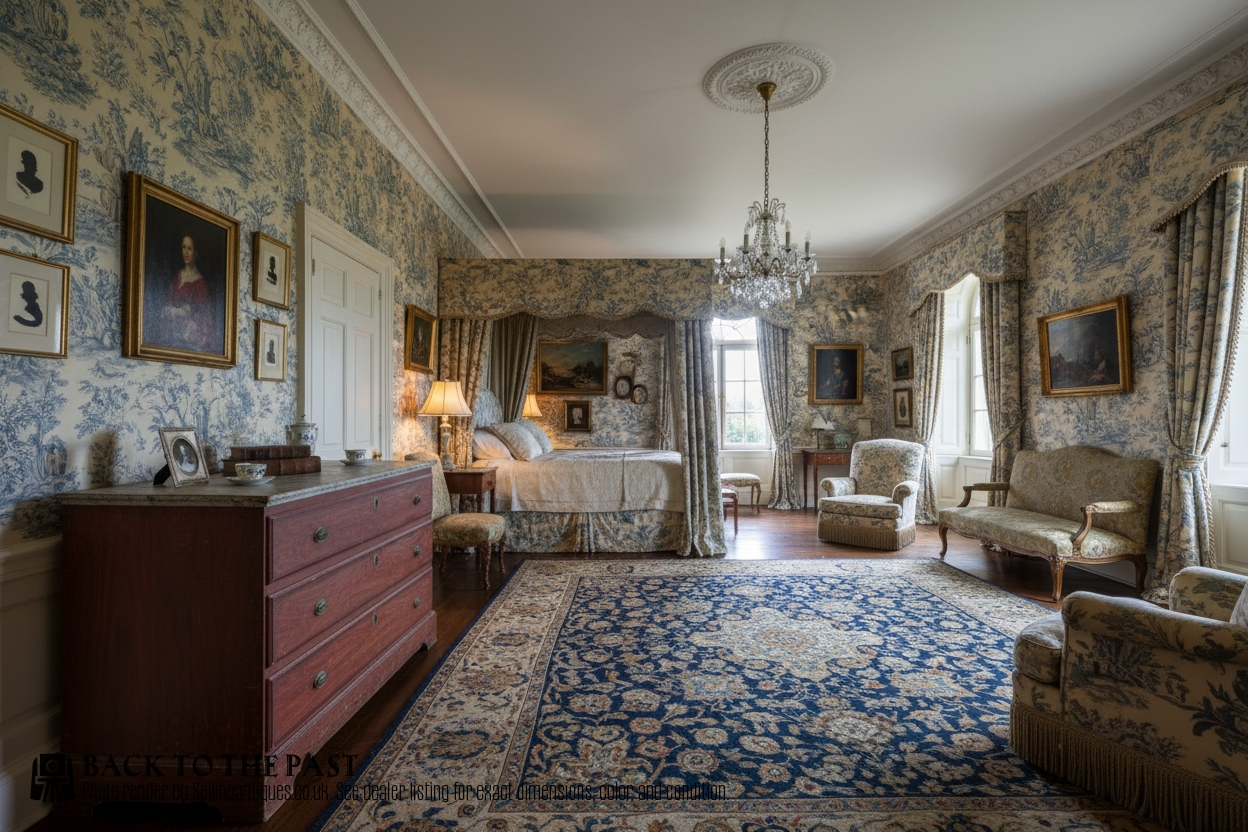
Swedish Commode Drawers
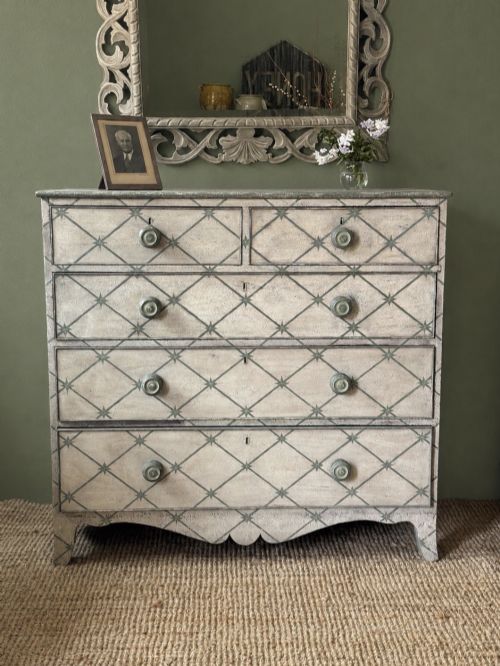
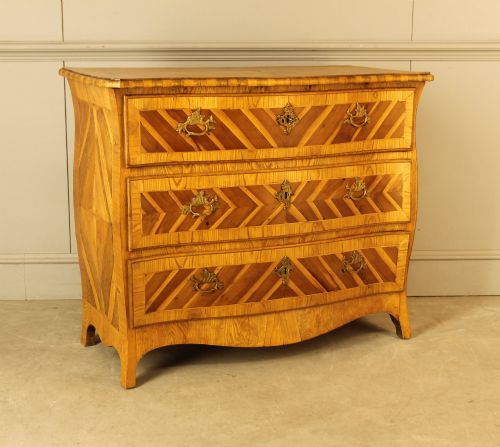
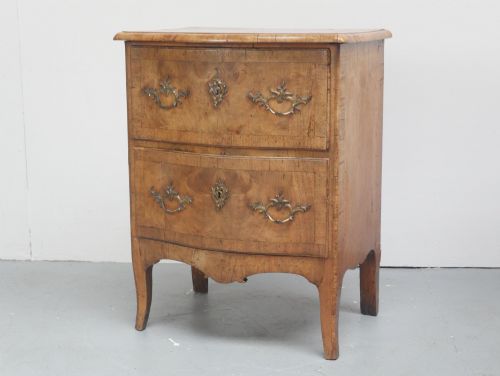
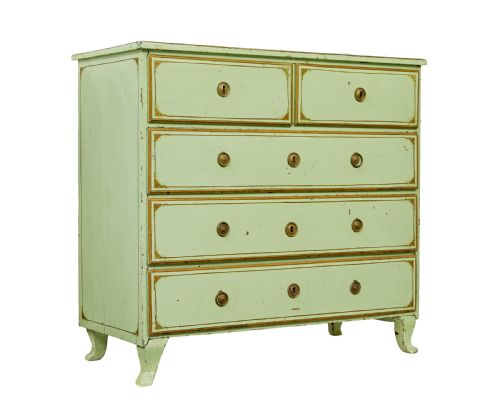
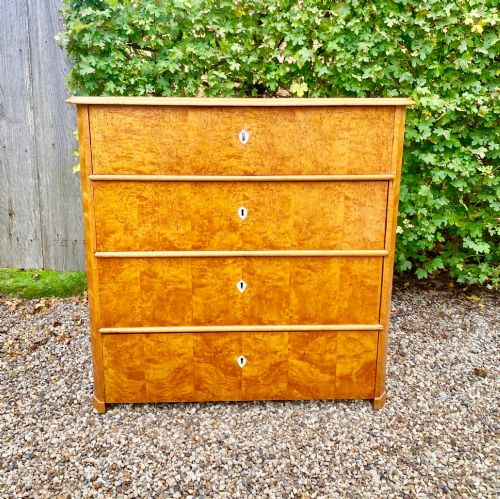
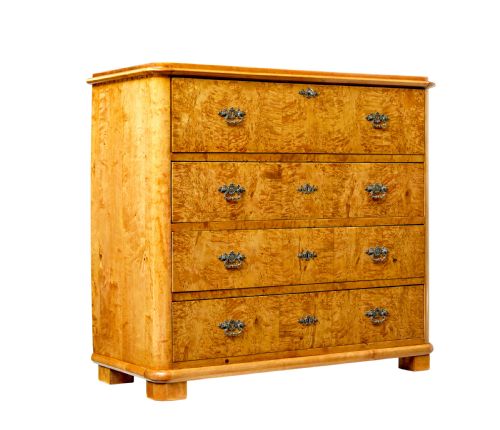
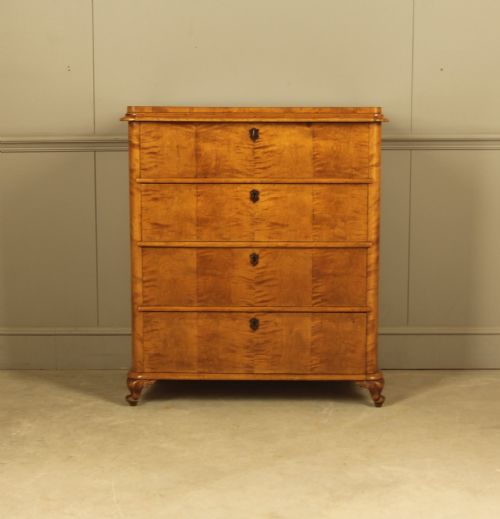
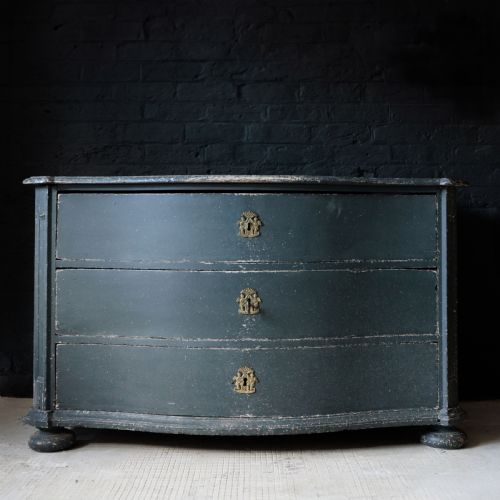
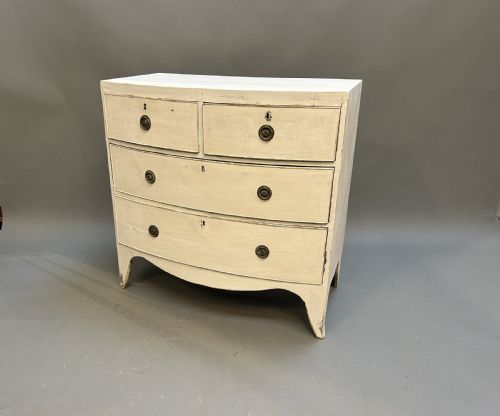
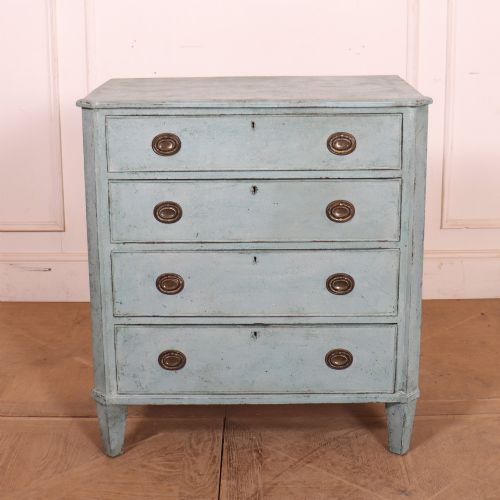
When buyers search for Swedish commode drawers, they find storage pieces primarily spanning the eighteenth and nineteenth centuries, taking the form of chests of drawers, secretaire chests, and serpentine commodes. The selection ranges from carved and burr birch timbers to pine in original paint, carrying influences from Gustavian neoclassical to Biedermeier and rococo styles.
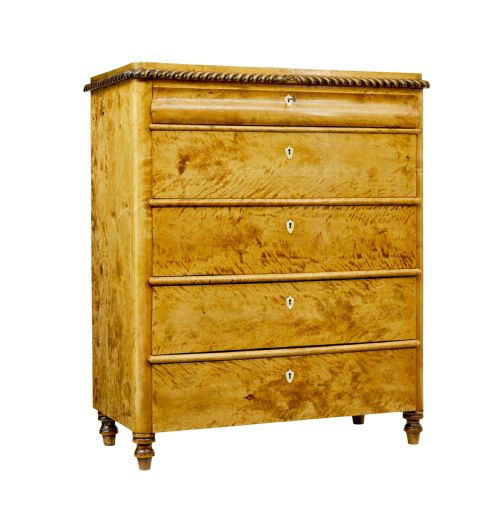
The most common pieces met on this page belong to the nineteenth century, executed in birch, flame birch, tiger birch, or painted softwood surfaces. These upright forms provide practical domestic storage while expressing the distinct aesthetic lineage of Scandinavian cabinetmaking.
How they were made
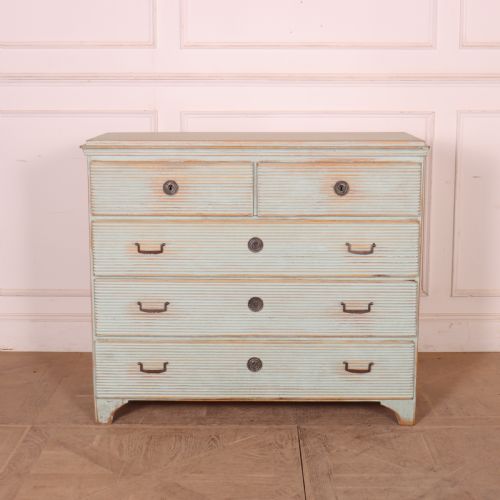
Cabinetmakers utilised native northern timbers such as pine, elm, ash, and various selections of birch, including masur, burr, and flame veneers applied to carcases. Drawer fronts frequently exhibit figured grains or fluted detailing, occasionally complemented by brass hardware or bone inlay.
Painted surfaces involve traditional pigments applied to pine carcases, sometimes layered to simulate richer woods or finished with faux marble tops. Carved elements and shaped serpentine profiles require precise hand-shaping of solid timber.
Some nineteenth-century makers cleverly painted ordinary pine chests to look like expensive exotic birch, proving that ambition outstripped the local timber budget.
What varies in quality
Quality rests in the selection of wood veneers and the precision of the carcase construction, where highly figured birch or burr walnut elevates a piece above standard utility items. The sophistication of the silhouette, seen in the sweep of a serpentine front or the crispness of carved detailing, distinguishes workshop production.
The integrity of painted surfaces, whether original pigment on pine or simulated grain effects, dictates the visual authority of the commode. Finer examples maintain their authentic decorative skin and structural harmony without heavy intervention.
Gemla Fabrikers
The Swedish Commode Drawers Glossary
- Commode
- A low chest of drawers or cabinet originating in French furniture design but widely adopted across Sweden. These pieces typically feature multiple drawer tiers and decorative hardware.
- Serpentine
- A furniture front shape characterised by a central convex curve flanked by two concave curves, or vice versa. This undulating contour requires skilled timber shaping.
- Biedermeier
- A central European and Scandinavian style spanning the nineteenth century focused on utilitarian comfort and clean lines. It highlights the natural grain of woods like birch without excessive ornamentation.
- Gustavian
- The Swedish neoclassical style developed during the reign of King Gustav III. It translates French louis styles into simpler, brighter domestic forms.
- Marquetry
- The art of applying small pieces of veneer to a structure to form decorative patterns. This technique utilises contrasting timbers for visual depth.
Swedish Commode Drawers: Frequently Asked Questions
How do I identify a Gustavian commode?
Gustavian pieces typically display restrained neoclassical symmetry, often painted in pale grey, white, or muted tones. They feature subtle fluting, straight or tapered legs, and minimal carved embellishment.
These designs reflect eighteenth-century Swedish interpretations of French Louis XVI taste, prioritising light and balanced proportions over heavy ornamentation.
What is a secretaire chest of drawers?
A secretaire chest incorporates a fitted fall-front or pull-out drawer concealing a writing surface and small internal compartments. It combines the everyday storage of a standard chest with a compact desk.
Cabinetmakers built these for domestic efficiency, keeping paperwork concealed behind the upper drawer facade while maintaining the exterior profile of a commode.
Are these commodes made of solid birch?
Many nineteenth-century Swedish pieces utilise birch timber, often in the form of veneers such as flame, tiger, or masur birch applied over a secondary wood carcase. Solid birch appears frequently in structural framing and drawer construction.
The distinct figuring of northern birch provided makers with decorative surfaces that required little additional ornament.
How should I care for an antique painted chest?
Painted surfaces require stable room humidity and protection from direct sunlight to preserve the original pigment layers. Dusting with a dry, soft cloth avoids abrasion to fragile antique finishes.
Avoid commercial polishes or moisture on painted or waxed pine, as these can soften historic finishes and alter the surface sheen.