

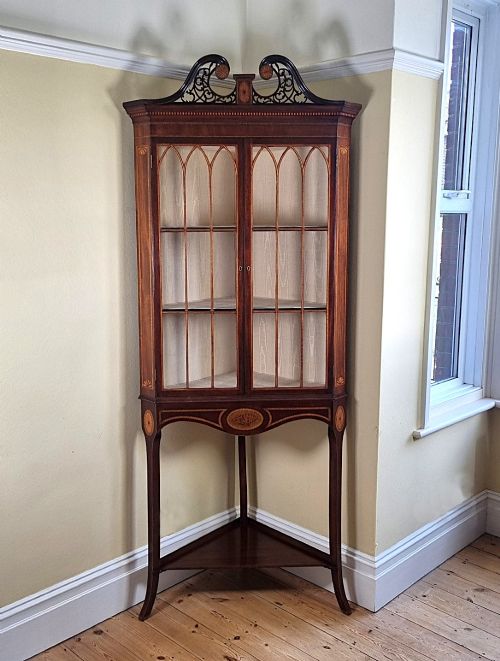
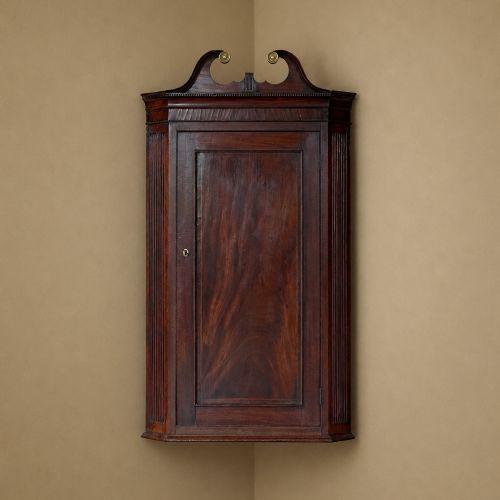
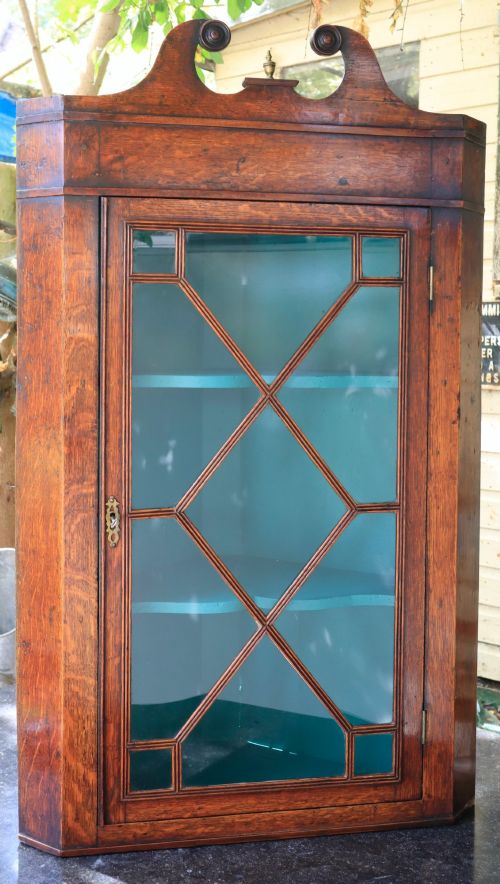
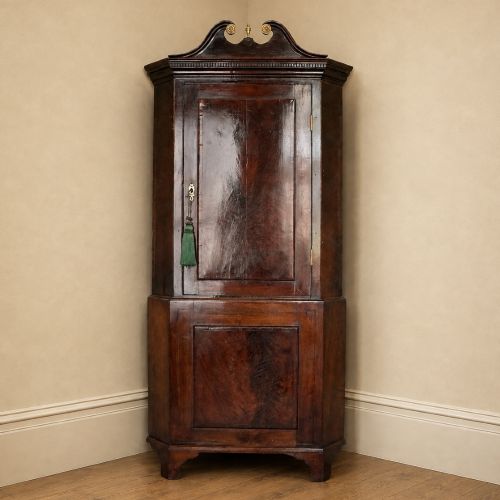
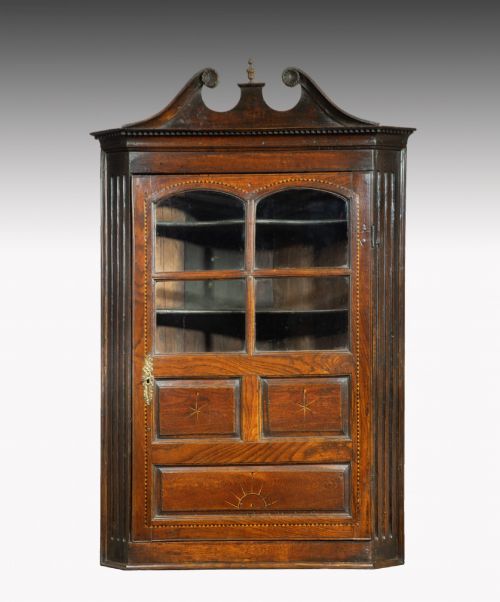
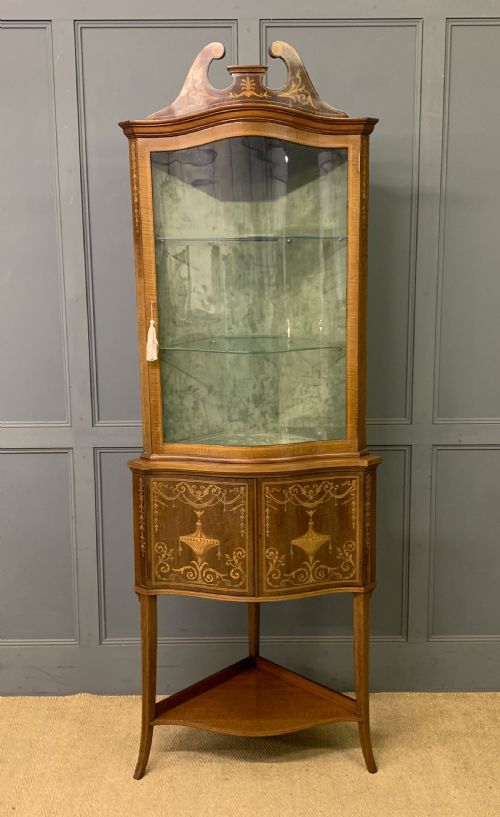
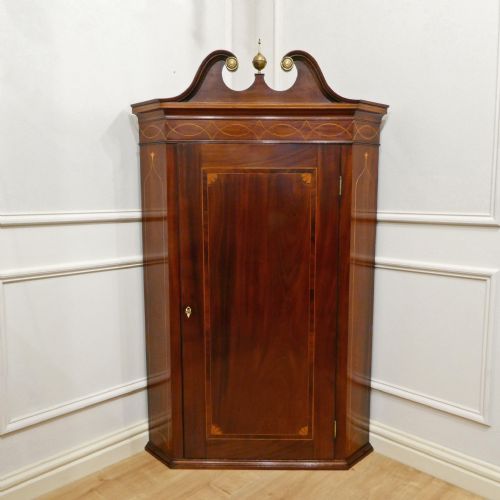


Swan Neck Corner Cabinet
A swan neck corner cabinet brings architectural grace to awkward spaces, offering clever storage with a swan neck pediment.
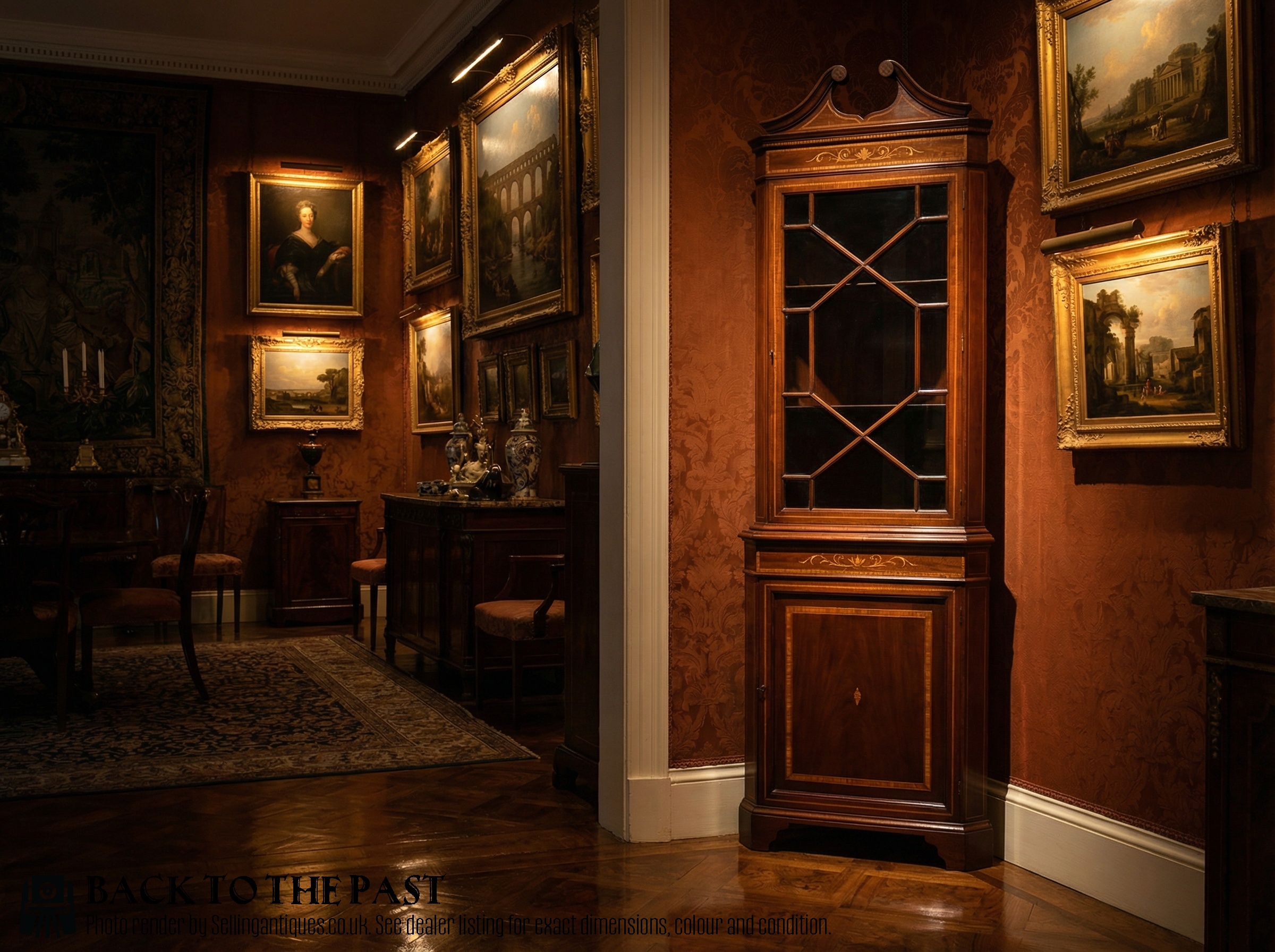
Swan Neck Corner Cabinet
A swan neck corner cabinet is a fitted or freestanding storage piece designed to occupy the meeting point of two walls, making practical use of dead room. These pieces appear in forms ranging from wall-hanging cupboards to tall standing units and display cabinets.
The versions most common on this page date from the Georgian era through to the Edwardian period, often constructed from rich timbers. Buyers encounter hanging single-door cupboards alongside grander two-piece floor-standing configurations.
How they were made
Cabinet makers relied primarily on solid mahogany and oak as structural timbers, frequently selecting flame mahogany veneers for prominent door panels. Timber selection dictated the structural integrity of the angled carcass and the stability of the mitred joints.
Decorative enrichment involved delicate inlay work utilising satinwood, boxwood, and brass hardware to accent the grain. The characteristic swan neck pediment at the summit required precise joinery to curve smoothly upward and inward.
Listings feature mahogany, oak, and rosewood cabinets, spanning Georgian, Victorian, and Edwardian periods with glass and brass hardware.
What varies in quality
Quality rests on the depth of timber selection and the restraint applied to decorative inlay. Superior examples display carefully chosen flame mahogany grain patterns matched across the door fronts rather than simple boards.
The execution of the pediment and the refinement of the glazing bars reveal the hand of a skilled workshop. Finer iterations integrate precise cockbeading around doors and subtle stringing that elevates the architectural presence of the cabinet.
The Swan Neck Corner Cabinet Glossary
- Swan neck pediment
- A broken arch cornice turning upward and outward in cyma curves, often terminating in rosettes. This architectural top gives these corner cabinets their distinctive profile.
- Flame mahogany
- A veneer figure resembling flickering flames, cut from the branch junction of the tree. Cabinet makers used this timber on principal doors to catch the light.
- Stringing
- Thin inlaid lines of contrasting timber set flush into the primary surface. This technique outlines door panels and cornices on Sheraton and Edwardian pieces.
- Glazing bars
- The wooden strips dividing glass panes within a cabinet door. Georgian and Sheraton examples often employ delicate tracery to form geometric patterns.
Swan Neck Corner Cabinet: Frequently Asked Questions
How do I hang a wall cabinet?
Hanging corner cupboards require secure fixing to solid masonry or internal wall studs using heavy-duty brackets. The substantial weight of mahogany timber demands robust hardware to support the piece safely.
Professional installation ensures the cabinet stays level, allowing the heavy door to swing shut cleanly against the frame without sagging.
Were these made for specific rooms?
These cabinets served primarily in dining rooms and parlours to store ceramics, glassware, and household provisions. Their triangular footprint kept high-traffic walkways clear while utilising unused corner space.
Tall standing versions offered enclosed shelving below for larger items and display space above for porcelain collections.
How do I distinguish Georgian from Edwardian pieces?
Georgian pieces rely on solid timber construction, heavy brass H-hinges, and deep patination accumulated over centuries. Their proportions tend to be robust, reflecting 18th-century workshop practices.
Edwardian interpretations often incorporate lighter satinwood inlay, machine-sawn veneers, and revival styles that mirror earlier Georgian and Sheraton designs.
What is a two-piece corner cabinet?
A two-piece version splits vertically or horizontally into an upper display section and a lower enclosed cupboard. This modular construction helped transport heavy furniture into domestic interiors.
Such standing cabinets often feature distinct crown mouldings and generous proportions suited to larger period rooms.