



Suzani Tapestry Hanging
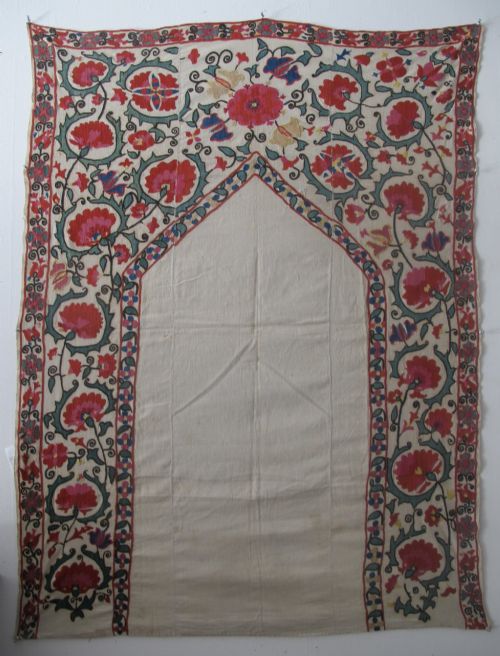
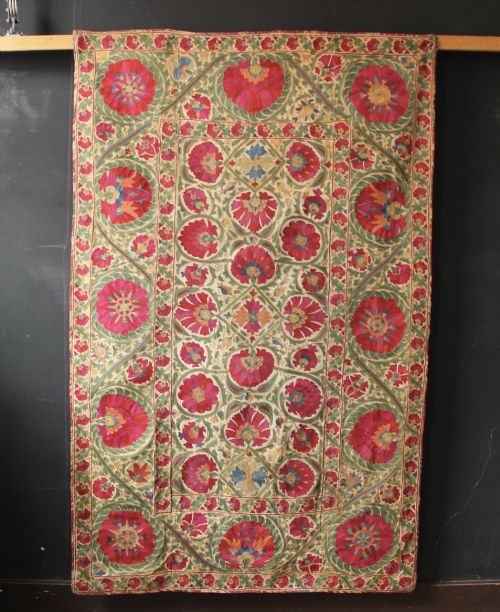
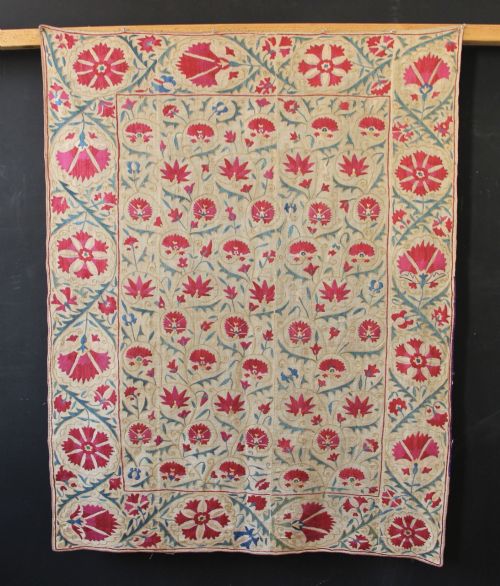
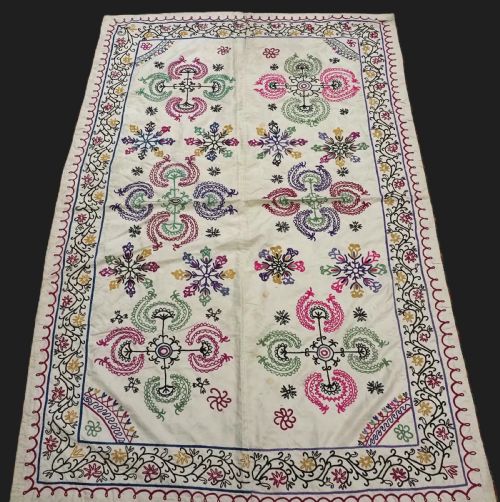
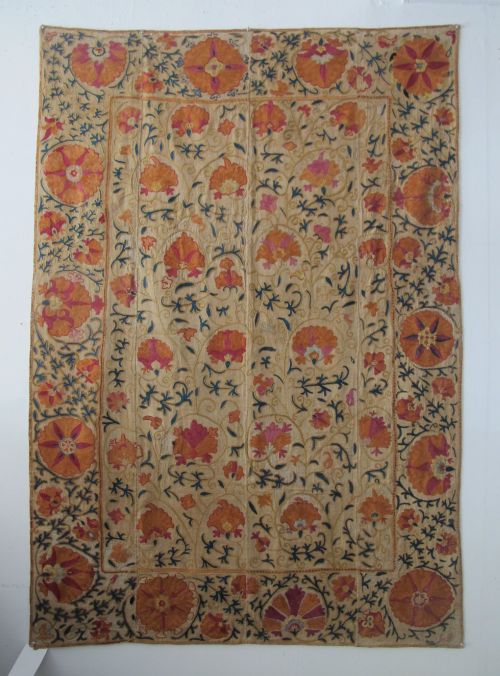
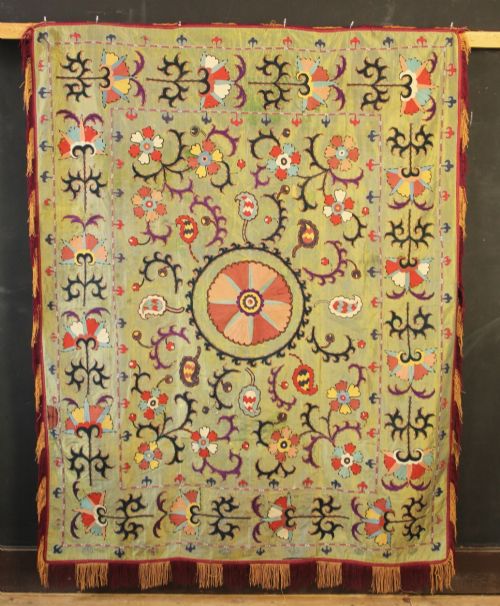
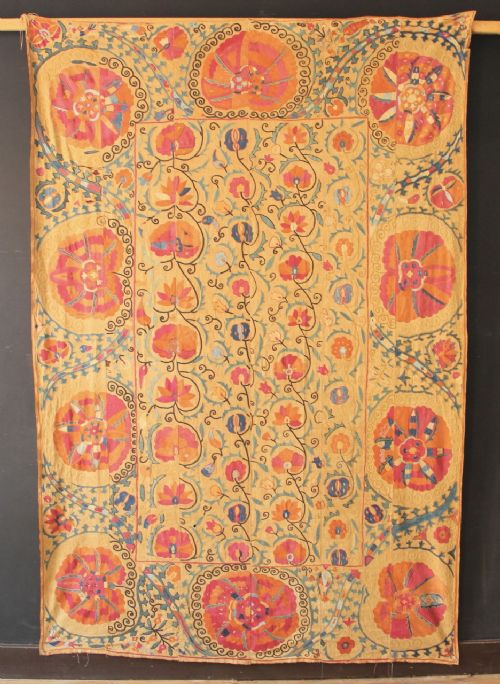
A suzani tapestry hanging is a richly embroidered Central Asian textile created for domestic display and ceremonial use, sought after for its vibrant palette and intricate needlework.
Suzani Tapestry Hanging
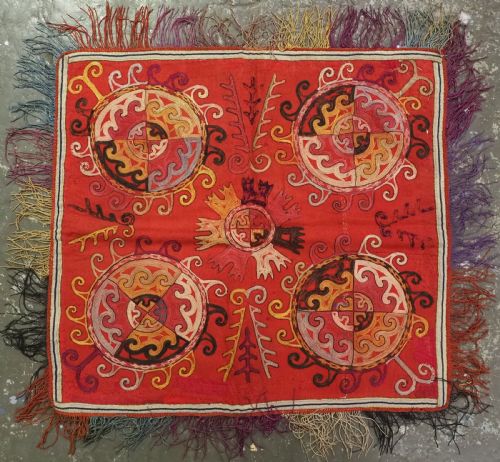
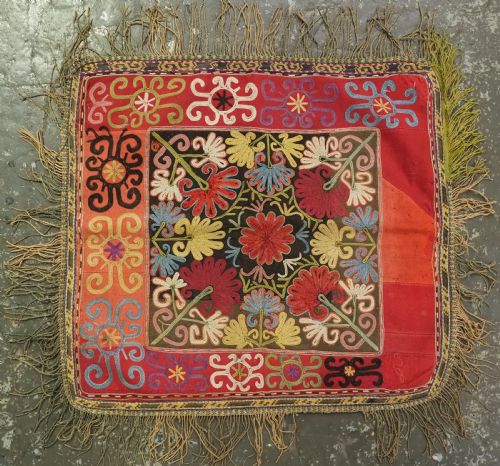
A suzani tapestry hanging originates primarily from Central Asian regions including Uzbekistan, with examples spanning from the mid nineteenth century through the early twentieth century. Collectors encounter various formats on this page, ranging from full scale wall hangings and palak designs to smaller nim suzanis and specialised dowry embroideries.
The traditional forms encompass prayer formats, bed covers, and ceremonial horse or saddle covers produced by tribal groups such as the Lakai. Regional variations include work attributed to Bukhara, Tashkent, Samarkand, and Shahrisabz, each displaying distinct composition styles and motifs.
Makers designed these textiles to serve functional and ceremonial roles within nomadic and settled households, utilising traditional Central Asian folk art patterns. The historical output relies heavily on needlework traditions passed down through generations.
Materials and construction methods
The construction of a suzani tapestry hanging typically involves silk thread hand-embroidered onto a woven ground fabric of cotton, silk, or occasionally wool and velvet. Ground fabrics appear in various colours including red, yellow, and black, providing a strong contrast to the detailed embroidery.
Artisans executed the needlework using specialised stitches to build up dense floral, architectural, or medallion designs. Many pieces demonstrate partial embroidery on a plain ground, while others achieve full work coverage across the entire textile surface.
Materials recorded across the archive include silk, cotton, wool, velvet, and specialised silk thread embroidery.
Assessing quality and execution
The distinction between standard and superior examples of a suzani tapestry hanging lies in the density of the needlework and the complexity of the design layout. Fully embroidered palak and full work pieces demand significantly more labour than smaller nim suzani formats.
Material selection and chromatic harmony also differentiate the range, with finely spun silk threads on stable cotton or silk grounds commanding greater attention. The precision of the Central Asian motifs and the preservation of the original ground fabric determine the overall standing of an individual textile.
The Suzani Tapestry Hanging Glossary
- Suzani
- A traditional embroidered textile from Central Asia, historically made as part of a bride's dowry. These pieces utilise silk or wool threads on cotton or silk foundations.
- Nim Suzani
- A smaller half scale version of a standard suzani tapestry hanging. These compact formats were often utilised for specific domestic spaces or as dowry items.
- Palak
- A heavily embroidered suzani type featuring a dense pattern, frequently dominated by large central star motifs or full surface coverage. Tashkent examples are particularly noted for this style.
- Ilgich
- A specific form of dowry embroidery produced by the Lakai tribe in Uzbekistan. These items function as wall hangings and display characteristic tribal motifs.
- Ru-i-jo
- A traditional Central Asian bed cover or supervisory textile designed for domestic interiors. They share the same silk embroidery techniques found on wall hangings.
Suzani Tapestry Hanging: Frequently Asked Questions
What is a suzani tapestry hanging?
A suzani tapestry hanging is a hand-embroidered textile created in Central Asian regions like Uzbekistan. These items were traditionally made as part of a bride's dowry.
They display floral, architectural, or geometric designs worked in silk thread on cotton or silk grounds. Families used them to decorate the interior of nomadic yurts and permanent homes.
How do I date a suzani?
Dating a suzani relies on examining the ground fabric, dye types, and regional embroidery styles. Nineteenth century examples often display specific natural dye palettes and traditional tribal motifs.
Comparing the density of the silk work and the construction style against known historical pieces helps place the textile within periods such as the mid or late nineteenth century.
Where were suzanis made?
These textiles were produced across Central Asia, with specific urban centres and tribal groups developing distinct aesthetic traditions. Regions such as Bukhara, Samarkand, Tashkent, and Shahrisabz are prominent origins.
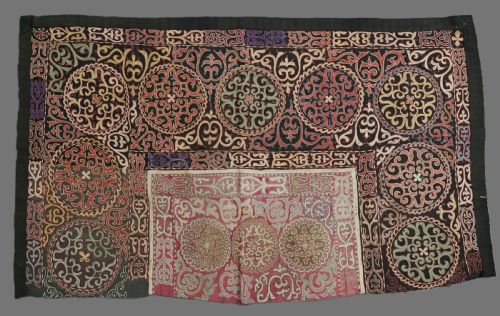
Nomadic groups like the Lakai and Kyrgyz also created unique interpretations, including yurt wall hangings and ceremonial horse covers.
How should I hang a suzani?
Displaying a suzani tapestry hanging requires careful support to distribute the weight evenly across the textile. Conservation mounting methods often involve stitching a supporting sleeve to the reverse.
Direct sunlight should be avoided to protect the silk threads and dyed cotton grounds from fading over time.