


Sumida Gawa Ceramic Vase
A sumida gawa ceramic vase brings tactile Japanese storytelling and dramatic flambé glazes directly into your room.
Sumida Gawa Ceramic Vase
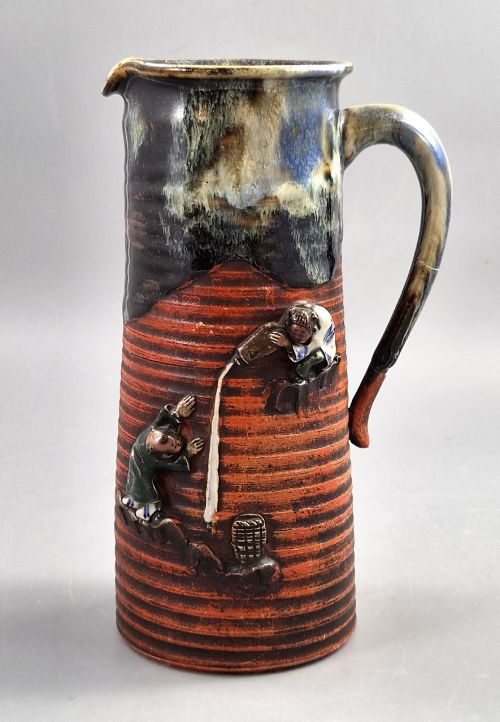
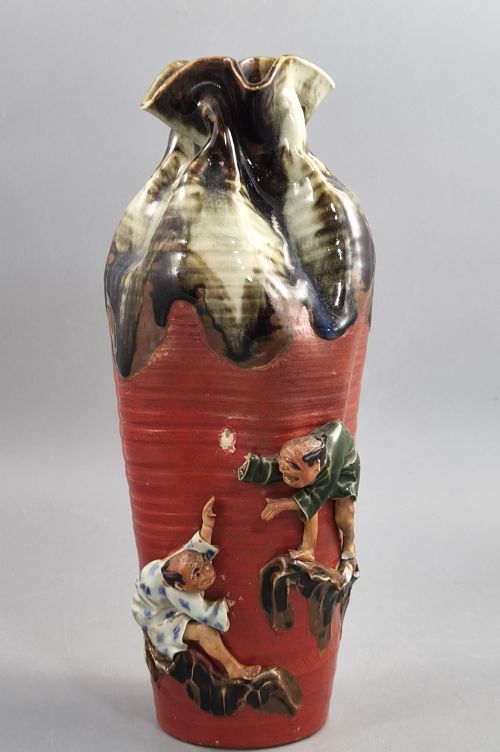
A sumida gawa ceramic vase is a distinct form of Japanese art pottery originating from the Meiji and Taishō periods. Collectors seek these pieces for their unmistakable sculptural landscapes and high-relief figures applied directly to the body. You will most frequently encounter vases, pitchers, and jars dated around nineteen hundred to the nineteen twenties.
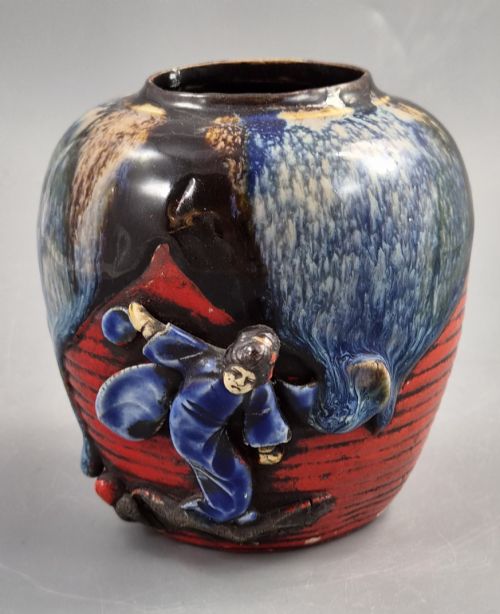
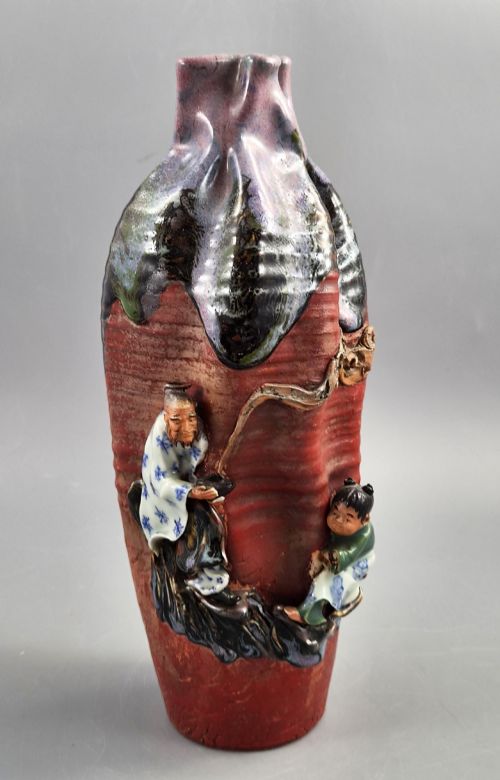
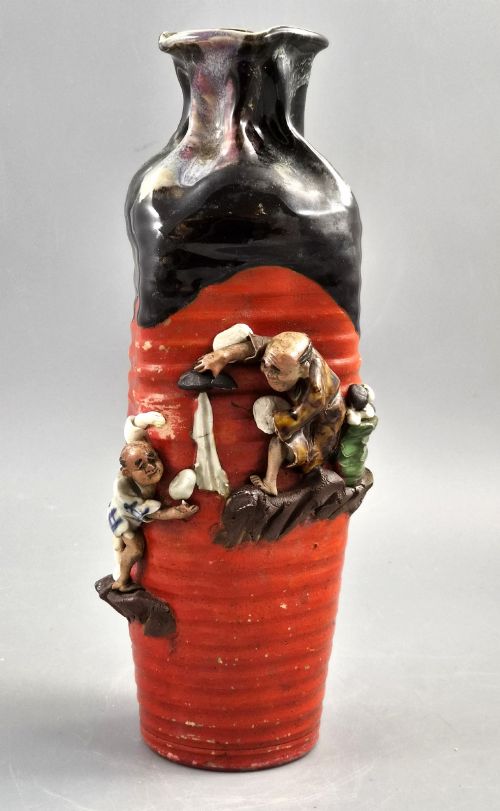
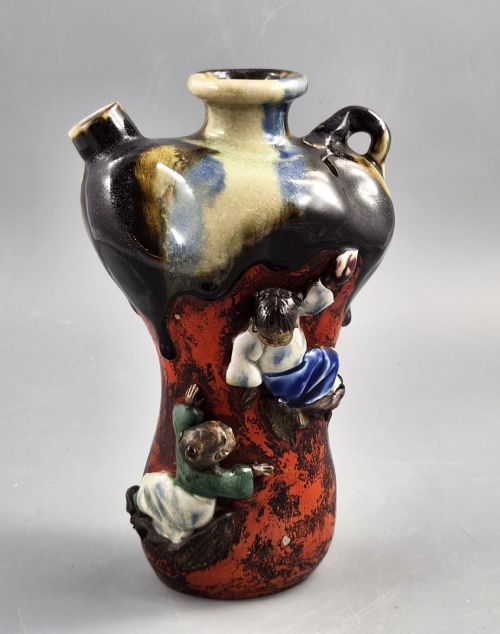
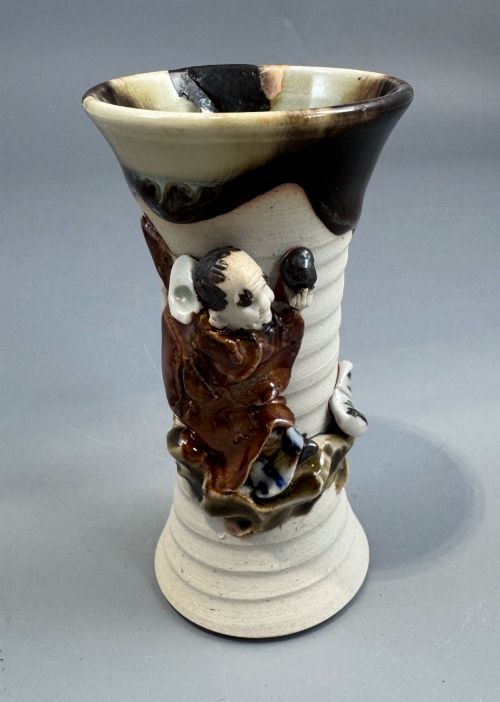
The aesthetic relies heavily on asymmetrical forms, pinched rims, and unglazed sections that contrast sharply with heavy drips of colourful glaze. Figures such as sages, children, karako, and climbing characters populate the surfaces of these vessels. Each piece functions as a three-dimensional canvas depicting traditional narratives or natural scenes.
Originating near the Sumida River in Tokyo, this pottery bridges traditional Japanese motifs with international export tastes of the early twentieth century. Pieces span the transition from the Meiji period through the Taisho and into the Showa era. The resulting objects combine robust earthenware or stoneware bodies with theatrical, narrative modelling.
How they were made
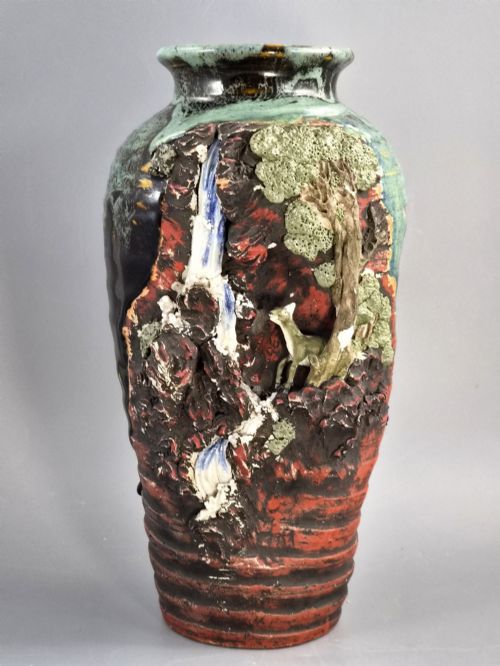
Makers built these vessels using earthenware, terracotta, or stoneware bodies, often shaping them into tall baluster forms, pitchers, or jars. Artisans applied clay figures and landscape elements by hand onto the exterior before firing. This wet-clay modelling creates the signature high-relief scenes that wrap around the vessel wall.
The documented objects span the Meiji, Taisho, and early Showa periods, capturing a distinct era of Japanese export pottery.
What varies in quality
Quality rests primarily on the crispness and complexity of the hand-modelled relief figures and landscape elements. Finer examples display expressive facial details and dynamic poses, such as figures climbing the walls or interacting across the vessel. Softer modelling and cluttered composition generally indicate lower artistic ambition.
The control and depth of the flambé glaze also separate standard output from superior studio work. Rich, dripping oxblood or deep blue glazes that pool evenly around the applied elements elevate the piece. The stability of the pinched rim and the integration of the signature seal further distinguish the tier of the work.
Inoue Ryosai·Ban-ni·Hiroshi
The Sumida Gawa Ceramic Vase Glossary
- Flambé glaze
- A streaky, variegated ceramic glaze achieved through reduction firing and controlled kiln atmospheres. It creates dramatic runs of blues, reds, and lavenders across the vessel.
- Karako
- A traditional decorative motif depicting Chinese children at play, frequently utilised in East Asian art. These figures appear as applied reliefs clambering across the ceramic body.
- Rakan
- An enlightened disciple of the Buddha, commonly represented in traditional sculpture and pottery. On these vessels, they appear as bearded sages integrated into rocky landscape scenes.
- Baluster
- A vertical architectural form featuring a rounded body tapering toward a narrow neck. This shape serves as a primary foundation for tall Japanese vases.
Sumida Gawa Ceramic Vase: Frequently Asked Questions
How do I identify a genuine period piece?
Examine the weight and texture of the earthenware or stoneware body alongside the hand-modelled relief work. Period pieces from the early twentieth century exhibit natural wear and deliberate textural contrasts between the unglazed clay and the glossy glaze.
Look for impressed or painted signatures from known makers near the base. The presence of authentic flambé runs and distinct Meiji or Taisho stylistic conventions further supports period attribution.
What subjects appear on these vessels?
Common subjects include sages, scholars, and karako figures climbing across cliffs or rocky outcrops. Natural elements like waterfalls, stags, and trees also wrap around the sculptural landscape.
These narratives draw from traditional folklore and daily observations. The figures are built in high relief so they physically project outward from the main body of the vase.
Where were these ceramics made?
These pieces were produced in workshops located near the Sumida River in Tokyo during the late nineteenth and early twentieth centuries. The production catered heavily to both domestic tastes and the burgeoning international export market.
Potters adapted traditional Japanese techniques to create these distinct export wares. The regional style remains tied to the Tokyo manufacturing history of the Meiji and Taisho eras.
How should I display a sculptural vase?
Place the vessel where side lighting can catch the high-relief figures and accentuate the depth of the glaze. Keeping the piece away from direct, harsh sunlight preserves the surface enamels and underlying terracotta or stoneware.
Allow enough space around the vase to view the narrative scenes from multiple angles. Because the decoration wraps entirely around the body, rotational placement reveals different parts of the story.