





Japanese Relief Figure Pottery
Japanese relief figure pottery brings together sculptural modelling and fluid ceramic glaze, offering striking domestic vessels populated by expressive three-dimensional figures.
Japanese Relief Figure Pottery
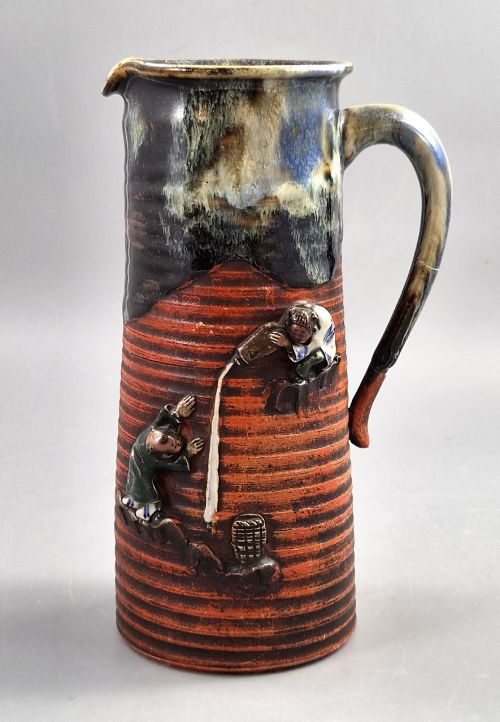
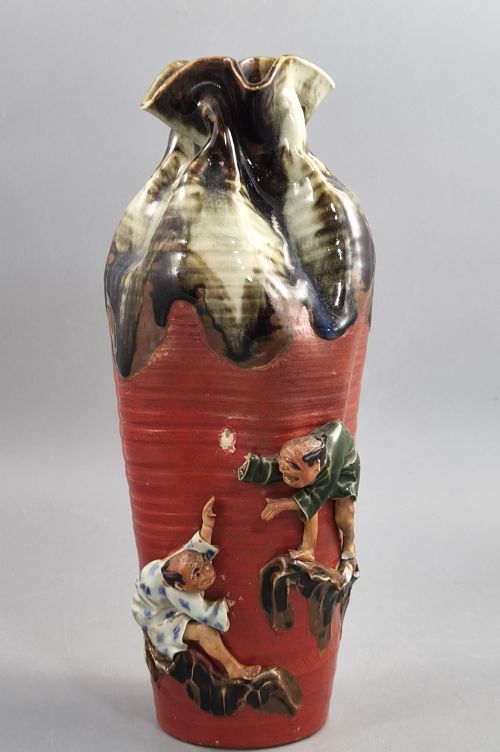
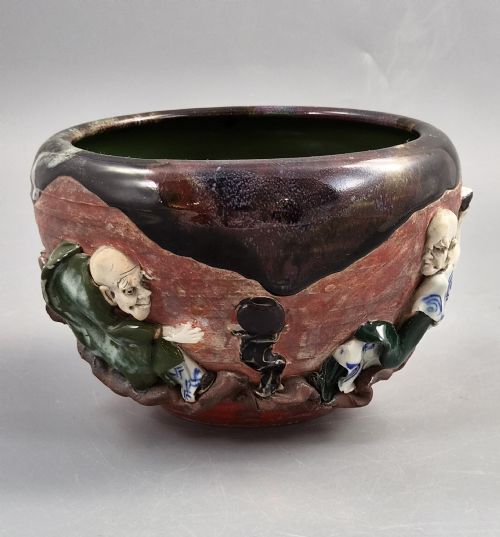
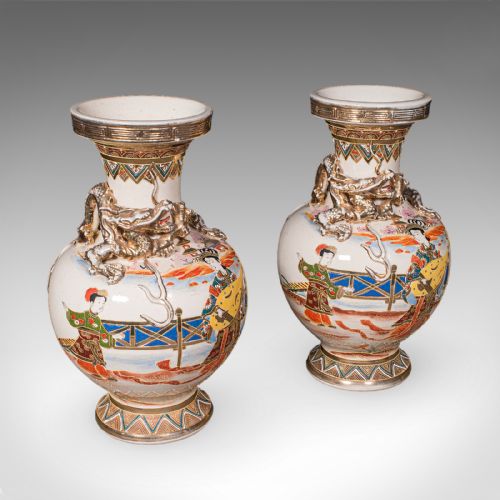
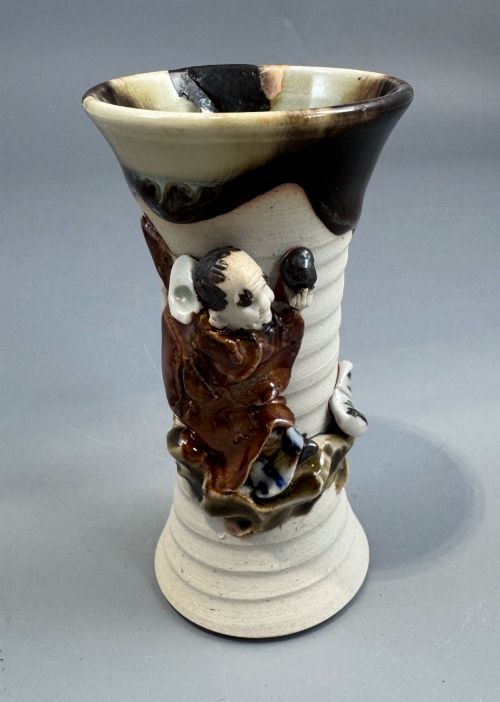
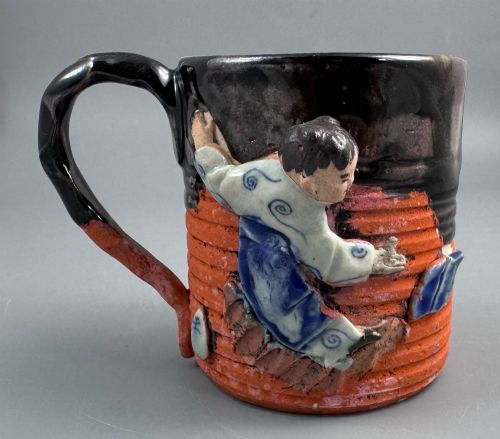
Japanese relief figure pottery centres primarily on Sumida Gawa wares originating from the Meiji and Taisho periods. These pieces take the form of vases, pitchers, jars, bowls, mugs, and teapots created for both export and domestic markets.
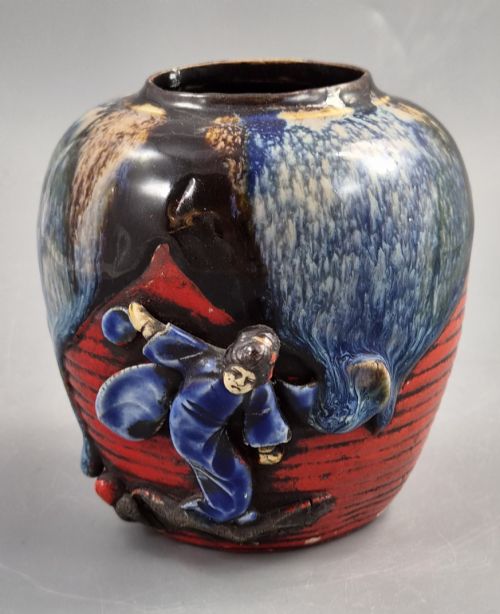
Buyers will most frequently encounter earthenware and stoneware vessels finished with distinctive flambe, lavender, or oxblood glazes. These works bridge the gap between traditional Japanese ceramic arts and late-nineteenth-century decorative tastes.
Materials and techniques
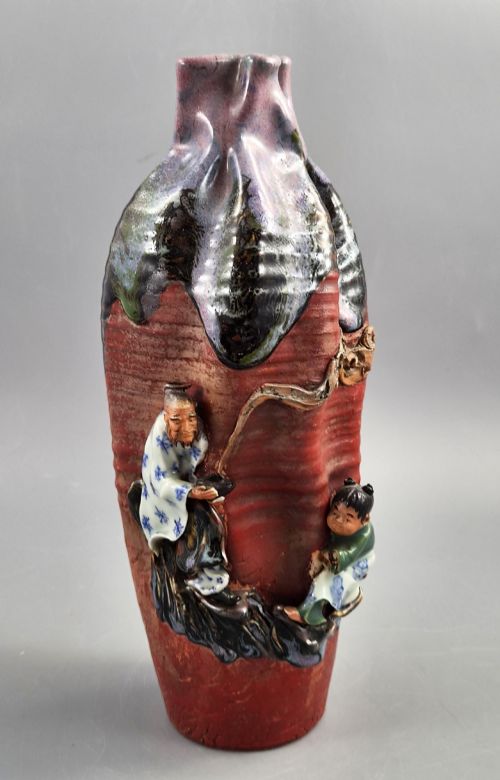
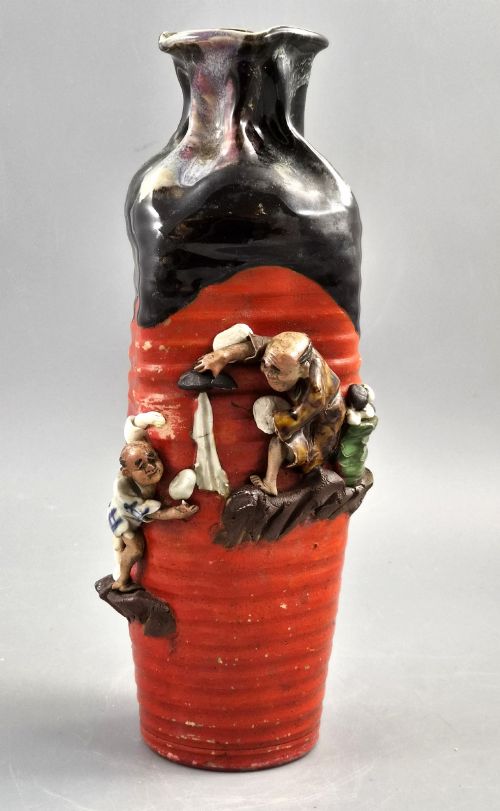
Potters built these vessels using earthenware, terracotta, or stoneware bodies formed into pitchers, bowls, and tall baluster vases. Artisans then hand-modelled human figures separately before applying them directly to the damp or leather-hard clay surface.
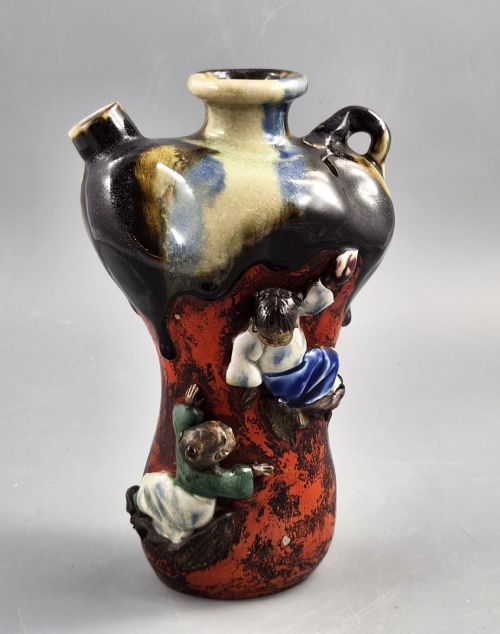
Makers finished the pieces with complex ceramic glazes, notably dripping flambe, lavender, and oxblood treatments that pool around the applied figures. Enamel details often highlight the faces and robes of the sages and children clambering up the sides.
Keep a thumb ready for the pinched rims designed to help grip a heavy, figure-laden pitcher without disturbing the climbing sages.
Assessing quality and execution
Quality rests upon the animation and modelling of the applied figures rather than uniform perfection. The most successful examples display deep, expressive character work in the faces of the sages and climbing children.
The interaction between the glaze and the body dictates visual success. Superior pieces feature controlled yet dramatic flambe runs that accentuate the pinched rims and textured surfaces without obscuring the relief work.
Inoue Ryosai·Ban ni·Hiroshi
The Japanese Relief Figure Pottery Glossary
- Sumida Gawa
- A distinct type of Japanese pottery originating from the banks of the Sumida River in Tokyo. These wares are characterised by heavily textured surfaces and applied figures in high relief.
- Flambe glaze
- A streaked or mottled ceramic finish created by metallic oxides fired in a reduction kiln. This technique produces dramatic pools of colour such as oxblood and lavender.
- Rakan
- A term for a disciple of Buddha, frequently depicted as a sage in these ceramic reliefs. They appear climbing or contemplating along the sides of vases and mugs.
- Karako
- A traditional decorative motif depicting a Chinese child at play. These figures often scramble up the bodies of teapots and pitchers.
- Earthenware
- Porous pottery fired at lower temperatures, commonly utilised for the heavily modelled bodies of these vessels. It provides a stable base for thick, applied glazes.
Japanese Relief Figure Pottery: Frequently Asked Questions
How were the figures attached?
The human figures, such as sages and children, were hand-sculpted separately from the main body of the vessel. Artisans then applied them directly onto the wet clay surface before glazing and firing.
This method created a dynamic, three-dimensional scene where characters appear to climb or peer over the rims of pitchers and jars.
What glazes are common?
These pieces frequently feature rich flambe glazes in shades of lavender, blue, and deep oxblood. The glaze often drips thickly down the sides, pooling around the applied figures to create textural contrast.
Enamel highlights were also added to details on the robes and faces to bring further definition to the modelled scenes.
How do I date these pieces?
Dating relies heavily on stylistic markers associated with the Meiji and Taisho periods, spanning from the late nineteenth century into the early twentieth century. Many works bear signatures or artist seals impressed into the clay.
The specific combination of earthenware bodies, flambe glazes, and applied relief figures points firmly to this distinct era of Japanese export and domestic art pottery.