


Japanese Stoneware Pottery Vase
These japanese stoneware pottery vase pieces bring tactile presence and rich historic character into a room.
Japanese Stoneware Pottery Vase
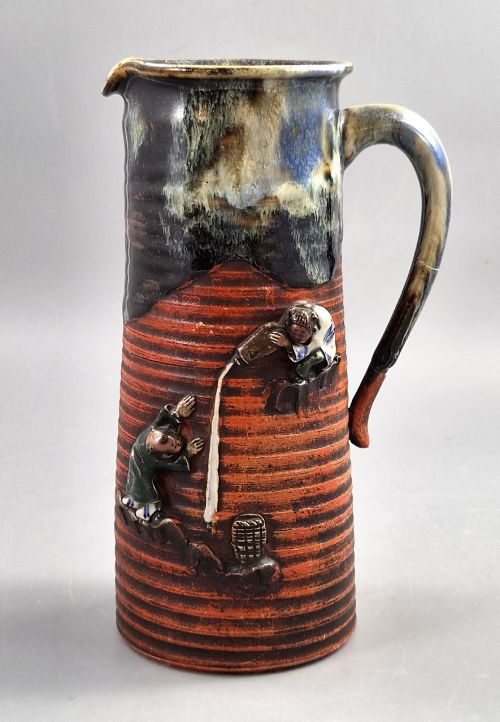
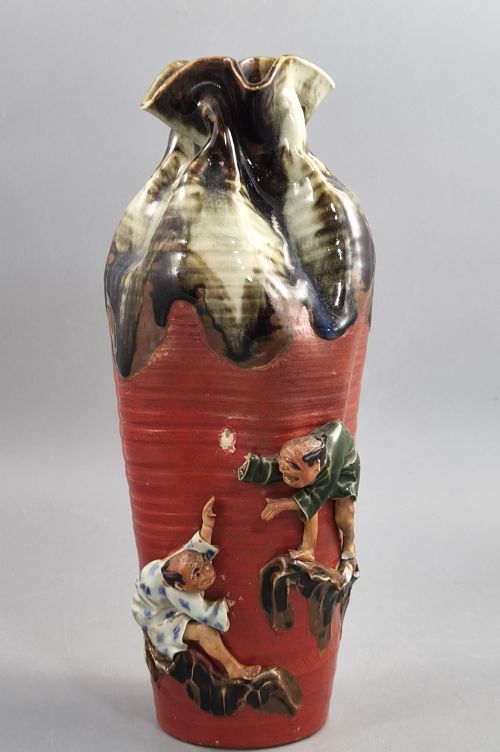
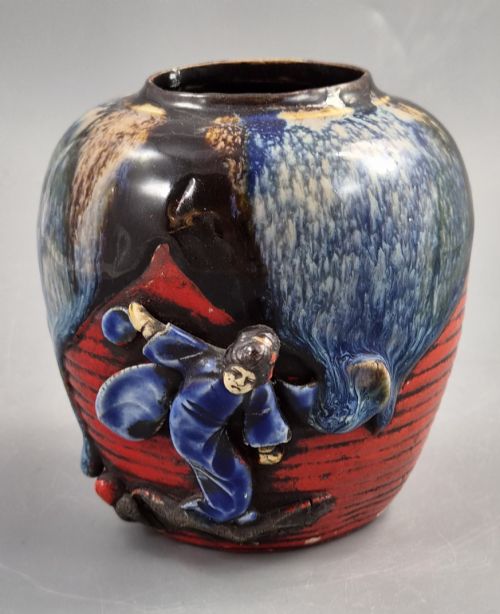
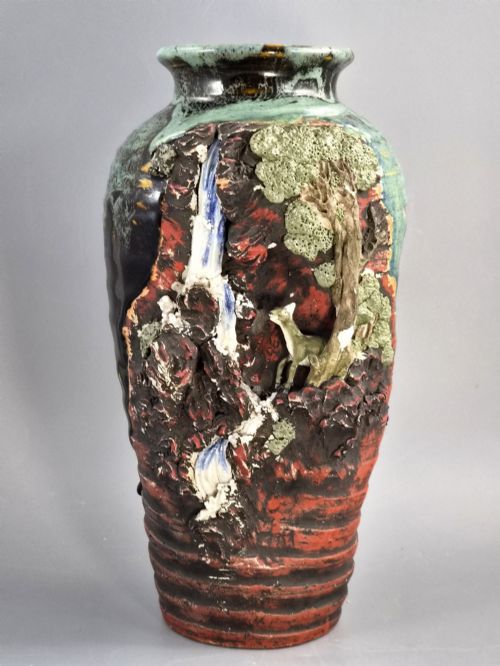
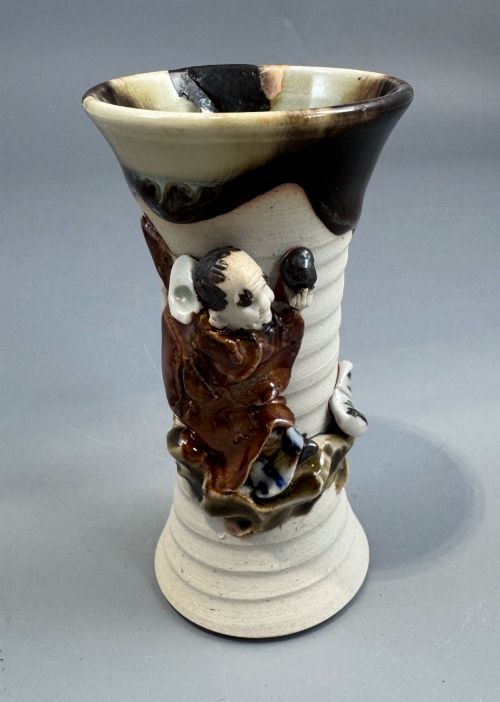
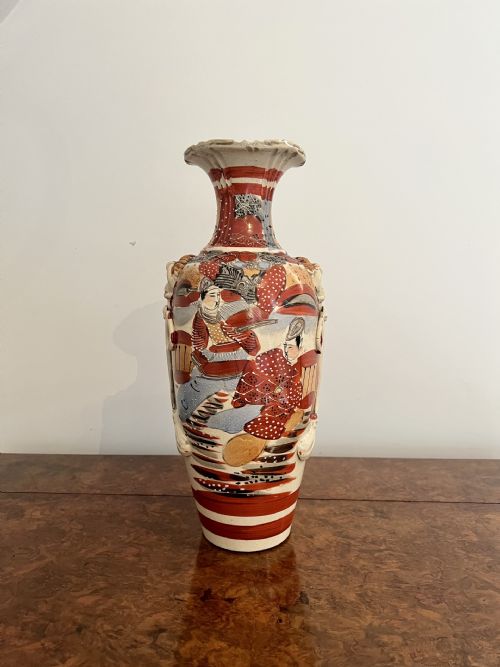
You are most likely to meet heavily modelled Sumida Gawa pieces covered in flamboyant drips, flambe glazes and applied human or animal figures. Alongside these sculptural vessels sit refined studio pottery creations and large hexagonal containers. Together, they represent a period of remarkable diversity in Japanese ceramic art that moves far beyond simple utilitarian ware.
Materials and construction
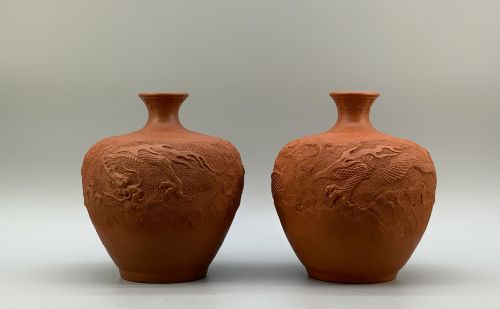
Makers shaped these vessels from dense stoneware, terracotta and red clay, forming sturdy bodies designed to hold heavy glazes. Artisans applied liquid ceramic glazes, including rich oxblood and flambe surfaces, which pooled and ran naturally during the firing process. Many pieces incorporate expressive applied figures modelled separately and attached by hand before glazing.
Surface decoration frequently relies on textured slip, enamel highlights and touches of gold leaf over the fired ceramic body. Workshops utilised pinched rims, faceted hexagonal sides and carved landscape details to give the heavy clay a sense of dynamic movement. Every technique serves to emphasise the physical weight and organic texture of the material.
Several stubborn frogs and tiny children insist on climbing forever up the sides of these stubborn ceramic vessels.
Assessing the work
Quality in these ceramics rests upon the control of the glaze and the vigour of the modelling. Superior examples display deeply saturated flambe colours that pool evenly without obscuring the fine details of applied figures. The best makers achieved a lively balance between the heavy stoneware body and the sculptural elements crawling across the surface.
Inoue Ryosai·Makuzu Kozan II·Hattori
The Japanese Stoneware Pottery Vase Glossary
- Stoneware
- A robust ceramic fired at high temperatures until vitrified and rendered completely non-porous. This dense body provides the durable foundation for heavy glazes and sculptural additions.
- Flambe
- A streaked or mottled glaze effect achieved through reduction firing of metallic oxides. The technique creates unpredictable pools of vibrant colour that run down the sides of the vessel.
- Meiji Period
- The era in Japanese history lasting from eighteen sixty-eight to nineteen twelve, marked by rapid modernisation and intense artistic output for export. Ceramics from this time often blend traditional motifs with innovative glazing methods.
- Jardiniere
- A large ornamental pot designed to hold a living plant or floral arrangement. These substantial ceramic containers usually feature decorated exterior surfaces meant to be viewed from all sides.
- Terracotta
- Unglazed or porous fired red clay used for sculptural elements and vessel bodies. Its warm reddish-brown tone provides a contrasting matte texture beneath glossy surface treatments.
Japanese Stoneware Pottery Vase: Frequently Asked Questions
How do I clean my vase safely?
Dust the surface gently with a soft, dry brush to protect delicate applied figures and aged glaze from accidental damage. Avoid using chemical cleaners or soaking the vessel in water, as old ceramic bodies can absorb moisture through microscopic fissures.
Keep these pieces away from direct sunlight and areas prone to heavy temperature fluctuations to preserve the stability of the clay and enamel decoration over time.
What is Sumida Gawa pottery?
Sumida Gawa refers to a distinct style of Japanese ceramic originating near Tokyo around the turn of the twentieth century. These pieces are immediately recognisable by their heavily dripped flambe glazes and sculptural figures climbing across the exterior.
Potters such as Inoue Ryosai produced these expressive works, which often depict folkloric scenes, animals or everyday characters modelled in high relief against a textured background.
How do I date these ceramics?
Examine the stylistic markers, glaze types and any applied signatures to establish a chronological window. Most pieces appearing in this category originate from the Meiji and Taisho periods, spanning roughly from eighteen eighty to nineteen thirty.
Changes in export stamps, studio marks and the evolution from traditional Satsuma aesthetics to experimental studio pottery help narrow down the exact decade of manufacture.
Where should I display these vessels?
Position your vase on a stable, level surface where its weight is fully supported and accidental knocks are prevented. Because many of these pieces feature intricate sculptural elements in high relief, placing them at eye level allows for close appreciation of the modelled details.
Ensure the display area receives balanced ambient light rather than harsh spotlights that might cause uneven fading on sensitive enamel or gold leaf highlights.