
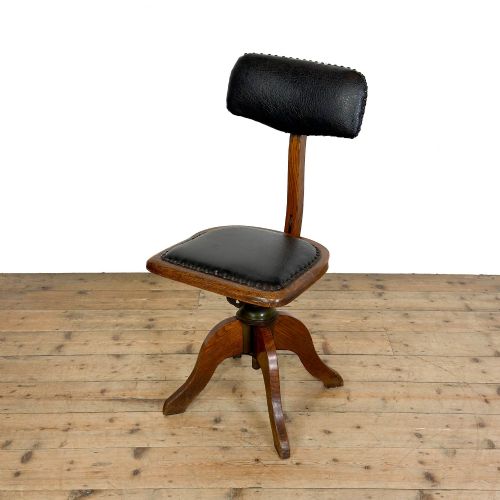


Studded Leather Swivel Chair
A studded leather swivel chair is a functional antique workspace seat, combining traditional upholstery with a revolving mechanism for the working room.
Studded Leather Swivel Chair
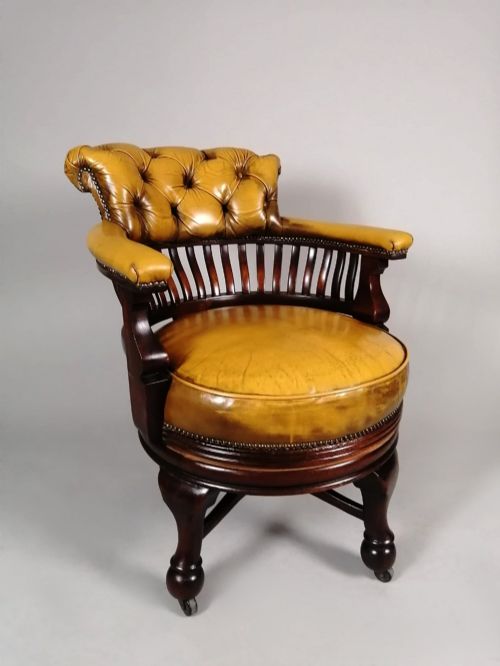
A studded leather swivel chair serves as a practical workspace seat, typically encountered in forms designed for offices and studies. These pieces primarily date from the nineteenth and early twentieth centuries, spanning the Victorian, Edwardian, and Arts and Crafts periods.
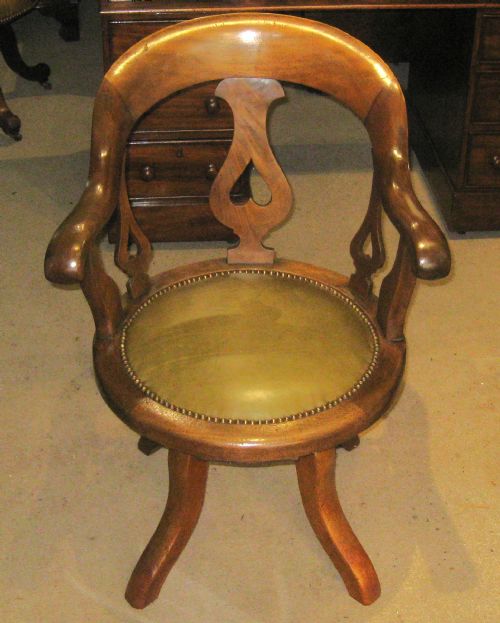
The most common versions on this page are desk chairs and revolving armchairs constructed from timber with leather upholstery. They incorporate pivoting and tilting mechanisms to suit the requirements of a working environment.
Materials and construction
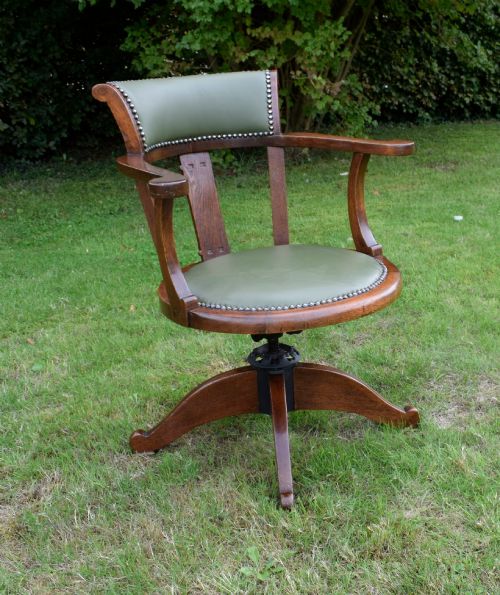
Makers utilised timber frames of oak, mahogany, walnut, beech, and teak, often pairing them with iron or cast iron swivel components. Brass studs secure the leather upholstery to the seat and backrest.
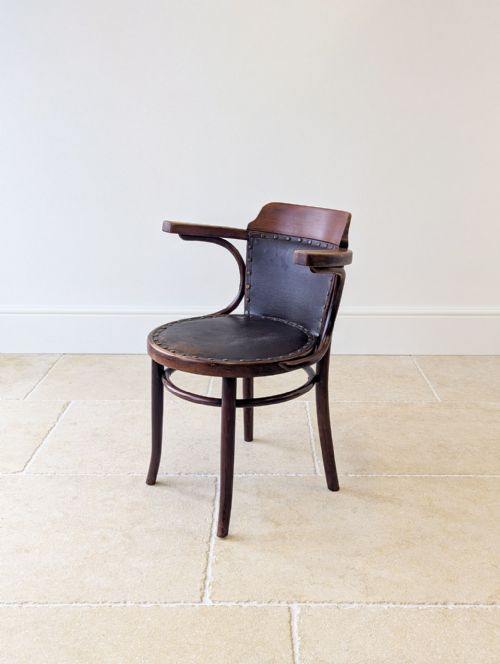
Bentwood techniques appear alongside traditional joinery, creating curved frames suitable for revolving seats and adjustable office chairs.
The listings span from the late nineteenth century through the Edwardian era into the 1920s, featuring oak, mahogany, leather, and cast iron.
Factors of quality
Quality depends upon the choice of timber and the complexity of the revolving and tilting mechanism. Solid hardwoods like mahogany and oak indicate superior construction compared to softer secondary woods.
The fineness of the leather upholstery and the neatness of the brass studding reflect the original workshop standards. Sturdiness in the iron swivel base distinguishes more robust commercial or office models from lighter domestic seating.
Kendrick and Jefferson
The Studded Leather Swivel Chair Glossary
- Swivel
- A mechanism allowing the upper portion of the chair to rotate fully on its base. This function became common in office furniture during the late nineteenth century.
- Bentwood
- Wood steamed and bent into curved structural shapes. It provides resilience and graceful lines in Edwardian seating.
- Hide
- The natural leather skin used for upholstery. It offers durability for daily use in desk chairs.
- Tilt
- A mechanical adjustment enabling the seat back to recline slightly. It adds comfort during long periods of work.
Studded Leather Swivel Chair: Frequently Asked Questions
How do I date a swivel chair?
Dating relies on the style of the timber frame and the complexity of the iron swivel mechanism beneath the seat. Victorian and Edwardian examples show distinct turning and joinery details.
Material choices also guide dating, as early twentieth-century offices introduced new forms alongside traditional nineteenth-century mahogany and oak designs.
Were these chairs used only for desks?
While primarily designed as desk and office chairs, the mechanisms suited various working environments. Specific variants served as ships chairs or music seating.
The inclusion of swivel actions and adjustable heights made them adaptable for tasks requiring mobility within a fixed workspace.
What woods were commonly used?
Makers selected sturdy hardwoods such as oak, mahogany, and walnut for their durability in daily office use. Beech and teak appear in specific regional or utilitarian designs.
Secondary timbers often form the internal structures beneath the leather upholstery and iron mechanisms.
How does the swivel mechanism work?
The mechanism typically employs a central iron spindle attached to a spider base with legs. This allows the seat to rotate through a full circle.
Additional adjustments often permit the chair to tilt backward, supported by metal springs or threaded spindles.