


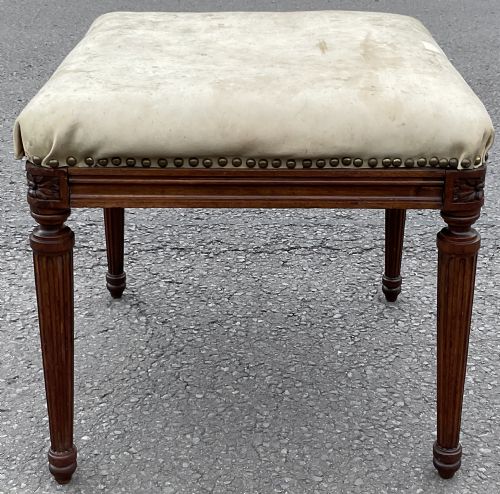


Studded Leather Ottoman Bench
These studded leather ottoman bench examples combine sturdy hardwood frames with brass upholstery pins and supple hides to offer versatile seating and storage.
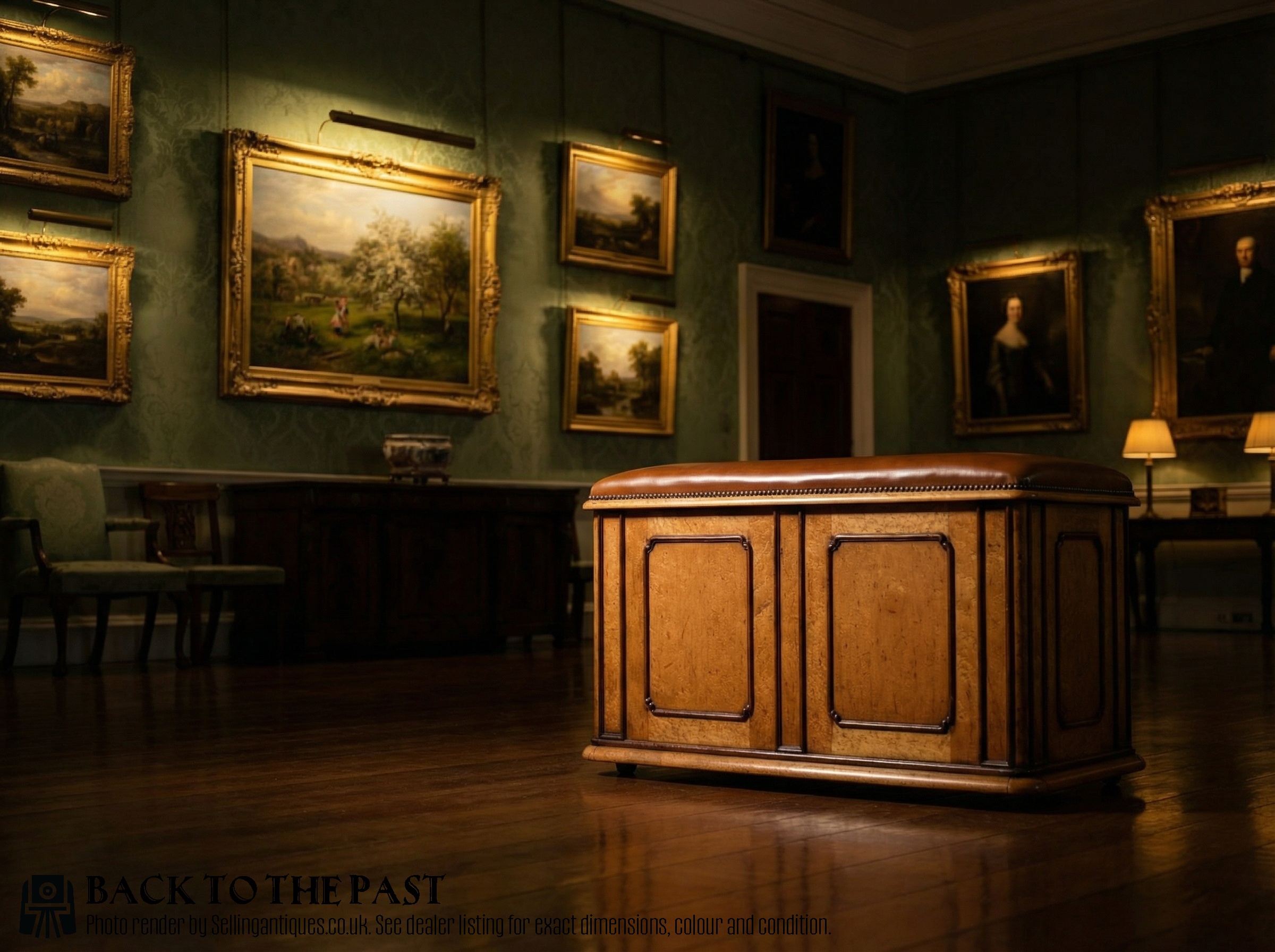
Studded Leather Ottoman Bench
A studded leather ottoman bench serves multiple domestic roles, functioning as a low seat, a footrest, or a concealed storage box depending on its specific historical form. Buyers searching for a studded leather ottoman bench will encounter various iterations spanning the nineteenth and early twentieth centuries, from formal Regency long benches to robust Edwardian oak stools and Victorian blanket boxes.
The objects listed on this page cover distinct periods including the Regency, Victorian, and Edwardian eras, alongside stylistic revivals such as Gothic and Carolean. Forms range from compact dressing stools and footstools to large country house ottomans and long window benches supported by fluted legs or carved lion heads.
Material combinations dictate the overall character of each piece, uniting timber frames of mahogany, oak, birch, or rosewood with leather upholstery secured by brass studs. Whether configured as a buttoned footstool or a box ottoman, these furnishings bridge the gap between practical utility and period craftsmanship.
Materials and construction
Makers constructed the structural frames of these pieces using solid timbers such as mahogany, oak, birch, walnut, and rosewood. These hardwoods provided the necessary rigidity for long benches, footstools, and blanket boxes designed to endure heavy daily use.
Upholstery techniques combined hand-dyed or coloured leather with traditional stuffing methods, secured at the edges by individual brass studs. Cabinetmakers and upholsterers shaped the timber frames with turned or fluted legs, carved lion heads, and hinged lids for box compartments.
The listings here encompass multiple timber species including mahogany, oak, birch, walnut, and rosewood across nineteenth and early twentieth-century periods.
Evaluating craftsmanship and proportion
Quality in these pieces rests upon the integrity of the timber framing and the skill of the joinery, distinguishing sturdy architectural builds from simpler constructions. Well-executed turning on legs, precise carving on elements like lion heads, and sound framing underpin the more accomplished examples.
The treatment of the leather and the precision of the brass studding further differentiate the work. Hand-dyed hides, buttoned upholstery, and careful alignment of individual studs indicate a higher standard of manufacture by period artisans.
The Studded Leather Ottoman Bench Glossary
- Ottoman
- A low upholstered seat or footstool without a back or arms, often featuring a hinged lid that opens to reveal storage space inside.
- Buttoned
- An upholstery technique where depressions are formed in the padded surface by pulling twine or thread through to the frame, secured with leather-covered or contrasting buttons.
- Regency
- An English architectural and decorative style spanning the early nineteenth century, characterised by classical restraint, elegant proportions, and influences from antiquity.
- Carolean
- A seventeenth-century English style revived in later furniture, known for richly carved woodwork, turned supports, and low seating proportions.
- Blanket Box
- A large chest or trunk designed for storing linens and blankets, sometimes adapted with an upholstered top to function as a seat or bench.
Studded Leather Ottoman Bench: Frequently Asked Questions
What is a studded leather ottoman bench used for?
These pieces functioned historically as domestic seating, footrests, or storage receptacles for household textiles like blankets and linens.
Today, they serve equally well as flexible living room furniture, combining a sturdy surface for resting feet with practical interior storage.
How do I date a Victorian leather ottoman?
Dating relies on examining the timber species, structural joinery, and stylistic markers characteristic of the nineteenth century.
Victorian pieces often employ dense mahogany or walnut frames alongside buttoned leather upholstery and traditional hand tools.
What timber was used for these benches?
Cabinetmakers utilised a variety of hardwoods depending on the period and the desired finish of the furniture.
Common timbers found in these frames include mahogany, oak, birch, walnut, and rosewood.
How should I care for antique leather upholstery?
Leather requires maintenance to prevent the hide from drying out or cracking over extended periods of domestic use.
Applying suitable conservation leather creams and keeping the piece away from direct heat sources helps preserve the material.