



Studded Leather Coffer Chest
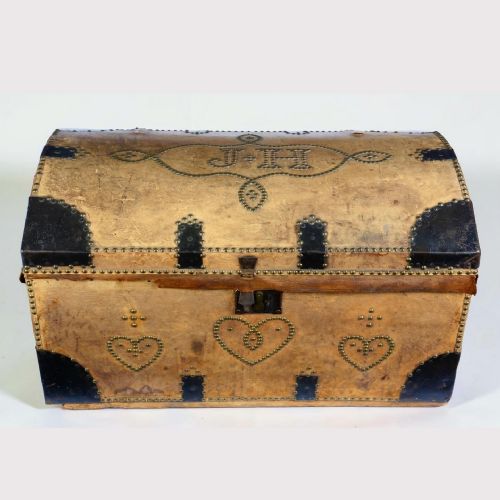
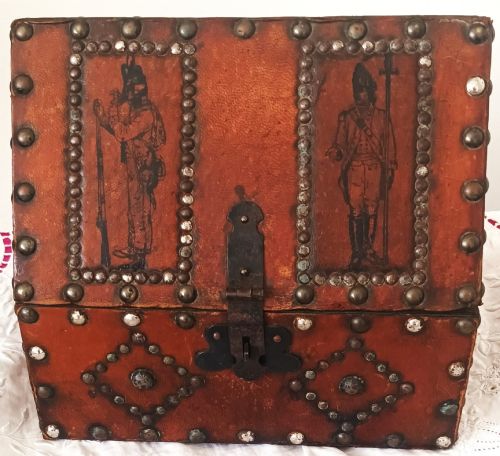
A studded leather coffer chest is a sturdy portable container built to carry valuables across long journeys.
Studded Leather Coffer Chest
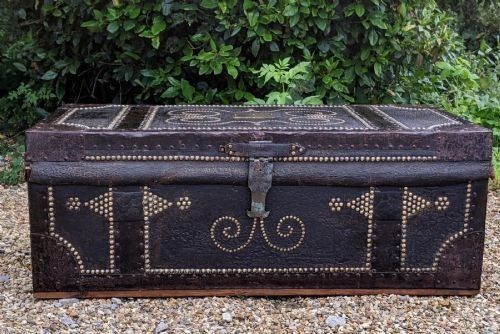
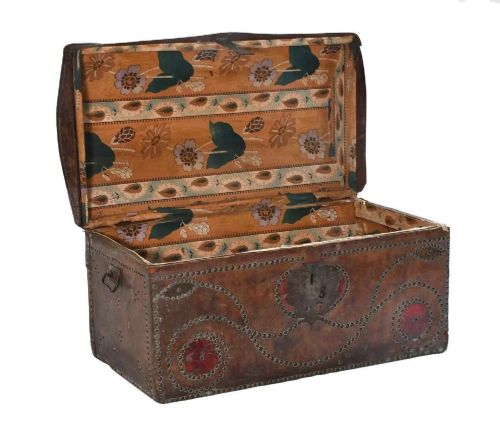
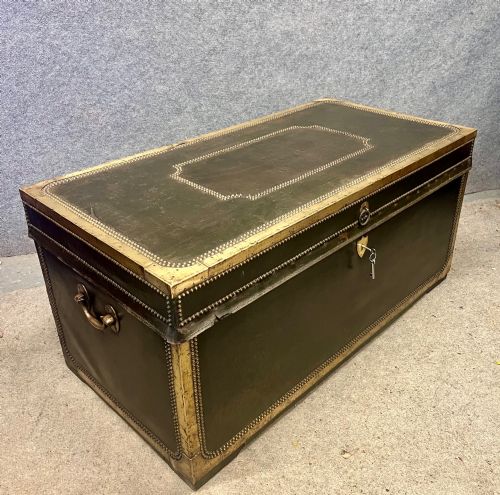
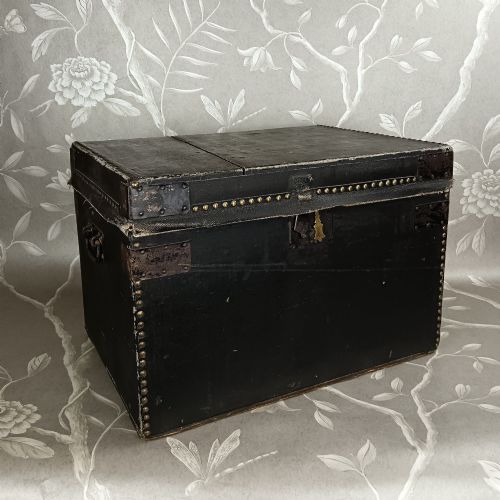
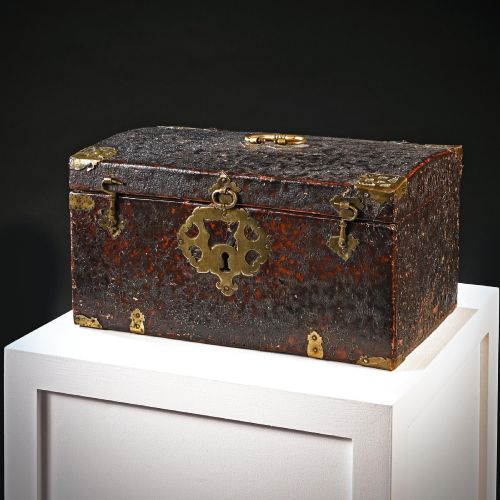
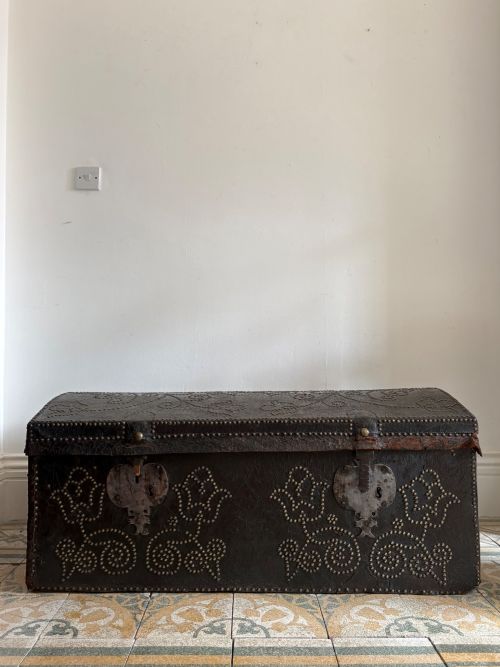
When searching for a studded leather coffer chest, buyers encounter practical containers that doubled as luggage and household storage across several centuries. The examples seen on this page span from the seventeenth century through the Victorian era, showing how travel furniture evolved.
Most pieces date from the nineteenth century, including Regency and Victorian examples, alongside earlier eighteenth-century and seventeenth-century variants. Forms range from dome-topped travelling trunks and heavy chests to ottomans and small caskets.
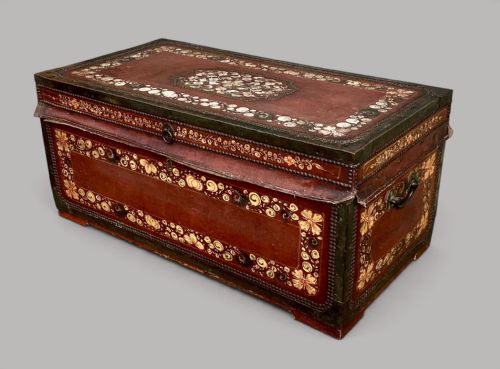
Origins vary from English workshops to Chinese Export and Spanish Baroque productions. Camphor wood appears frequently in pieces made for the China Trade, prized for keeping contents safe during long voyages.
Materials and construction methods
These pieces rely on a sturdy internal wooden carcase, often constructed from timber such as camphor wood, mahogany, or birch, which provides structural integrity. The exterior is clad in animal hide, leather, or paper, secured tightly to the wood.
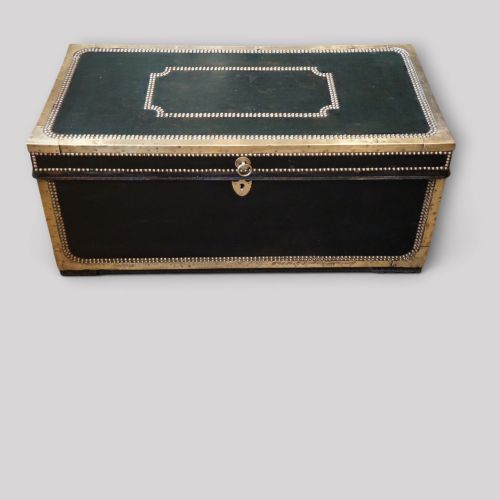
Metal components play both a functional and decorative role, with brass studs, iron mounts, and brass-bound edges reinforcing the corners and seams. Nailhead details and carry handles complete the robust exterior necessary for coaching and campaign use.
Studded Leather Coffer Chest Retail Price Guide 2026
Typical asking prices for studded leather coffer chest among the pieces listed under this phrase on Sellingantiques today, from the lower quarter to the upper quarter. They describe what is for sale here now, not the wider market.
Materials span from simple iron-bound hide to fine camphor wood clad in brass-studded leather.
Judging the standard of workmanship
Quality rests in the precision of the brass studwork and the integrity of the leather cladding. Finer examples feature intricate patterns of individual studs and robust hardware that demonstrate careful hand labour.
The choice of internal timber distinguishes standard transport trunks from superior pieces. Chests utilising fragrant camphor wood or dense hardwoods indicate a higher grade of manufacture intended for affluent travellers.
Wm. Insall of Bristol·Arthur Wannop·Chapple & Sons·Seabrook of St.Pauls London
The Studded Leather Coffer Chest Glossary
- Coffer chest
- A heavy box traditionally used for storing valuables, linens, or documents. They often feature reinforced lids and sturdy carrying handles.
- Campaign trunk
- A portable chest designed for military officers or travellers on the move. These pieces frequently incorporate durable leather and metal bindings to withstand rough transit.
- China Trade
- Goods manufactured in China specifically for export to Western markets during the eighteenth and nineteenth centuries. These items often combine Asian timber with European forms.
- Dome top
- A rounded lid profile designed to shed rainwater during travel. This shape allows extra interior volume for bulky garments.
- Studded leather
- Leather or hide surfaces decorated and secured with rows of metal nails or brass studs. This technique provides both visual rhythm and structural strength.
Studded Leather Coffer Chest: Frequently Asked Questions
What were studded leather coffers used for?
These chests served primarily as heavy-duty luggage for travellers, diplomats, and military officers on long journeys. They protected clothing, valuables, and documents against the rigours of coaching and shipboard transit.
At home, households utilised them for storing blankets, winter garments, and precious possessions. Their robust construction allowed them to function as tables or window seats in domestic settings.
How do I date a leather chest?
Dating relies on examining the construction methods, materials, and hardware styles of the piece. Seventeenth-century examples often display simpler iron mounts and heavy timber frames, while Regency and Victorian pieces incorporate refined brass studwork and sophisticated locking mechanisms.
Makers' labels, stamps, and specific wood types like camphor also help narrow down the period. China Trade pieces typically exhibit distinct decorative motifs associated with nineteenth-century export production.
Where should I place an ottoman chest?
These chests suit placement at the foot of a bed for storing spare bedding and pillows. Their flat tops provide a convenient surface for sitting while dressing.
They also work well in hallways or living rooms as coffee tables with hidden storage. Keeping them away from direct heat sources protects the antique leather and wood from drying out.
Are China Trade trunks different?
China Trade trunks are distinguished by their use of specific regional timbers, most notably aromatic camphor wood. This wood deterred insects and protected textiles during damp sea voyages from Asia.
Their exterior leather or painted finishes often reflect a blend of traditional Chinese craftsmanship and Western aesthetic demands. Surviving examples demonstrate the global nature of nineteenth-century trade.