



Studded Leather Bench
These studded leather bench pieces combine supportive seating with traditional upholstery, bringing useful surface space and character to a room.

Studded Leather Bench
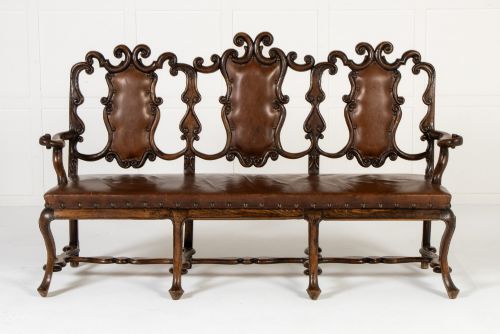
A studded leather bench covers a diverse group of low seating forms, ranging from club fenders and long stools to ottomans and settees. Buyers searching for a studded leather bench will encounter pieces spanning the nineteenth century, the Edwardian period, and the nineteen-twenties.
The selection includes low hall seats, dressing stools, and fireside seating featuring buttoned leather and brass studding. Materials vary across these forms, combining wood frames with upholstered leather seating surfaces.
Makers and workshops produced these benches across multiple stylistic revivals, including Regency, George III, and Art Deco designs. Each piece adapts the core formula of leather upholstery and structural studs to different domestic settings.
Materials and construction
Makers built the structural frames of these benches using hardwoods such as mahogany, oak, walnut, rosewood, and birch, alongside iron and brass frameworks for club fenders. These robust skeletons support the weight of daily use while providing a stable base for upholstery.
Upholstery involves fitting leather over padding, secured along the edges with visible brass studs that hold the material tight to the wooden frame. Skilled hands ensured the spacing of the studs remained even around the contours of stools, ottomans, and settees.
Listings feature eighteenth and nineteenth-century styles including Regency, George III, and Art Deco across various wooden and metallic frames.
Assessing quality
Quality shows in the weight and stability of the timber or metal frame beneath the upholstery, where denser hardwoods and solid brass or iron indicate superior construction. Finer examples feature well-turned legs, such as fluted supports or carved oak details like lions' heads.
The treatment and condition of the leather separate standard examples from exceptional ones, particularly where hand-dyed or mature tan finishes show depth. Even stud placement and firm buttoning indicate greater attention to detail during the original upholstery process.
The Studded Leather Bench Glossary
- Club fender
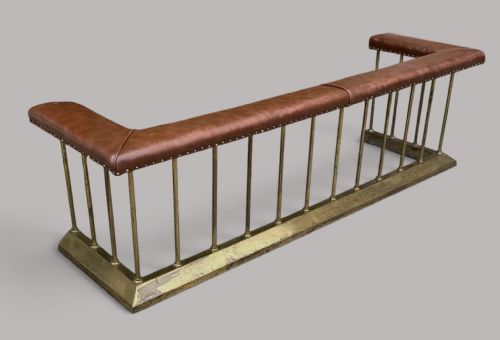
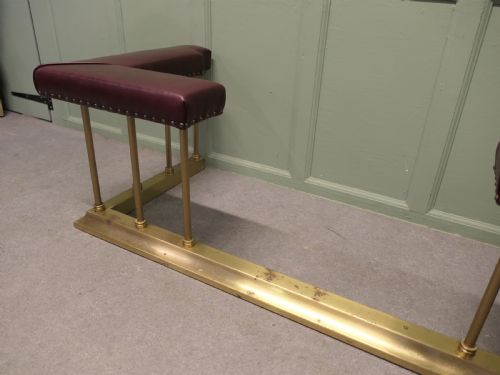
- A fireside seat with low cushioned pads, typically supported by a brass or iron frame surrounding the hearth. This form allowed people to sit close to the fire.
- Ottoman
- A padded seat or footstool without a back or arms, sometimes featuring internal storage space beneath a hinged lid. They function as both seating and resting places for feet.
- Buttoned leather
- An upholstery technique where indentations are formed in the leather using deep stitches secured by buttons. This method keeps the internal padding evenly distributed.
- Joint stool
- An early form of wooden seating constructed with pegged mortise and tenon joints rather than traditional upholstery. These sturdy pieces reflect sixteenth and seventeenth-century carpentry methods.
Studded Leather Bench: Frequently Asked Questions
Where should I place a club fender?
Club fenders suit large fireplaces in living rooms or studies, providing low seating directly around the hearth. They create a traditional fireside focal point while keeping floor space open.
Ensure you measure the hearth width and depth carefully before selecting a brass or iron fender to guarantee proper clearance for foot traffic and fireplace access.
How do I care for antique leather?
Maintain antique leather by keeping it away from direct sunlight and heat sources that dry out the material. Regular dusting with a soft cloth prevents surface grime buildup.
Apply specialised leather conditioners sparingly if the surface feels dry, testing any product on an inconspicuous area first to check for colour changes.
Can I use an ottoman as a coffee table?
Large flat ottomans serve well as coffee tables when paired with a sturdy tray to hold drinks and books. Firmly upholstered buttoned leather surfaces provide enough stability for everyday living room use.
Choose pieces with dense padding and solid wood frames to ensure the top remains level and supports placed items safely.
How do I identify a Regency bench?
Regency benches often feature classical revival motifs, including fluted legs, mahogany or rosewood timbers, and clean structural lines. These pieces reflect early nineteenth-century design influences drawn from Greek and Roman antiquities.
Examine the secondary woods and joinery methods underneath the upholstery to confirm the period construction characteristics.