

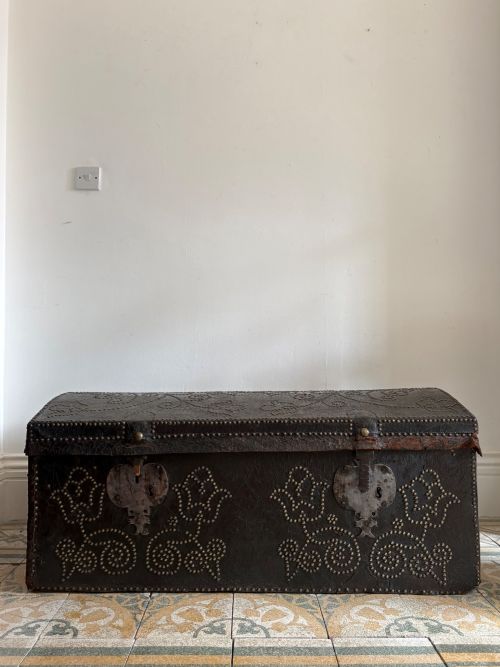
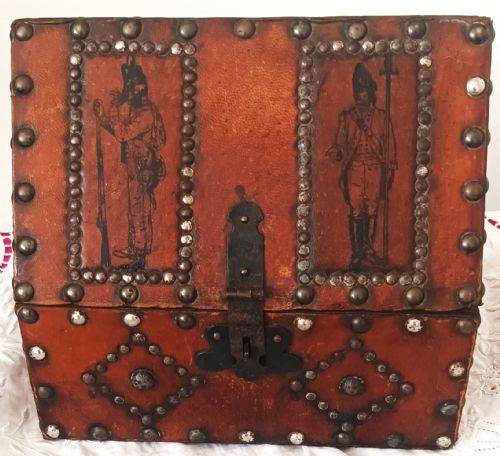


Studded Iron Bound Box
A studded iron bound box combines robust security with historic craftsmanship, offering both sturdy storage and distinctive character for any room.
Studded Iron Bound Box
When you search for a studded iron bound box, you encounter heavy-duty storage containers designed for travel, security, or domestic organisation across past centuries. These pieces encompass trunks, coffers, caskets, and strong boxes originating from diverse traditions ranging from Georgian Britain to continental Europe and beyond.
The versions most frequently met on this page span the seventeenth, eighteenth, and nineteenth centuries, including Victorian and Georgian examples. They arrive in various structural forms, featuring dome top chests, flat travelling trunks, and compact money boxes.
Geographic origins vary widely among the available selections, showing Anglo-Indian, Dutch, Scandinavian, Chinese, and Japanese influences. Each region contributes distinct construction methods and aesthetic details to the fundamental combination of wood, leather, and metal reinforcement.
Materials and construction methods
These items rely on sturdy timber foundations constructed from oak, teak, or general hardwoods, providing the primary structural integrity for heavy use. Wood panels are joined and reinforced to withstand the rigours of domestic utility or long-distance transit.
Iron and brass serve as the primary materials for structural binding, straps, and protective studs, which are fastened securely across the exterior surfaces. Leather and hide coverings frequently wrap the wooden core, held in place by rows of decorative or structural metal studs.
Smithing techniques for the wrought iron fittings involve manual shaping to follow the contours of each box, creating interlocking braces and corner plates. Handles and lockplates are forged to integrate directly with the metal strapping.
Studded Iron Bound Box Retail Price Guide 2026
Typical asking prices for studded iron bound box among the pieces listed under this phrase on Sellingantiques today, from the lower quarter to the upper quarter. They describe what is for sale here now, not the wider market.
Geographic origins range widely across the selections, including Anglo-Indian, Dutch, Scandinavian, Chinese, and Japanese traditions.
Judging quality and execution
Quality in these containers rests on the integration between the timber carcase and the metal reinforcement. Superior examples display precise blacksmithing where iron straps and studs align harmoniously with the underlying wooden structure.
The selection of covering materials dictates the tactile and visual grade of the piece, with fine-grained leather, treated hide, and select hardwoods marking higher tiers of production. Original hardware, including functional locks and authentic maker labels, elevates the integrity of the item.
Hand-painted finishes or intricate surface tooling indicate higher workshop execution compared to utilitarian versions intended purely for rough transport. The preservation of original fastening elements without later replacement parts distinguishes the best-surviving specimens.
Seabrook of St Pauls London
The Studded Iron Bound Box Glossary
- Casket
- A small decorative box or chest used for storing valuables, jewellery, or documents. These often feature finer materials and more intricate surface decoration than larger utility trunks.
- Coffer
- A stout wooden chest, typically bound with iron, traditionally utilised for storing money, plate, or valuable garments. They often feature heavy lid construction and robust locking mechanisms.
- Hide
- Animal skin prepared for preservation and used as an exterior covering on boxes and trunks. It provides a durable, weather-resistant outer layer when stretched over wood.
- Zenibako
- A traditional Japanese merchant money box featuring internal compartments and iron reinforcement. These containers reflect specific regional security practices from the nineteenth century.
- Dome top
- A rounded lid configuration designed to shed water during travel and increase internal storage capacity. This profile appears frequently on eighteenth and nineteenth-century trunks.
Studded Iron Bound Box: Frequently Asked Questions
What were studded iron bound boxes used for?
These containers served primarily for secure transport of personal belongings, valuables, and legal documents during travel across land and sea. Their robust iron strapping and heavy locking mechanisms protected contents from theft and the physical strains of transit.
In domestic settings, smaller versions functioned as desktop document holders or miniature strong boxes for household money. Larger coffers remained stationary in halls or chambers to store linens, silver, and winter garments.
How do I date a studded iron bound box?
Dating relies on observing the construction techniques of both the woodwork and the ironwork, alongside the style of locks and hinges. Earlier seventeenth-century examples typically feature hand-sawn timbers and simpler, heavier forged strapwork.
Later nineteenth-century pieces often incorporate machine-rolled metal, specific revival styles such as Baroque, or paper maker labels. Comparing the type of hide or leather covering and the fastening patterns helps narrow the period of origin.
Are these boxes suitable for modern storage?
Their solid timber frames and durable iron bindings make them exceptionally well-suited for everyday storage in contemporary living spaces. They provide deep, enclosed compartments that conceal clutter while adding historic texture to a room.
Buyers frequently place them at the foot of beds, beside sofas as coffee tables, or within studies to hold books and papers. The sturdy lids allow the surfaces to double as display areas for lamps or decorative objects.
How do I care for leather and iron on a box?
Maintaining these materials requires gentle cleaning with dry or slightly damp cloths to remove dust from crevices around the studs and straps. Avoiding excessive moisture protects both the underlying wood and any historic leather or hide coverings.
Applying microcrystalline wax sparingly to the iron elements helps prevent oxidation without altering the metal surface. Leather sections benefit from specialised conditioning balms designed for historic skins to prevent drying and cracking over time.