

Vintage Indian Chest Box
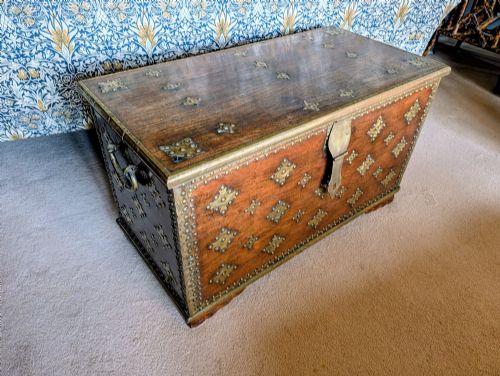
A vintage indian chest box brings heavy timber, gleaming metal mounts, and distant trade routes straight into a room.
Vintage Indian Chest Box
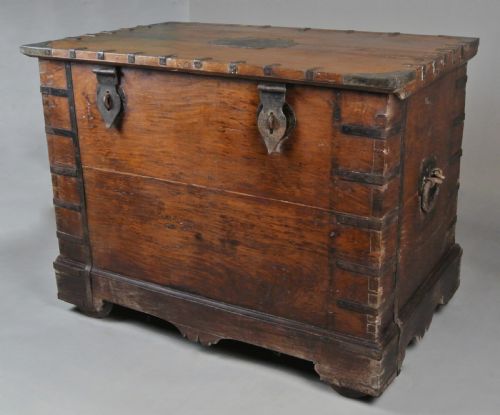
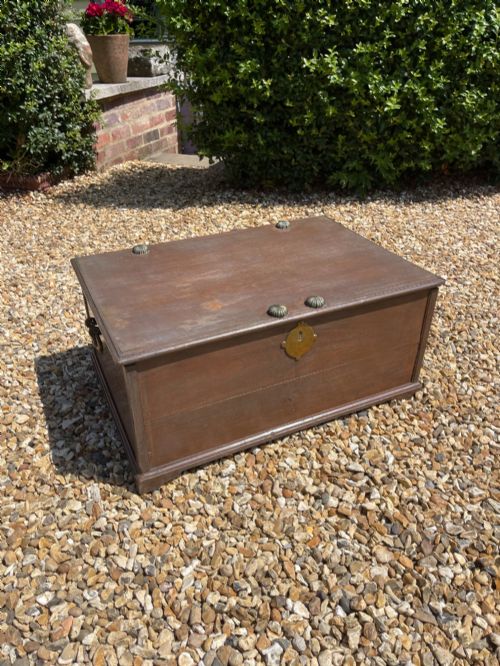
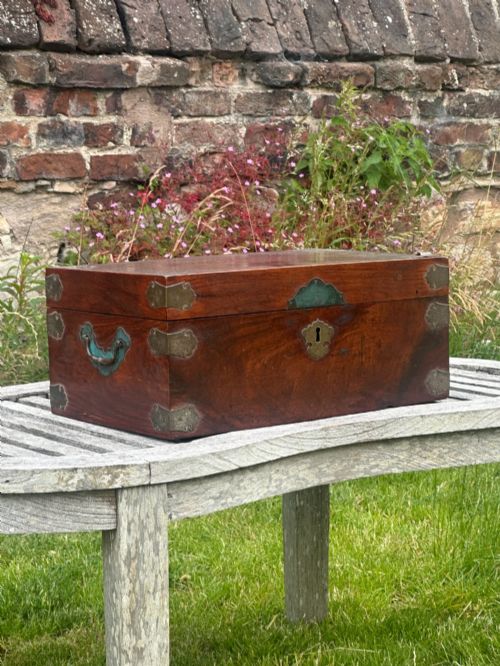
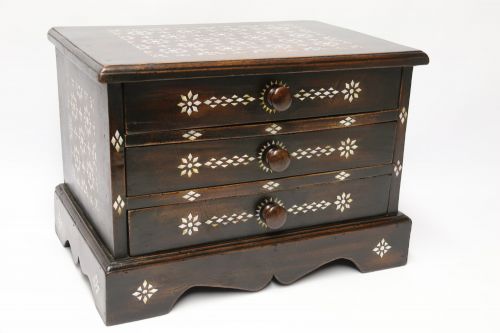
A vintage indian chest box encompasses a wide variety of storage forms, from massive dowry chests and traders' trunks to compact jewellery and writing boxes. The examples seen here range from substantial 18th century pieces to early 20th century works, often shaped by Anglo-Indian and colonial influences.
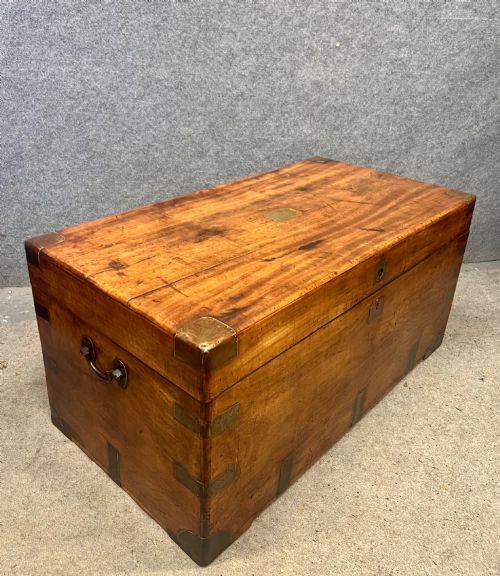
The most common form met on this page is the sturdy trunk or blanket box, frequently constructed from dense tropical timbers and reinforced for travel or maritime trade. These containers reflect both traditional regional craftsmanship and the practical demands of military and merchant life across the centuries.
Materials and Technique
Makers utilised resilient tropical hardwoods such as teak, padouk, camphor wood, and ebony, selected for their durability and resistance to insects and humidity. These timbers were frequently joined using traditional carpentry methods and substantial framing to support heavy contents.
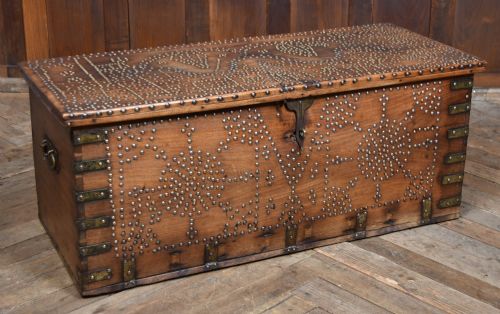
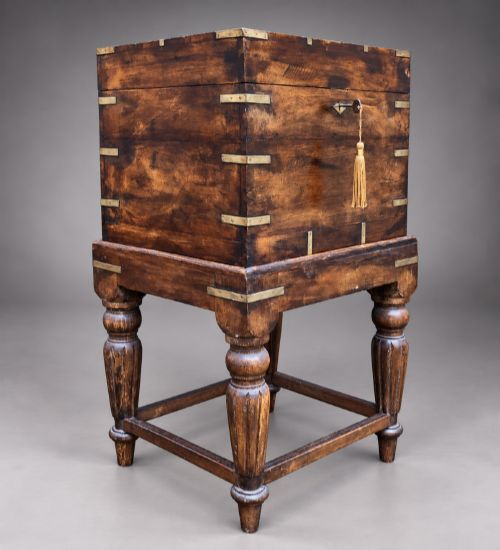
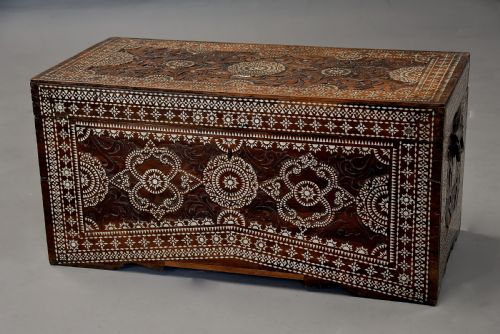
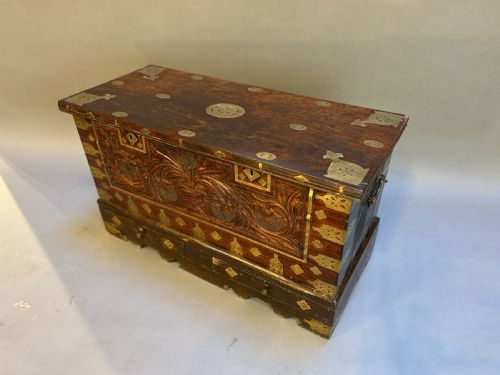
Metal reinforcement defines much of the work, with heavy brass corners, studded decoration, and wrought iron bands securing the panels. Inlaid mother-of-pearl and delicate carving also appear on select domestic and ceremonial pieces, adding surface pattern to the timber.
The listings on this site span multiple centuries, uniting 18th century carved spice boxes with early 20th century inlaid hardwood trunks.
The Measure of Craft
Quality rests in the selection of the timber and the precision of the metal mounts, where thick hand-beaten brass or heavy iron bands signal substantial construction. The integration of complex joinery and the survival of original locking mechanisms further distinguish finer examples.
Decorative ambition separates standard utility boxes from exceptional pieces, particularly where intricate carving, detailed brass studwork, or inlaid mother-of-pearl elevate the surface. The crispness of these decorative elements reveals the skill of the original workshop.
The Vintage Indian Chest Box Glossary
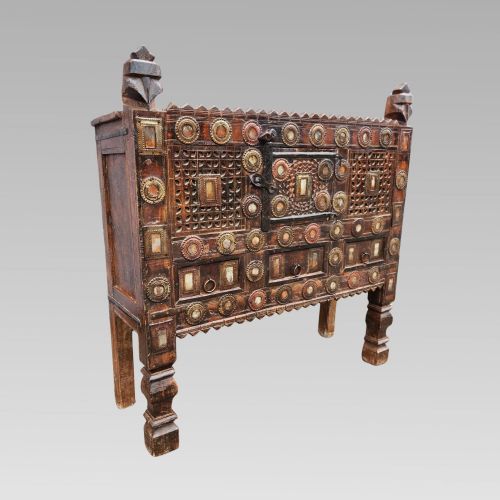
- Damchiya
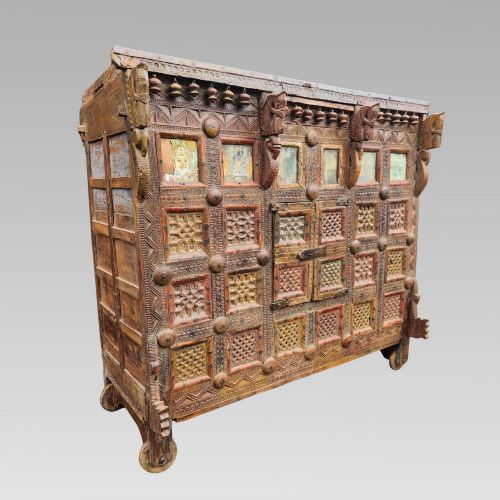
- A traditional carved dowry chest or storage cabinet originating from regions such as Rajasthan, often featuring a low profile and robust timber construction. These pieces served a ceremonial function in marriage customs.
- Campaign chest
- A portable trunk or set of drawers made in sections with recessed brass handles, designed for easy transport by military officers on colonial campaigns.
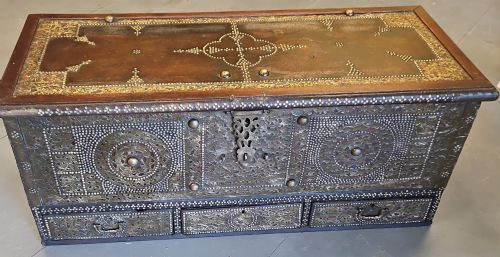
- Zanzibar chest
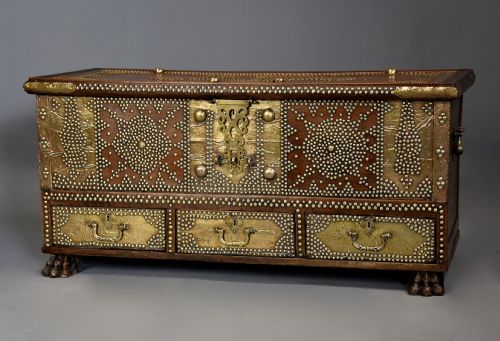
- A heavy wooden storage trunk characterised by dense brass studding, strapwork, and often a distinctive domed lid. They reflect maritime trade connections across the Indian Ocean.
- Cellarette
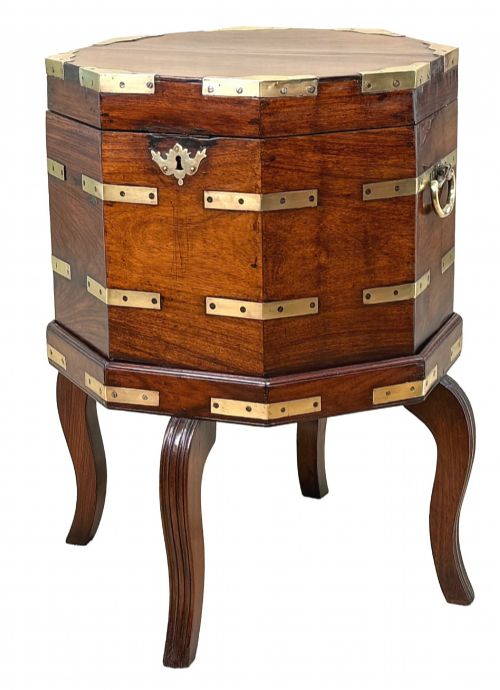
- A fitted container or box designed specifically for holding wine bottles or decanters securely during transport or dining. They are often raised on low stands or feet.
Vintage Indian Chest Box: Frequently Asked Questions
How were these chests originally used?
These boxes served multiple practical purposes, from storing valuable household dowries and textiles to transporting personal belongings during military campaigns or maritime voyages.
Smaller iterations functioned as desktop writing cabinets or secure receptacles for jewellery and documents.
What woods are most common?
Teak, camphor wood, and padouk appear frequently across the listings, chosen for their strength and dense grain.
Ebony and rosewood are also found on select decorative or regional examples.
How do I care for a hardwood chest?
Keep the timber away from direct heat sources and extreme humidity fluctuations to prevent the wood from splitting.
Apply a microcrystalline wax occasionally to nourish the surface without attracting dust.
What distinguishes a Zanzibar chest?
Zanzibar chests are identified by their heavy brass studwork, elaborate strap hinges, and robust timber framing.
They often incorporate internal secret compartments and domed lids suited to maritime transport.