

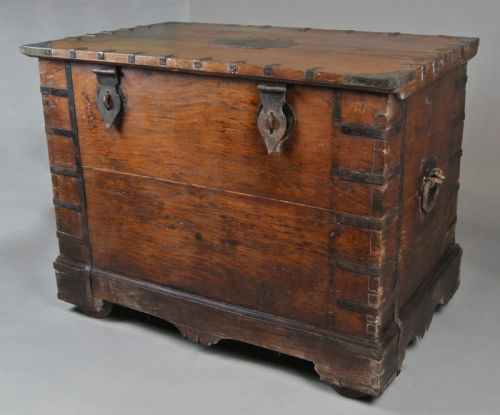
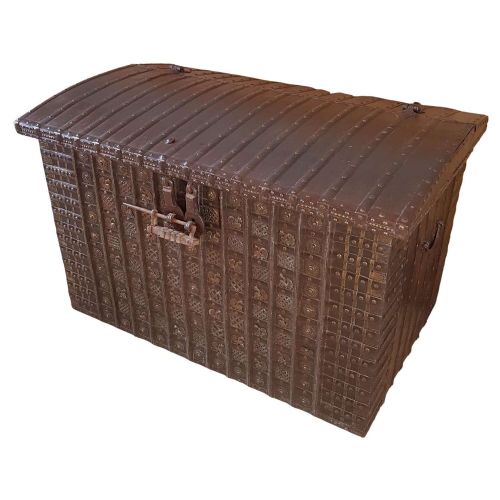


Indian Iron Bound Trunk
An indian iron bound trunk brings weight and utility into a room, forged from timber and strapwork for travellers and households.
Indian Iron Bound Trunk
An indian iron bound trunk stands as a heavy storage piece built from dense timbers and reinforced with metal bands. These pieces range from monumental dowry chests to travelling strong boxes used across regions.
The version most commonly met on this page is the nineteenth-century specimen, often styled as Anglo-Indian or Rajasthani. They combine utilitarian strength with regional decorative woodwork.
Forms span across simple chests and coffers to specialised damchiya dowry chests fitted with historic locks. The structure prioritises security and durability for transport and safekeeping.
Materials and construction
Makers constructed these trunks using sturdy tropical timbers such as teak, mahogany, and general hardwood. These woods provided a solid carcass capable of withstanding heavy handling and humid climates.
Wrought iron and brass strapwork provide the structural reinforcement, bound tightly around the wooden panels with visible rivets. This iron binding protects the corners and edges while holding the timber rigid.
Indian Iron Bound Trunk Retail Price Guide 2026
Typical asking prices for indian iron bound trunk among the pieces listed under this phrase on Sellingantiques today, from the lower quarter to the upper quarter. They describe what is for sale here now, not the wider market.
Listings for this phrase focus on nineteenth-century pieces, incorporating materials like teak, mahogany, and wrought iron.
Assessing quality
Quality rests in the heaviness of the timber and the complexity of the iron work. A superior trunk displays dense hardwood boards joined securely with hand-hammered strapwork rather than thin decorative plating.
The presence of original working locks and forged brass mounts elevates a piece significantly. Finer examples show deliberate craftsmanship in the alignment of the metal bands and the finish of the wood.
The Indian Iron Bound Trunk Glossary
- Damchiya
- A traditional low storage chest or dowry trunk from Rajasthan, often featuring complex front panels and heavy fastenings. These pieces served central roles in domestic storage.
- Coffer
- A box or chest traditionally used for holding valuables and documents, distinguished by a secure lid and sturdy side construction. They appear frequently in colonial and regional contexts.
- Anglo-Indian
- A descriptive term for furniture made in India during the British period, blending local craftsmanship with European forms. These items reflect a cross-cultural design exchange.
- Wrought iron
- Iron that has been heated and hammered into shape by hand, resulting in a fibrous texture and high durability. It forms the protective strapwork on these trunks.
- Dowry chest
- A large receptacle prepared to hold goods and valuables for a bride's household. They represent significant craftsmanship and communal status.
Indian Iron Bound Trunk: Frequently Asked Questions
What were indian iron bound trunks used for?
These trunks served as secure storage containers for household valuables, garments, and personal belongings. Their heavy construction and metal straps protected contents during travel and domestic use.
Larger dowry chests held significant family assets and textiles. Strong boxes functioned similarly for important documents and portable wealth.
How do I date an iron bound trunk?
Dating relies on examining the timber species, the style of the ironwork, and construction methods. Nineteenth-century examples often display hand-forged straps and dense native hardwoods.
Changes in lock mechanisms and colonial stylistic influences also help narrow the period of origin. Comparing the joinery with dated comparative pieces refines the timeline.
Where should I place a trunk in my home?
These trunks function well as coffee tables, blanket chests, or hallway storage benches. Their flat tops and sturdy builds accommodate everyday items while anchoring a room.
Keep them away from direct heat sources to protect the historic timber and iron from warping or cracking. Adequate clearance allows the metal strapwork to remain visible.
Are these trunks heavy?
Yes, they are exceptionally heavy due to the solid tropical hardwoods and thick iron strapwork used in their construction. Moving them typically requires two people to prevent damage to floors and the piece itself.
This weight reflects their original purpose as secure receptacles that resisted unauthorized removal or tampering.