
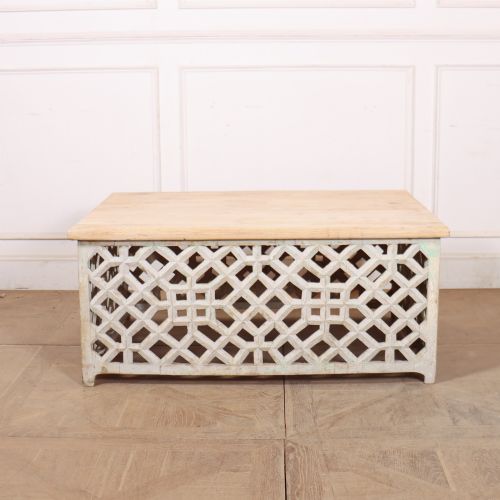
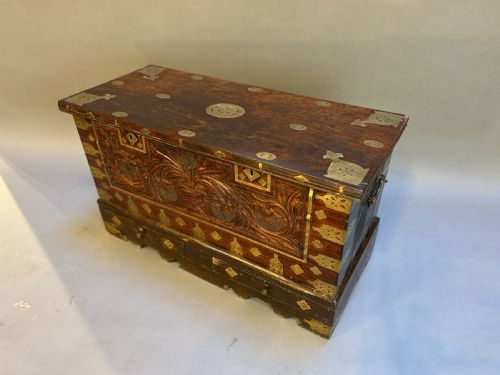


Colonial Indian Wooden Trunk
These colonial indian wooden trunk pieces bring travel-worn weight and rich grain into a room, fashioned for officers and merchants on the move.
Colonial Indian Wooden Trunk
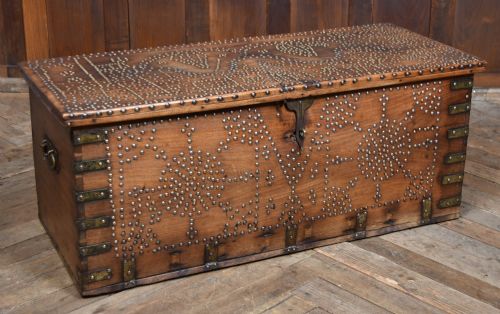
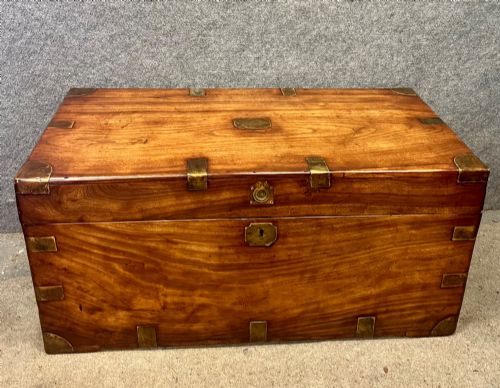
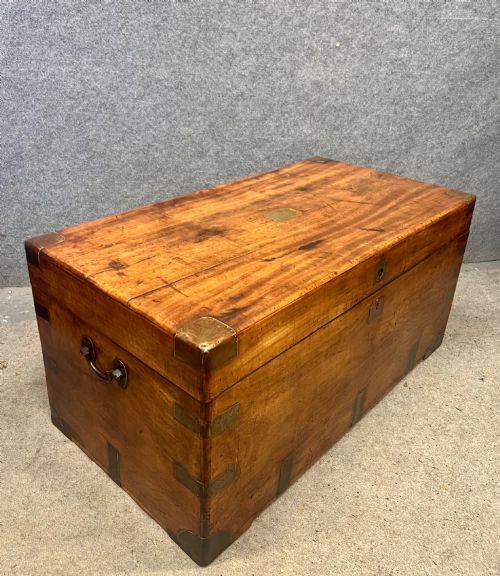
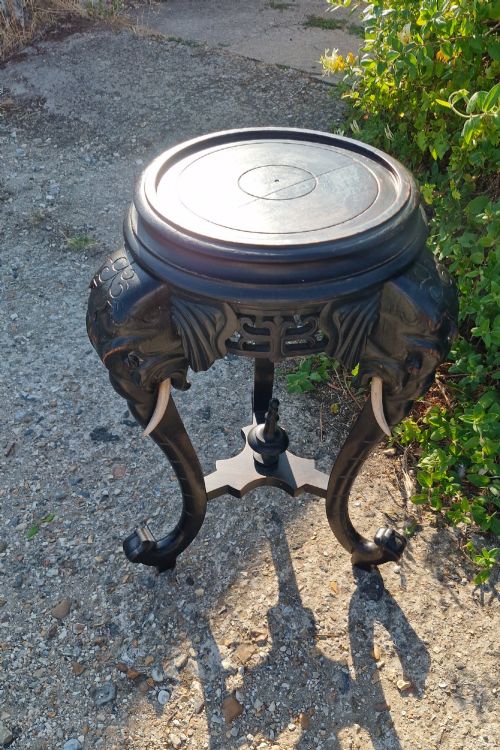
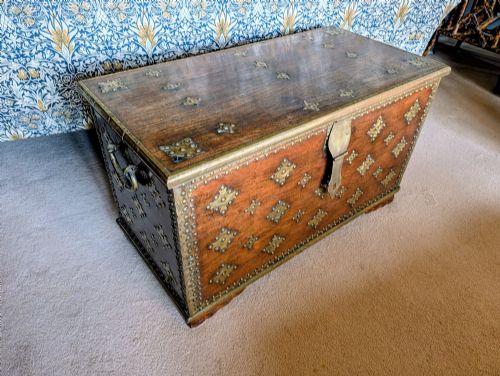
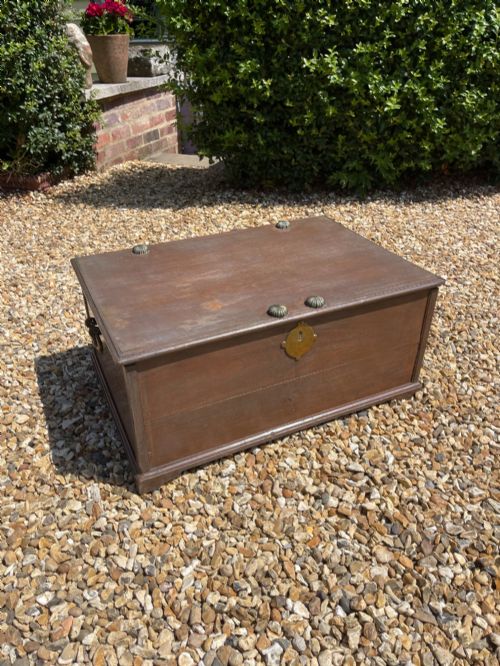
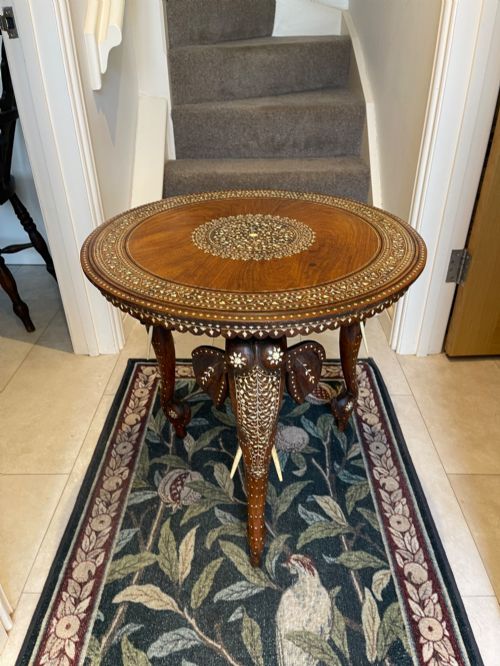
A colonial indian wooden trunk is a sturdy storage piece built during the nineteenth century for travel and domestic use. You meet heavy campaign chests and blanket boxes designed for maritime trade and colonial life, alongside smaller occasional tables taking elephant forms.
The materials span teak, camphor wood, padouk, and hardwood, frequently reinforced with brass or iron bandings. Forms range from simple merchants chests to detailed celebration chests with carved elements.
Most items on this page date from the nineteenth century, including Victorian and Georgian periods. These pieces functioned as strong boxes, deed boxes, and storage chests before finding a place in modern interiors as coffee tables and statement furniture.
Construction and Materials
Joinery relies on dense tropical timbers such as teak, camphor wood, and padouk, selected for their durability in humid climates. Camphor wood provided a practical interior scent while deterring insects from stored textiles.
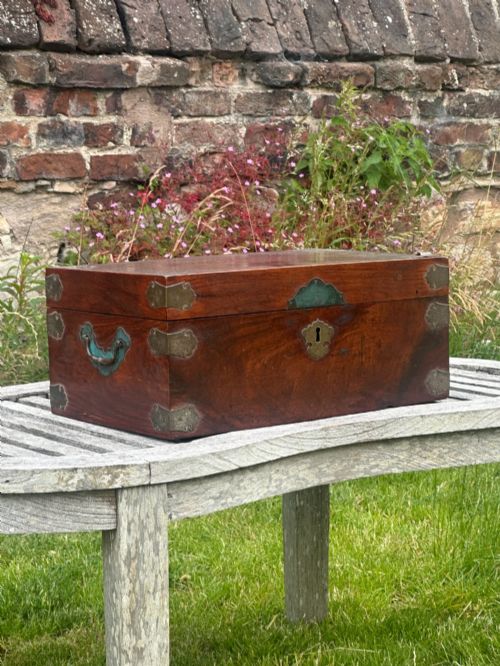
Metal reinforcement defines many examples, utilising heavy brass straps, corner brackets, and iron bands secured with studs. These fixtures protected the corners during long journeys across land and sea.
Camphor wood trunks double as natural linen guards, quietly releasing a distinct scent that keeps moths away from stored woollens.
Quality and Craftsmanship
The distinction in quality rests upon the choice of timber and the precision of the metalwork. Finely cast brass mounts and intricate carved detailing elevate a piece above standard utility trunks.
Proportion and original hardware integrity dictate the character of the box. Pieces retaining their fitted interior compartments and substantial brass binding demonstrate superior original manufacture.
The Colonial Indian Wooden Trunk Glossary
- Campaign trunk
- A portable chest made in sections or fitted with carrying handles for military officers on active service.
- Zanzibar chest
- A heavy timber storage box characterised by brass studding and intricate metal strapwork, associated with trade routes.
- Padouk
- A dense reddish-brown tropical hardwood prized for stability and deep colour in nineteenth-century cabinetmaking.
- Deed box
- A smaller secure container utilised for documents and valuables, often fitted with a heavy lock and reinforced corners.
- Coffer
- A large wooden chest traditionally used for holding precious items, textiles, or provisions.
Colonial Indian Wooden Trunk: Frequently Asked Questions
What is a colonial indian wooden trunk?
A colonial indian wooden trunk is a nineteenth-century storage chest built from dense tropical hardwoods like teak or camphor wood.
These pieces were made for travel and domestic storage during the British colonial period, often featuring brass or iron reinforcement.
How were these trunks used originally?
Merchants and military officers used them to transport clothing, documents, and valuables across long distances.
At home, they served as secure storage boxes and blanket chests in bedrooms and offices.
Where should I place a trunk at home?
These chests function well as coffee tables in living rooms, providing surface space and hidden interior storage.
Smaller deed boxes sit comfortably on sideboards or desks, while larger blanket chests anchor the foot of a bed.
How do I care for camphor wood and teak?
Keep the wood away from direct heat sources and sudden humidity changes to prevent timber movement.
Dust with a dry cloth and occasionally feed the hardwood with a suitable wax to maintain the finish.
What dates are typical for these pieces?
The majority of pieces date from the nineteenth century, spanning Georgian, Victorian, and later periods.
Construction details and hardware styles help narrow down the approximate decade of manufacture.