
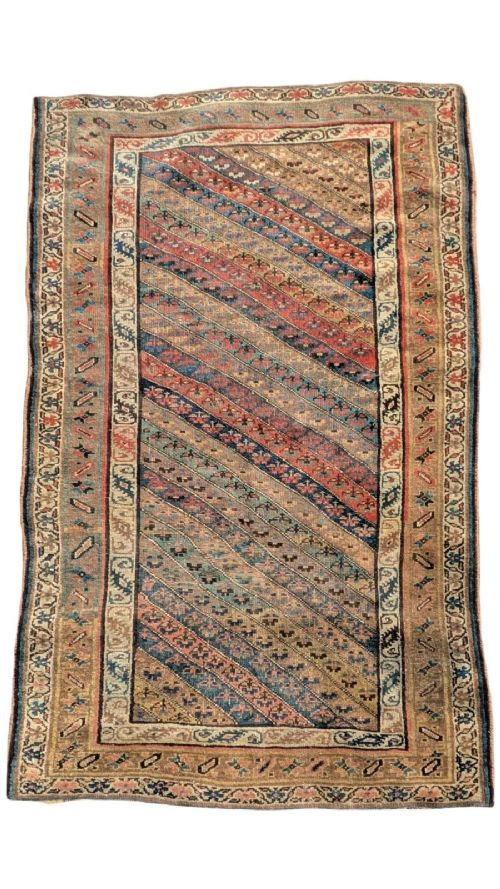
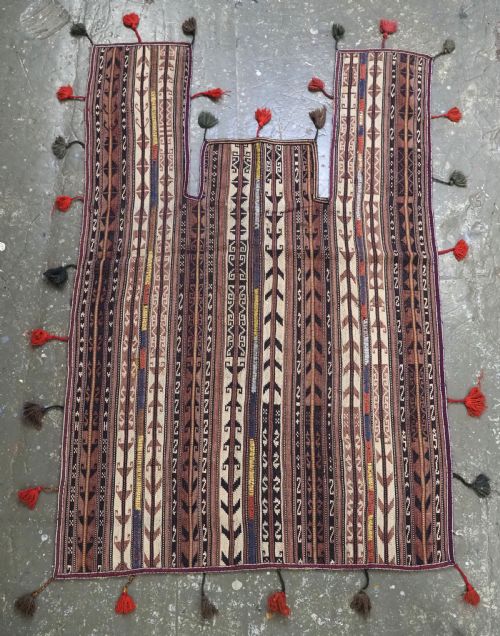
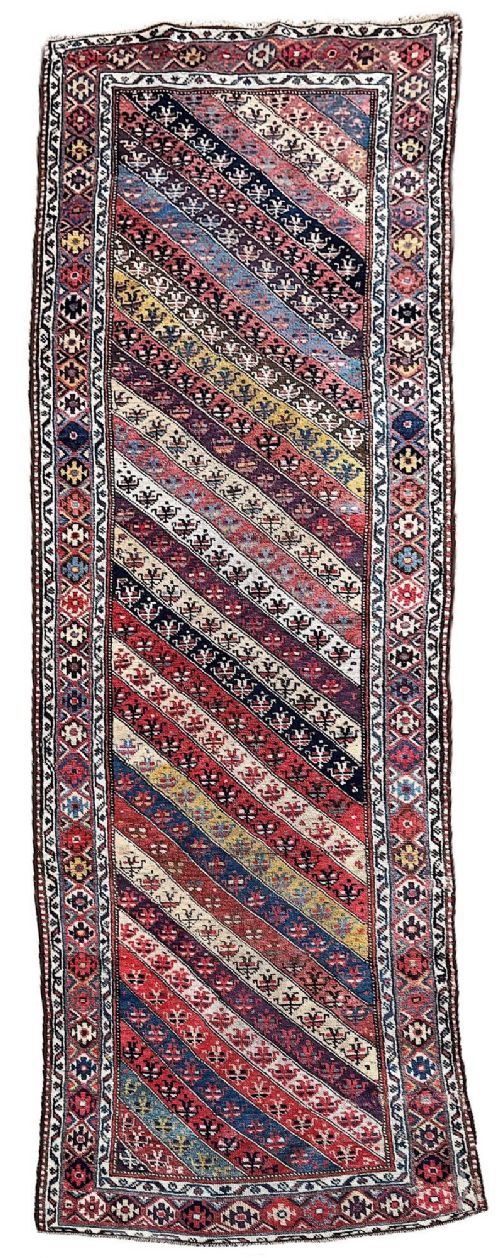


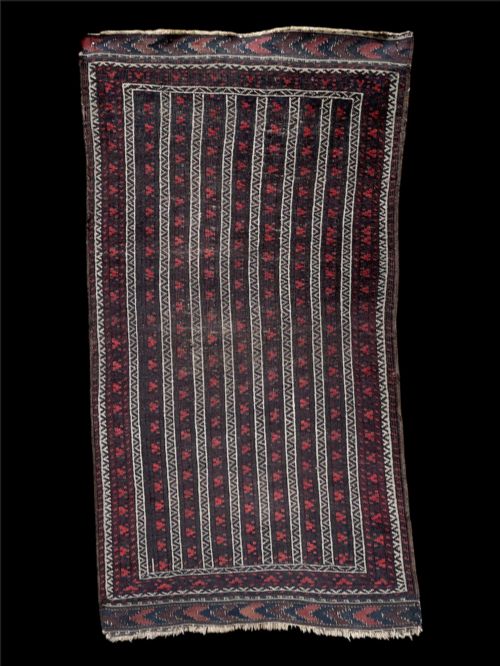


Striped Woven Rug
Striped woven rug describes flatweaves and piled textiles featuring linear patterns, offering utility and striking graphic impact for modern interiors.
Striped Woven Rug
On this page, buyers will most frequently encounter nineteenth and early twentieth-century examples featuring banded and linear designs, including Yomut Turkmen mafrash, Uzbek gajeri kilims, and Qashqai striped floor spreads. These items derive their character from traditional tribal weaving centres, bringing distinct regional motifs and flatweave structures into domestic spaces.
How They Were Made
The construction of these textiles relies primarily on hand-spun wool and cotton, often enriched with natural dyes derived from local plants and minerals to produce deep, lasting colour variations. Goat hair and silk also appear occasionally in specific regional pieces, adding structural rigidity or subtle sheen to the flatweave fabric.
Weaving techniques vary from standard slit-tapestry kilim construction to intricate cicim work and warp-faced banded designs, executed on portable horizontal looms by nomadic weavers. This combination of local materials and traditional flatweave methods creates the durable, reversible textiles seen in the listings.
Several items started life as grain sacks before finding retirement on the floor.
What Varies in Quality
Quality in these textiles rests upon the fineness of the weave and the precision of the banded or graphic layout. Pieces with tightly packed warps and wefts demonstrate superior technical mastery by the maker, creating a firmer, more resilient fabric.
The vibrancy and depth of the natural dyes significantly influence the visual merit of an example. Subtle shifts in tone resulting from hand-dyeing processes separate masterworks from more standard village productions.
The Striped Woven Rug Glossary
- Kilim
- An unpiled flatwoven textile produced by tightly interlocking weft threads over warps, creating a smooth, reversible fabric. These rugs often display sharp geometric patterns and horizontal bands.
- Sofreh
- A utilitarian dining or bread-serving cloth used by nomadic tribes, frequently rendered in striking flatweave designs. They double as small rugs or wall hangings due to their strong graphic compositions.
- Jajim
- A tightly woven flatweave textile traditionally made from wool, cotton, or silk in narrow striped panels that are stitched together. They serve as floor spreads, blankets, or wall coverings.
- Mafrash
- A large rectangular storage bag or chest face woven by Turkmen tribes, often featuring banded flatweave patterns. Collectors prize them for their dense geometric layouts.
- Cicim
- A supplementary weft-float embroidery technique applied to a woven ground to create raised decorative patterns. This method adds texture to the surface of flatweave rugs.
Striped Woven Rug: Frequently Asked Questions
How were these rugs originally used?
Nomadic and village communities utilised these woven textiles for daily domestic duties, including sleeping mats, animal trappings, grain storage, and dining cloths.
Many pieces served specific functional roles within tribal life, such as bread-sacks or horse blankets, before surviving as decorative items today.
Where do these striped textiles originate?
The pieces originate primarily from Persia, the Caucasus, and Central Asia, created by tribal groups such as the Qashqai, Bakhtiari, Yomut Turkmen, and Uzbeks.
Each region developed distinct palettes, weaving structures, and linear patterns that reflect the heritage of the specific makers.
How should I care for a flatweave rug?
These textiles require gentle maintenance, beginning with regular light vacuuming without a rotating brush to prevent fibre damage.
Professional cleaning tailored to antique wool is recommended when necessary, and keeping the rug out of direct sunlight preserves the natural dyes.
How do I distinguish regional styles?
Regional attribution relies on identifying specific colour combinations, structural techniques, and the geometry of the banded stripes.
For instance, Turkmen pieces often feature precise red and brown banded designs, while Persian tribal rugs display broader chromatic ranges.