




Striped Wool Rug
When you look for a striped wool rug, you are searching for woven textiles defined by linear bands, originating largely from tribal traditions of the late nineteenth and early twentieth centuries.
Striped Wool Rug
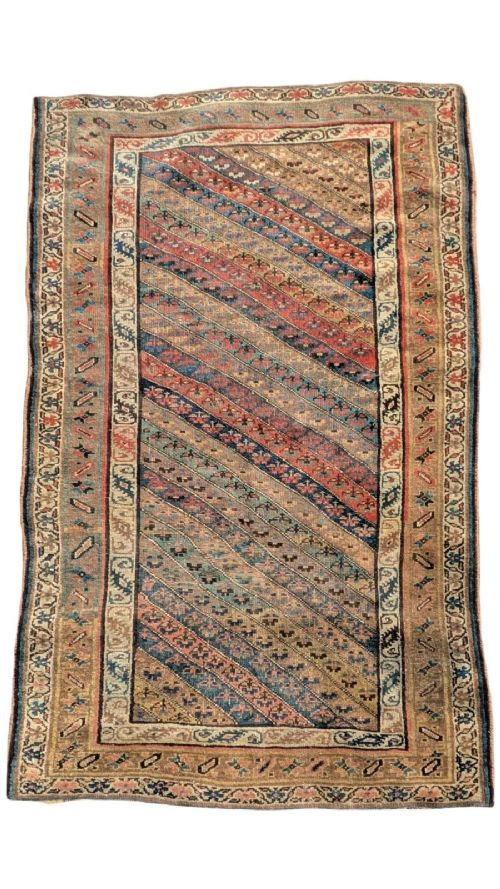
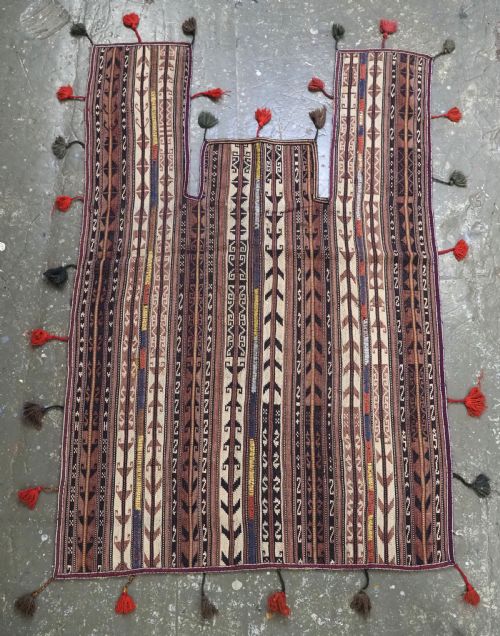
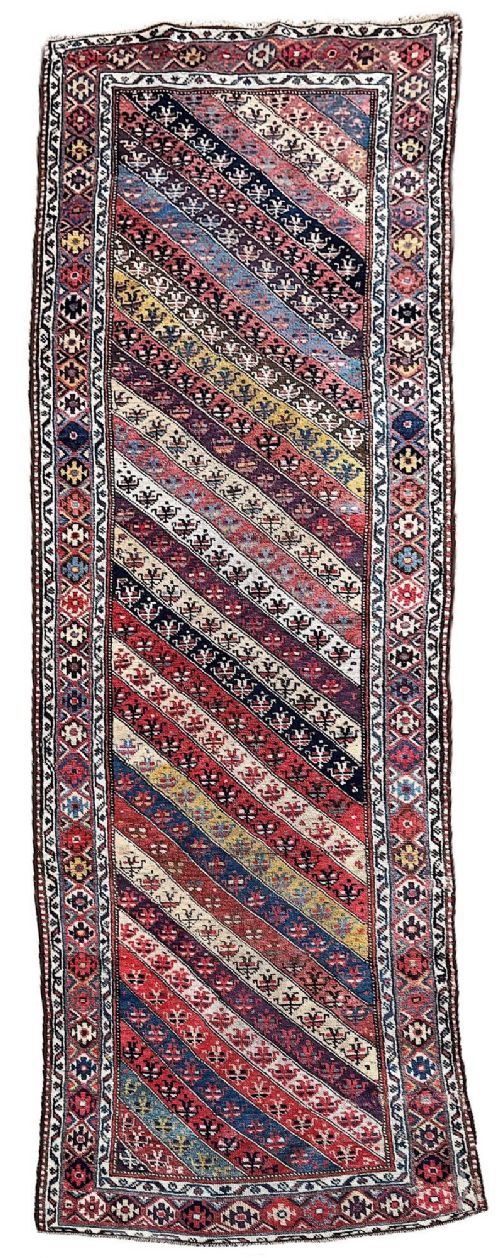
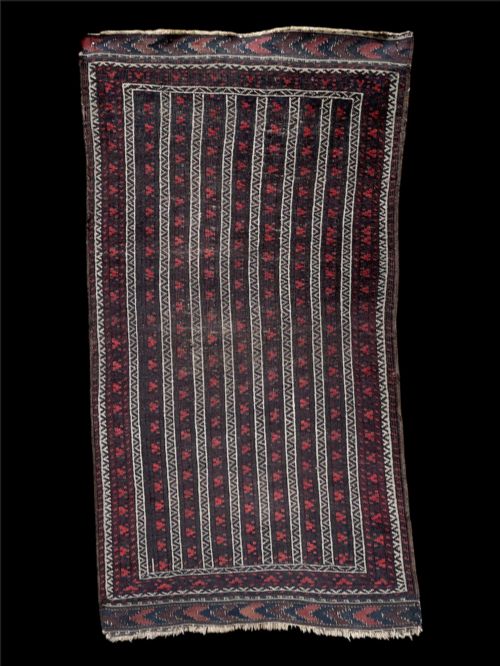
A striped wool rug encompasses tribal weavings and flatweaves featuring linear patterns, often manifested as banded kilims, runners, and horse blankets. The examples seen here originate from Persian, Caucasian, and Central Asian regions, dating from the late nineteenth century up to the 1920s.
Buyers will encounter functional household items adapted into decorative textiles, including wheat-sacks, bread sofreh, and tent bands. These pieces derive their character from regional tribal aesthetics, utilising repeating bands of pattern rather than centralized medallions.
How they were made
The construction relies heavily on wool, hand-spun wool, and cotton, often supplemented by goat hair, camel hair, and natural dyes to achieve durable, earthy palettes. Artisans employed flatweave techniques such as kilim and cicim, alongside pile knotting, to construct robust floor coverings and utility textiles.
Weavers worked within distinct tribal traditions across Persia, the Caucasus, and Central Asia, creating tight, very fine weaves designed for daily utilitarian service. Materials were sourced locally, yielding textiles with varied tactile weights and structural rigidity.
Several textiles began life as horse blankets, wheat-sacks, or bread cloths before finding new careers on the floor.
What varies in quality
Quality in a striped wool rug is determined by the tightness of the weave, the precision of the linear bands, and the depth of the natural dyes. Pieces with exceptionally fine weaves and stable structural integrity represent the upper tier of the range.
The sophistication of the graphic layout and the condition of the material set individual pieces apart. Retaining original edges and structural completeness elevates a textile, while loose tension or degraded materials place an item lower down.
The Striped Wool Rug Glossary
- Kilim
- A flatwoven carpet or rug produced without pile, created by tightly interweaving warp and weft strands. This technique results in a flat, durable textile often characterised by sharp geometric patterns.
- Sofreh
- A type of spread or cloth used traditionally for dining or the preparation of bread. In tribal contexts, these textiles double as finely woven flatweaves featuring linear designs.
- Mafrash
- A large rectangular storage bag or chest panel woven by nomadic tribes. These panels are frequently disassembled and repurposed into smaller rugs or wall hangings.
- Cicim
- A supplementary weft-wrapping technique used to add decorative surface patterns during weaving. It creates a textured, embroidered effect on top of the base fabric.
- Warp
- The vertical foundation threads stretched lengthwise on a loom before weaving begins. The weft threads are passed across these structural elements to form the cloth.
Striped Wool Rug: Frequently Asked Questions
What is a striped wool rug?
A striped wool rug is a flatwoven or pile textile defined by horizontal, vertical, or diagonal bands of colour. These pieces originate primarily from nineteenth and early twentieth-century tribal makers in Persia, the Caucasus, and Central Asia.
They encompass utilitarian items such as grain sacks, horse blankets, and tent bands that utilise linear patterns. The aesthetic relies on repeating geometric stripes rather than floral or pictorial motifs.
How were these rugs used originally?
Nomadic and village communities utilised these textiles for daily domestic and transport functions. Many served as floor spreads, bedding, or storage containers for grain and bread.
Specialist items included horse covers and saddle bags required for nomadic travel. Their robust construction was designed to withstand rigorous daily handling in tribal camps.
How do I live with a antique tribal rug?
Living with these textiles involves placing them in areas with moderate foot traffic to preserve their structure. Using a quality underlay prevents slipping and reduces friction between the fibres and the floor.
Keep them away from direct, prolonged sunlight to protect natural dyes from fading. Gentle vacuuming without a rotating brush roll maintains the cleanliness of the wool.
How can I tell different tribal styles apart?
Regional styles are distinguished by their specific colour palettes, weave densities, and geometric vocabulary. Caucasian pieces often display sharp, highly geometric motifs, while Persian tribal weavings utilise softer tones and varied flatweave techniques.
Central Asian pieces frequently feature bold graphic banding and specific utility forms like gajeri kilims. Examining the edge finishes and wool preparation helps pinpoint the geographic origin.