
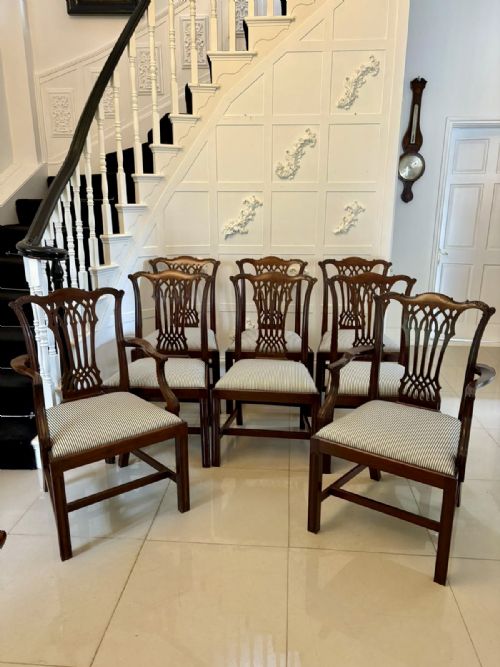
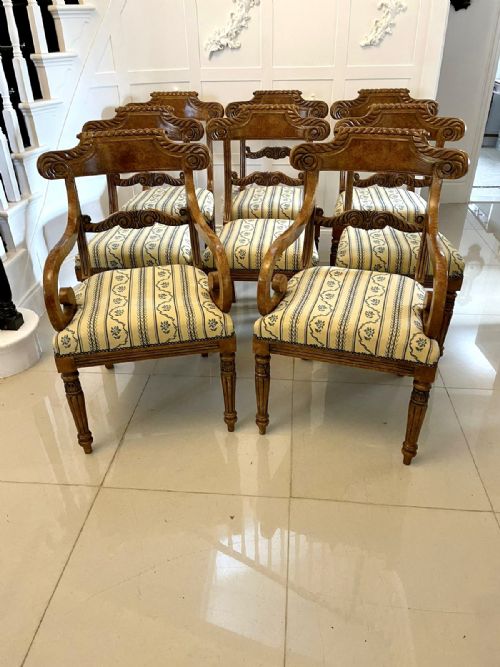
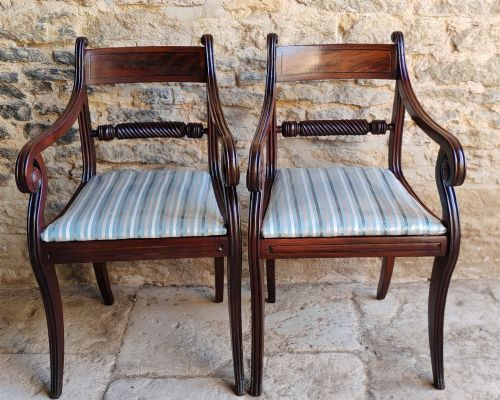


Striped Upholstered Dining Chairs
Striped upholstered dining chairs bring period character to a room, combining solid timber frames with distinctive textile patterns.
Striped Upholstered Dining Chairs
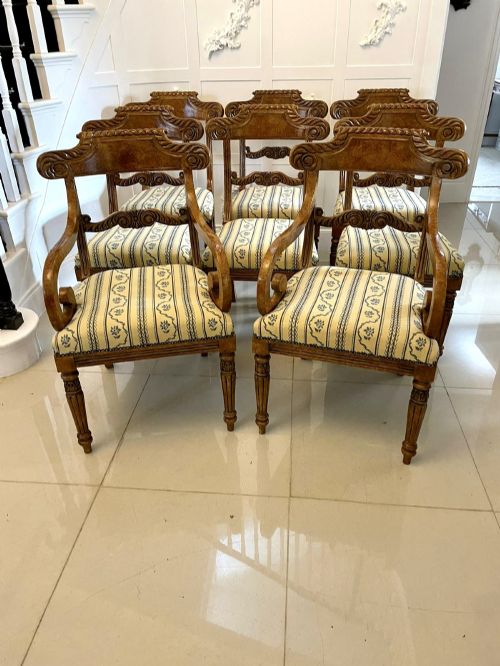
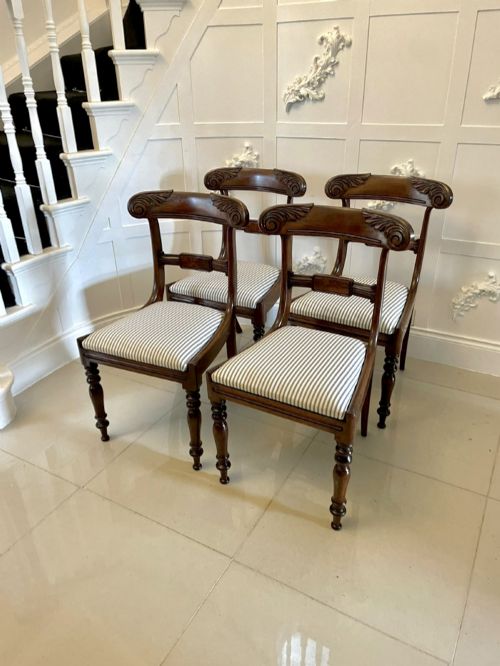
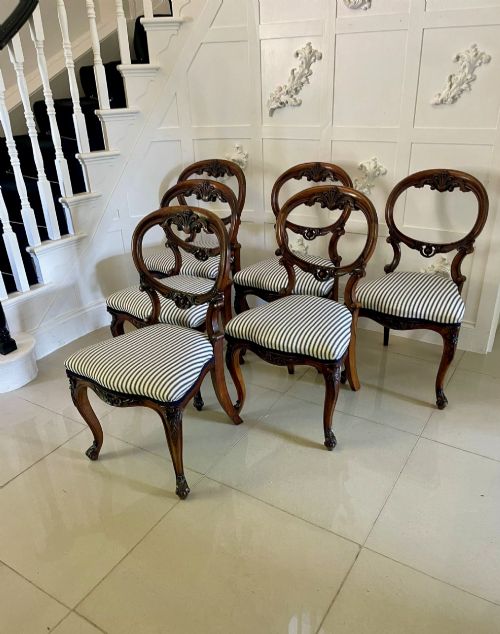
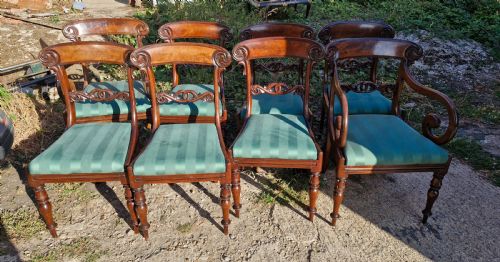
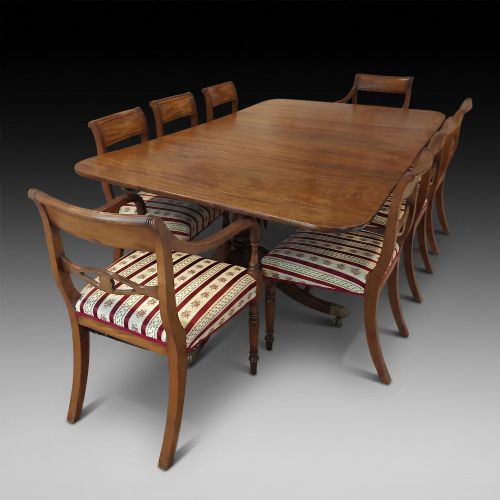
Striped upholstered dining chairs cover a range of periods including Georgian, Regency, and Edwardian pieces. These seats appear as sets of four, pairs, or larger dining suites suitable for traditional tables.
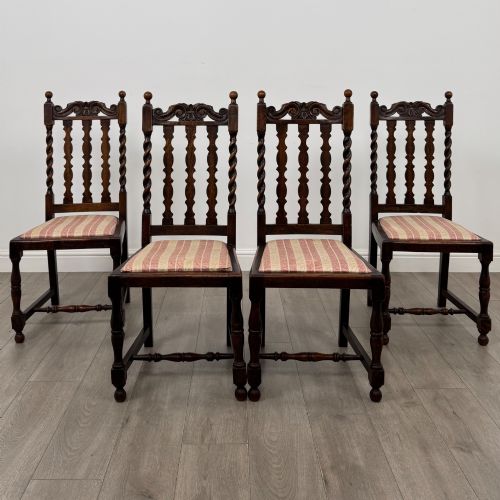
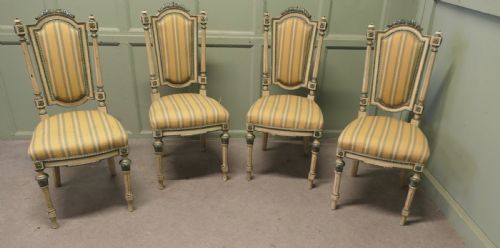
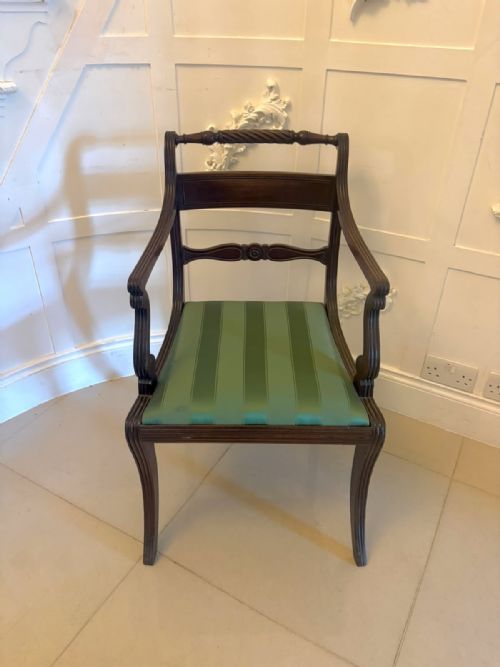
The selections on this page feature forms such as rope back chairs and barley twist designs in oak and mahogany. French upholstered chairs from nineteen hundred also contribute to the mix of available seating.
Buyers seeking striped upholstered dining chairs will encounter various wood types alongside diverse upholstery fabrics, velvet, and satin upholstery. The forms range from simple side chairs to comprehensive dining suites.
How they were made
Craftsmen built these frames using solid timber such as oak and mahogany, often shaping the wood into intricate profiles like barley twist supports or rope back designs. Painted wood variants also exist within the recorded listings.
Upholstery work incorporated diverse textiles including standard fabric, velvet, and satin upholstery. Brass details occasionally supplemented the primary timber and textile construction.
Striped Upholstered Dining Chairs Retail Price Guide 2026
Typical asking prices for striped upholstered dining chairs among the pieces listed under this phrase on Sellingantiques today, from the lower quarter to the upper quarter. They describe what is for sale here now, not the wider market.
Some chairs sport twists so enthusiastic they practically swirl right off the floor and into the dining room.
What varies in quality
Quality separates simple utility seating from finer dining suites through the precision of the timber framing and the execution of carved details like barley twists. Superior pieces demonstrate careful timber selection and robust joinery.
The choice of covering material also marks a distinction, where rich velvet or satin upholstery elevates the piece above standard fabric treatments. The overall proportion and balance of the frame define the better examples.
The Striped Upholstered Dining Chairs Glossary
- Barley twist
- A carved wooden support resembling a twisted rope, common in Jacobean Revival and Edwardian furniture. This decorative turning technique adds texture to chair legs and stretchers.
- Rope back
- A chair backrest featuring carved wooden members that emulate twisted rope, typical of the Regency and Georgian periods. This classic design requires precise woodworking skill.
- Mahogany
- A dense, reddish-brown hardwood favoured for high-quality dining furniture during the Georgian and Regency eras. Its stability makes it ideal for slender carved components.
- Side chair
- An upholstered or wooden chair without arms, designed primarily for use at a dining table. These pieces form the majority of standard dining sets.
- Upholstery fabric
- The textile material used to cover padded furniture seats and backs, appearing in various weaves and patterns including stripes. The choice of covering significantly alters the visual weight of a chair.
Striped Upholstered Dining Chairs: Frequently Asked Questions
How do I care for antique upholstery?
Vacuum textile surfaces gently using a soft brush attachment to remove dust without damaging the fibres. Keep timber frames nourished with appropriate furniture wax applied sparingly.
Avoid placing antique chairs in direct sunlight or near heat sources to prevent the wood and fabric from fading or drying out prematurely.
Can I mix these chairs with a modern table?
Period dining chairs pair effectively with contemporary tables to create a striking contrast in a dining room. The mix of historical timber and clean modern lines works well in various interior schemes.
Ensure the seat height allows comfortable clearance beneath the table surface before combining different eras.
What defines a Regency dining suite?
Regency furniture draws inspiration from classical antiquity, featuring clean structural lines and dark timbers like mahogany. These suites often incorporate brass accents and refined carving.
Dining suites from this period were designed to create a formal, unified appearance in the dining room.
How do I identify Edwardian seating?
Edwardian chairs frequently revive earlier styles, such as Jacobean Revival barley twists executed in oak. The construction shows the manufacturing capabilities of the early twentieth century.
These pieces combine traditional forms with comfortable proportions suited to later domestic interiors.