


Strike Repeat Clock
A strike repeat clock brings mechanical mastery to the tabletop, sounding hours and quarters on demand.
Strike Repeat Clock
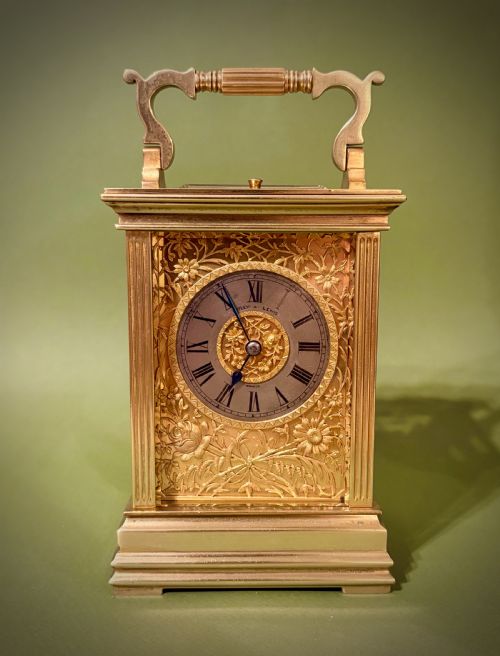
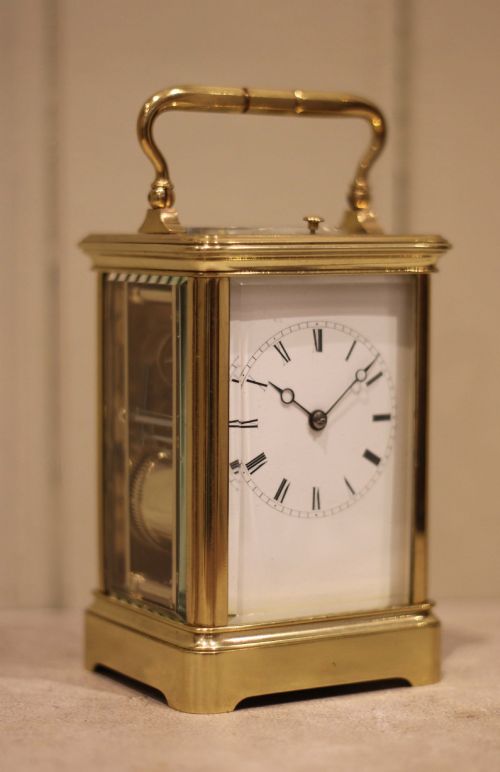
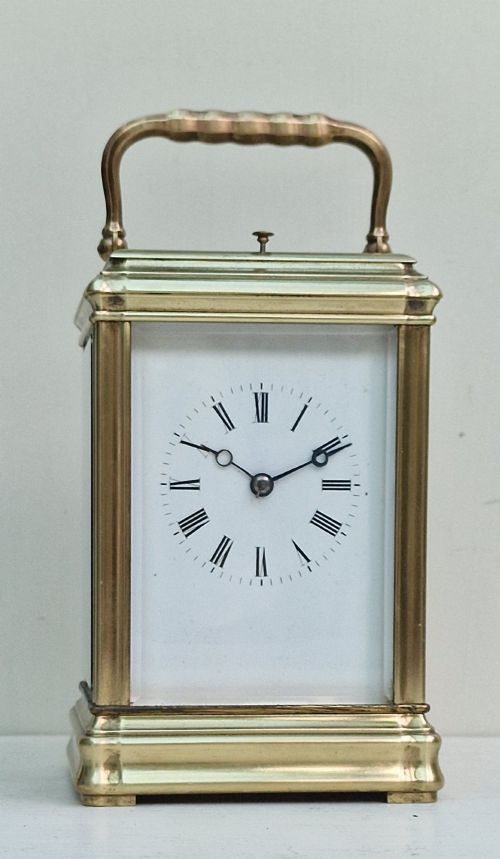
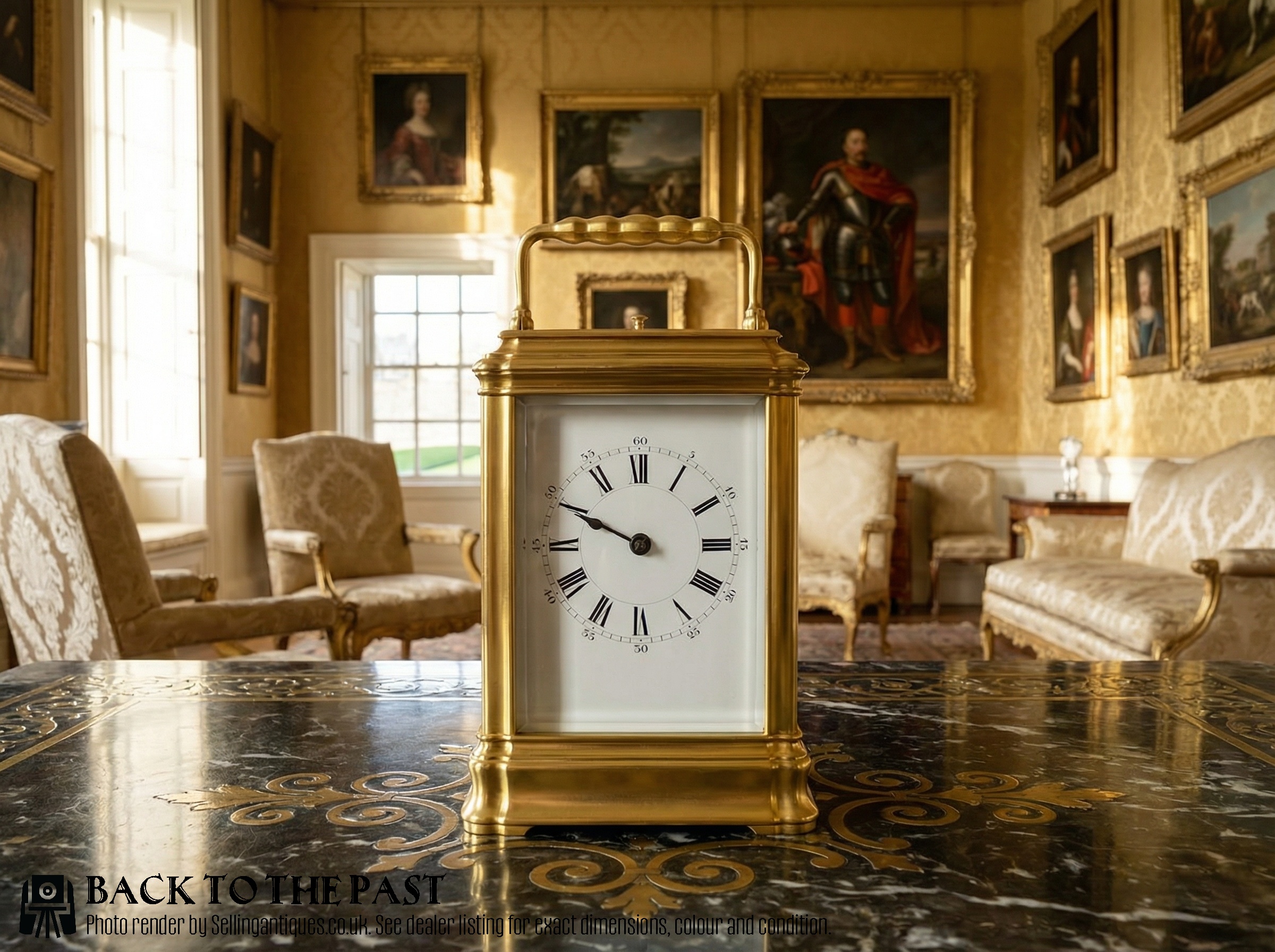
When searching for a strike repeat clock, a buyer looks at sophisticated timepieces designed to sound the time independently or when a plunger is pressed. The pieces met most often on this page are nineteenth-century French carriage clocks housed in brass, gilt brass, or glass cases.
Beyond portable carriage clocks, the selection includes bracket clocks featuring fusee chain-driven movements enclosed in mahogany. These machines reflect nineteenth-century horology, spanning periods from the Victorian era through the early twentieth century.
French workshops and English makers alike produced these mechanisms, frequently incorporating enamel dials with Roman numerals alongside alarm and sonnerie complications. The forms range from standard gorge cases and oval frames to architectural Corinthian-capped designs.
How they were made
Clockmakers constructed these housings primarily from heavy brass and gilt brass, fitted with bevelled glass panels that reveal the intricate gear trains within. Dials were executed in white enamel, featuring painted Roman numerals and delicate steel hands.
Movements relied upon sophisticated metal components of steel and brass, driven by springs or fusee chains depending on whether the format was a portable carriage clock or a larger bracket clock.
Listings feature nineteenth-century French and English horology, spanning the Victorian era, Regency period, and early 1900s through brass, mahogany, and glass.
What varies in quality
The sophistication of the internal movement dictates the tier of the piece, moving from standard hour-striking mechanisms up to complex grand sonnerie, quarter-repeating, and alarm functions. Superior examples often retain their original matching leather travelling cases and factory gilding.
The refinement of the exterior housing also sets specimens apart, distinguishing simple brass frames from heavily engraved gorge cases, rococo mounts, or architectural fretwork bronze designs by master makers.
DROCOURT·Alfred Drocourt·Henri Jacot·Richard and Co·Le Roy of Paris·Hunt and Roskell·Dwerrihouse and Bell·J.W. BENSON
The Strike Repeat Clock Glossary
- Carriage clock
- A portable spring-driven timepiece designed for travel during the nineteenth century. These clocks typically feature brass and glass frames with integrated carrying handles.
- Grand sonnerie
- A striking complication that sounds both the hours and the quarters automatically as each quarter-hour passes. It represents a higher tier of horological execution.
- Fusee
- A conical pulley used in bracket clocks to equalize the diminishing power of the mainspring as it unwinds. This mechanism ensures even tension throughout the eight-day run.
- Repeat mechanism
- A complication operated by pressing a button or cord on the case, causing the clock to sound the last hour or quarter-hour again. This function was essential before electric lighting.
Strike Repeat Clock: Frequently Asked Questions
How do I operate the repeat function?
Press the button or plunger located on the top of the case to activate the mechanical striking train.
The clock will immediately sound the most recent hour or quarter-hour without altering the timekeeping hands.
What is a grand sonnerie movement?
A grand sonnerie mechanism strikes the hours and the current quarters automatically on bells or gongs.
This intricate complication requires advanced gearing compared to standard clocks that only strike on the hour.
How do I wind a carriage clock?
Insert the appropriate winding key into the arbours located on the underside or backplate of the movement.
Turn the key gently until resistance indicates the mainspring is fully tensioned, typically supporting an eight-day run.
What is a gorge case?
A gorge case is a distinct rectangular brass housing featuring stepped, concave mouldings at the crown and base.
This specific architectural style was widely utilised by French makers for high-grade carriage clocks during the nineteenth century.