


Repeat Carriage Clock
When you search for a repeat carriage clock, you seek a portable mechanical timekeeper that chimes the hours or minutes on demand.
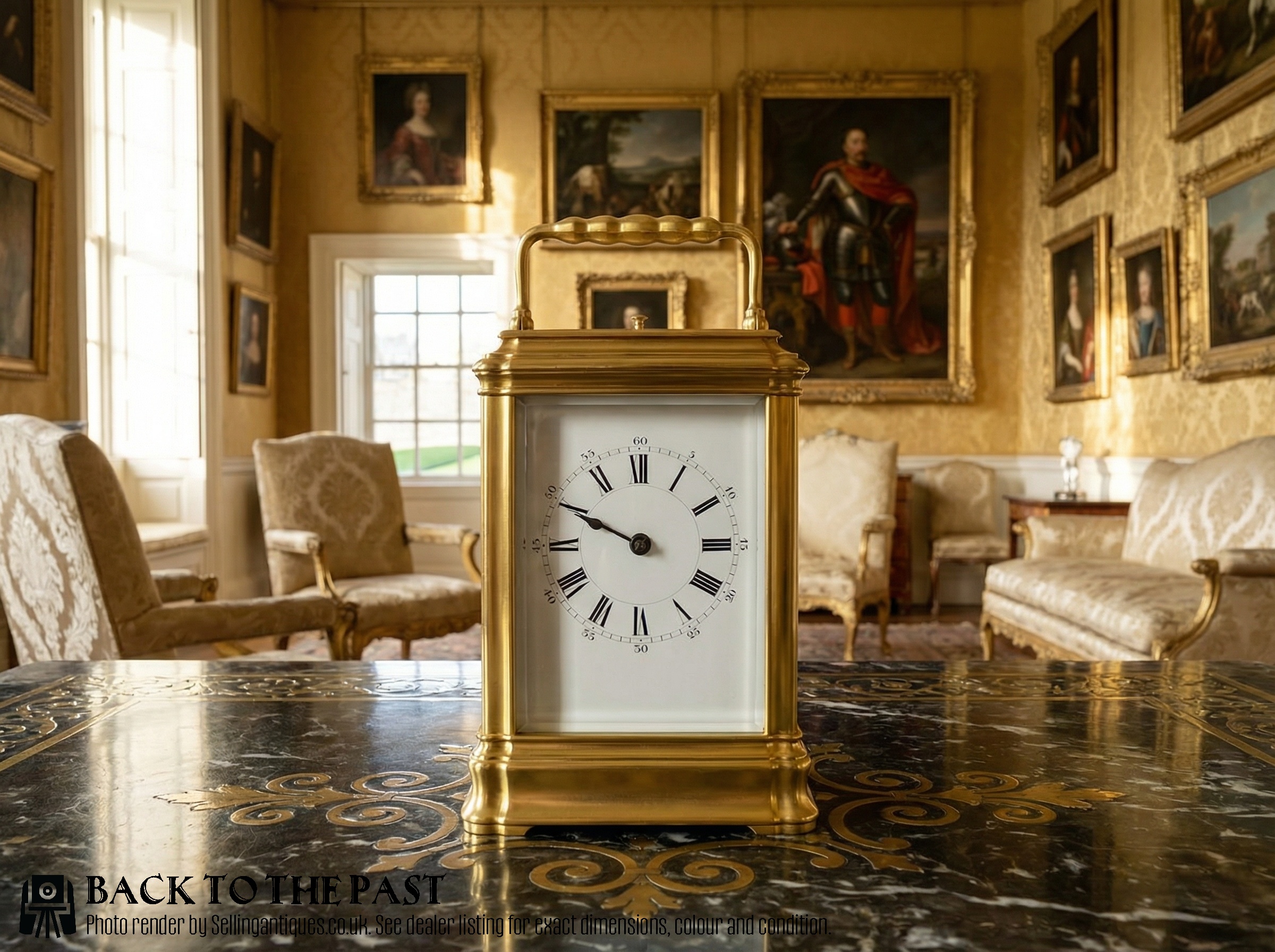
Repeat Carriage Clock
A repeat carriage clock combines portable mechanical horology with a mechanism that sounds the time when a button or plunger is pressed. These timepieces typically originate from French workshops during the nineteenth century, spanning periods from the Victorian era into the early twentieth century.
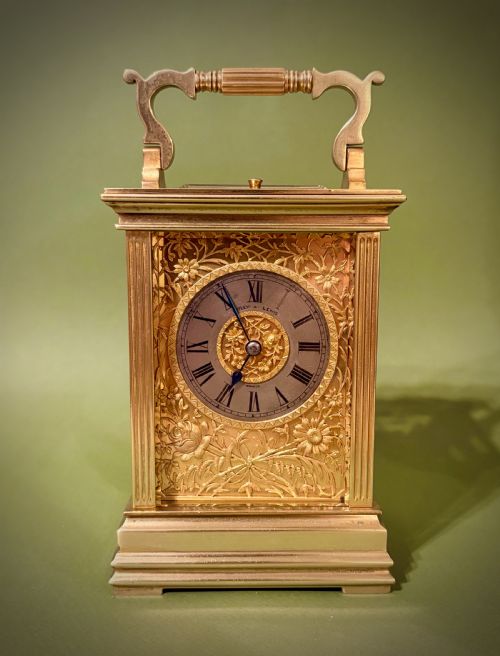
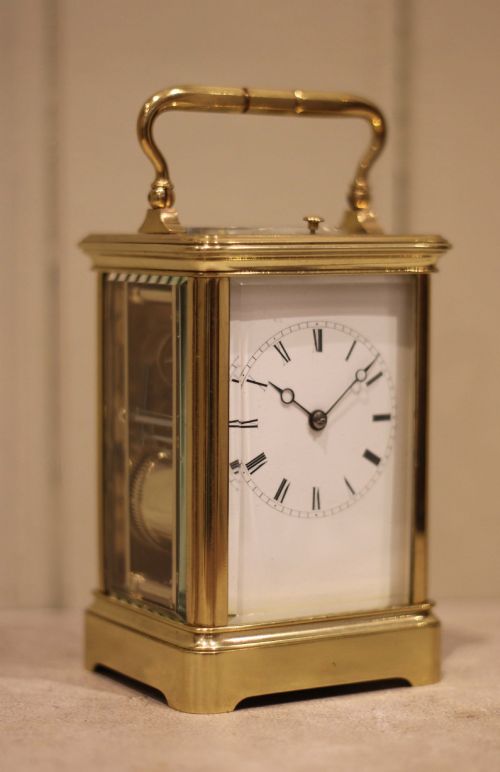
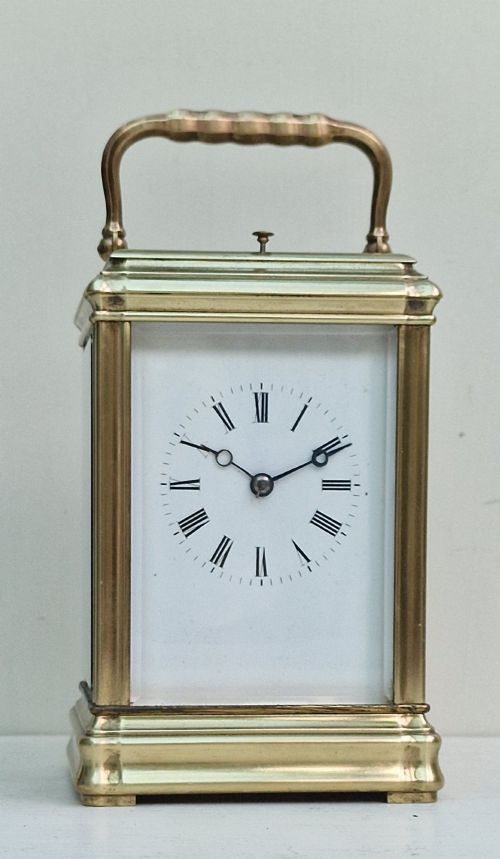
The most common examples encountered on this page feature brass or gilded brass frames with glass panels housing eight-day movements. Many incorporate striking mechanisms that sound the hours and half hours automatically alongside the repeating function.
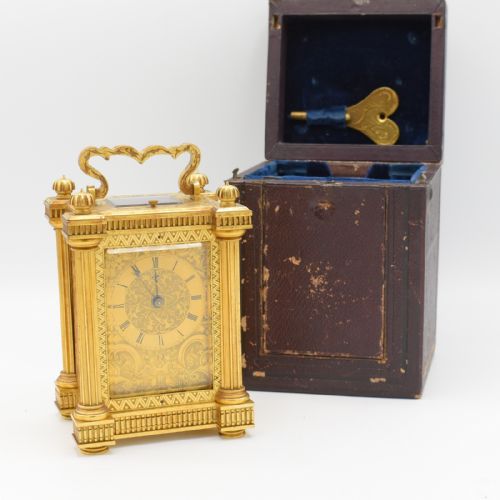
Collector interest often centres on variations involving decorative elements such as enamel dial bands, painted floral panels, or fully engraved cases. Certain pieces include alarm functions or grand sonnerie striking capabilities within gorge or doucine shaped cases.
Materials and Construction
These clocks rely on heavy brass and gilt brass frameworks designed to house intricate spring-driven movements safely while remaining portable. Glass panels permit views of the escapement and gear train from multiple angles.
Enamel is utilised for white dials bearing Roman or Arabic numerals, and occasionally for decorative floral paintings across the dial masks or case panels. Steel components operate within the movement, while leather frequently lines the fitted travel boxes associated with surviving examples.
Listings feature pieces spanning the mid-nineteenth century through to the early twentieth century, predominantly utilising brass, gilt brass, and enamel.
Quality and Craftsmanship
Quality in a repeat carriage clock rests upon the precision of the repeating mechanism and the complexity of the movement. Examples featuring grand sonnerie, quarter-striking, or five-minute repeating functions demonstrate higher horological ambition than standard hour-repeating versions.
Enclosure decoration also distinguishes the range, moving from plain polished brass cases to deeply hand-engraved frames and intricate enamel panel work. The presence of signed maker movements and original numbered cases elevates the status of an individual piece.
Drocourt·Henri Jacot·Francois Arsene Margaine·Henri Marc·Le Roy of Paris·Dwerrihouse & Bell·Howell & James
The Repeat Carriage Clock Glossary
- Repeating mechanism
- A complication operated by pressing a button on the case top to sound the last hour and quarter-hour audibly. This system allows the owner to check the time in darkness.
- Gorge case
- A distinct rectangular brass case style featuring stepped mouldings to the top and bottom frame members. This form appeared frequently in nineteenth-century French horology.
- Grand Sonnerie
- A complex striking train that chimes both the hours and the quarters automatically on passing, alongside repeating the time upon demand. It represents a pinnacle of carriage clock engineering.
- Platform escapement
- The miniature horizontal assembly mounted visibly at the top of the movement containing the balance wheel and hairspring. It regulates the timekeeping of the portable clock.
- Doucine case
- A traditional carriage clock case design featuring outward-curving ogee mouldings along the top or base profile. This subtle architectural sweep characterises specific nineteenth-century French models.
Repeat Carriage Clock: Frequently Asked Questions
How do I operate the repeat mechanism?
Press the button or plunger located on the top plate of the case firmly downwards. The internal gongs will sound the last elapsed hour and quarters.
Release the plunger gently to let the mechanism complete its sequence without forcing the components.
What is the difference between striking and repeating?
A striking mechanism sounds the hours and half-hours automatically as time passes throughout the day and night. A repeating mechanism only sounds the time when manually triggered by the user.
Many pieces combine both functions into a single movement housed within the brass and glass case.
How should I wind my carriage clock?
Use the appropriate key on the winding squares located through the back door or beneath the base plate. Turn the key steadily until resistance indicates the mainspring is fully tensioned.
Avoid over-winding to protect the delicate internal springs of the eight-day movement.
Can I travel with a antique carriage clock?
These pieces were originally designed for travel in leather protective carrying cases during the nineteenth century. Ensure the platform escapement and winding arbors are secure before moving the clock.
Modern transit requires careful packing to prevent sudden shocks from damaging the glass panels or pivot holes.