
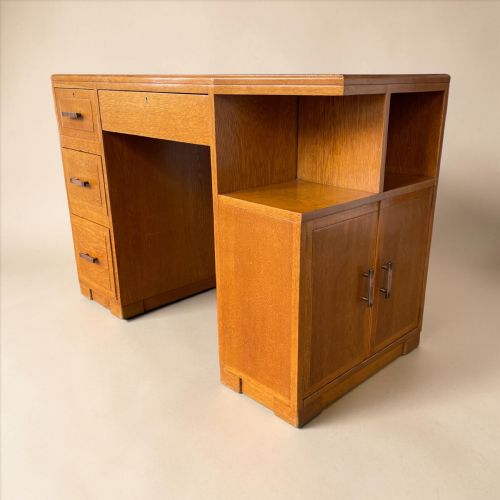

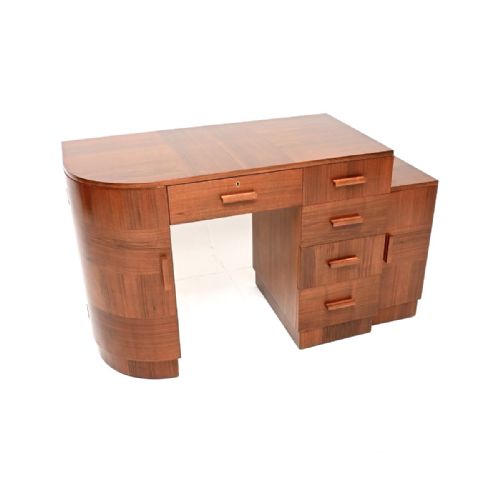


Streamline Moderne Writing Desk
A streamline moderne writing desk brings the clean architectural curves of the nineteen-thirties directly into a modern study.
Streamline Moderne Writing Desk
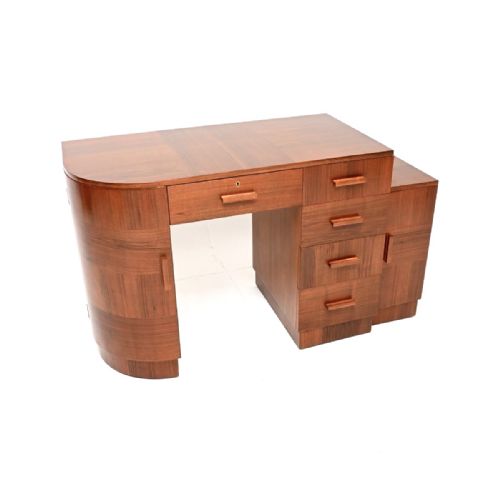
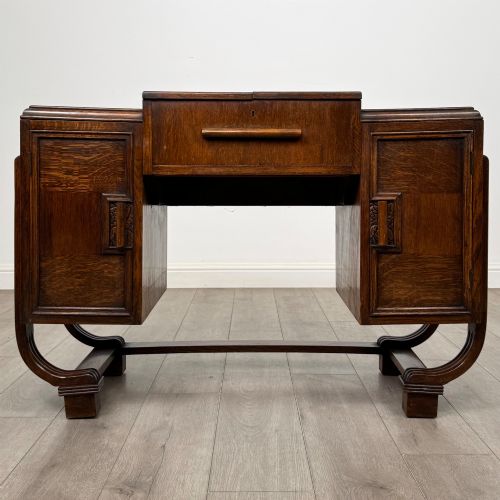
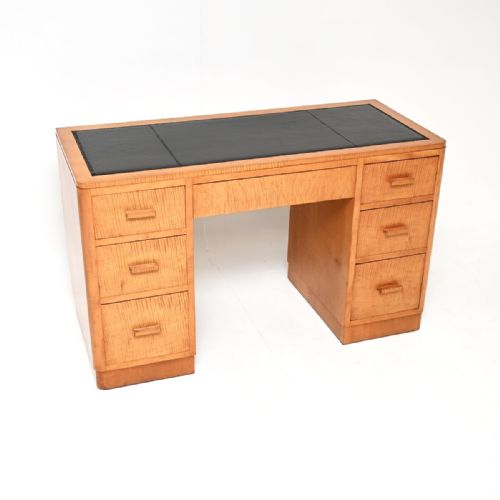
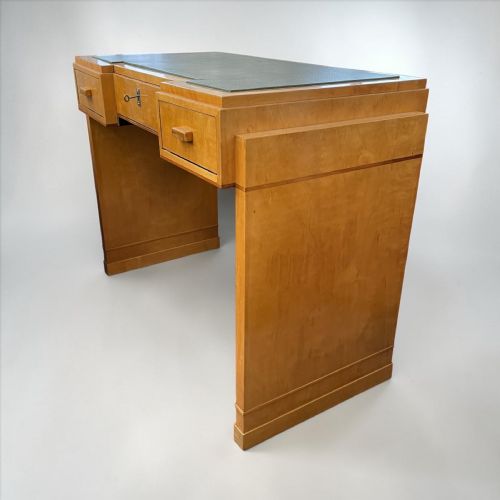
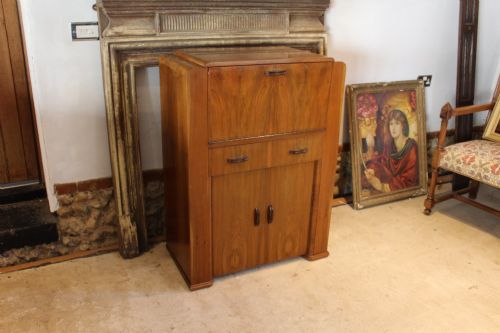
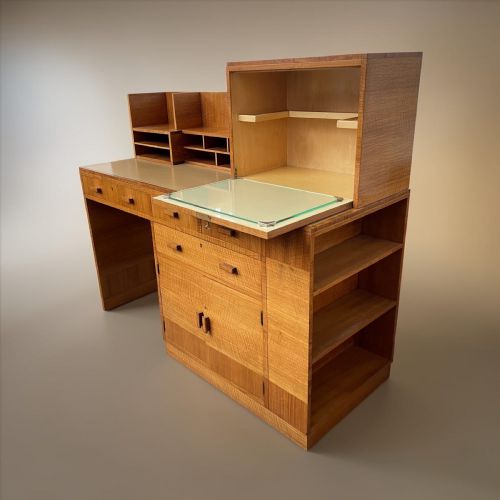
A streamline moderne writing desk is primarily defined by the rounded, aerodynamic forms of the Art Deco period, spanning the nineteen-twenties and nineteen-thirties alongside an Edwardian outlier. These pieces function as workspaces, bureau bookcases, and occasional sidetables, bringing distinct architectural presence to an interior.
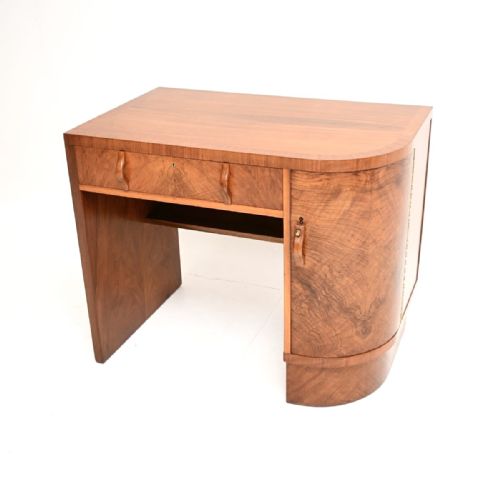
Buyers most frequently meet walnut and walnut veneer surfaces across these listings, often paired with contrasting leather top inserts and chrome or brass hardware. Oak and satin birch examples also appear, showing how makers utilised different timbers to achieve varying tones of finish.
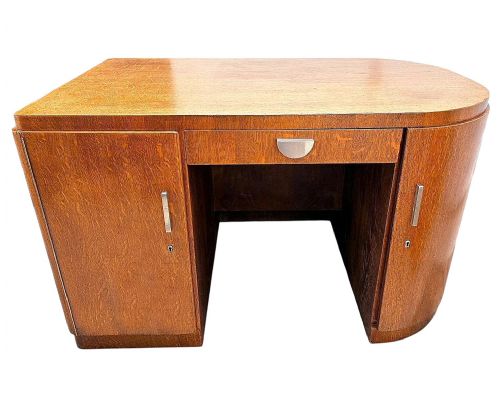
The forms range from compact writing desks to large pedestal desks and D end two sided tables. Makers such as Heal's, Betty Joel, and Maurice Adams produced significant examples during this era, alongside workshop pieces from makers like F.H. Marshall & Co Glasgow.
How they were constructed
Makers applied figured walnut veneers over solid wooden carcases to create sweeping grain patterns across the desktop and drawer fronts. Satin birch and oak were similarly selected for their distinct timber figures and light or dark coloration.
Chrome and brass components function as structural and decorative elements, forming handles, feet, and supporting frames that reinforce the horizontal momentum of the design. Leather inserts provide a dedicated writing surface inset into the wooden tops.
Materials recorded across the inventory include walnut, oak, leather, wood, chrome, walnut veneer, brass, and satin birch.
What separates the grades
The sophistication of the timber selection dictates much of the distinction between pieces, particularly in the choice of figured walnut veneer and satin birch. Matched grain patterns across multiple drawers show a higher degree of planning by the cabinet maker.
Attribution to documented makers such as Heal's or Maurice Adams separates standard workshop production from pieces bearing a known workshop provenance. The integration of metal hardware and leather inserts also reflects the original tier of manufacture.
F.H. Marshall & Co Glasgow·Heal's·Betty Joel·Maurice Adams
The Streamline Moderne Writing Desk Glossary
- Pedestal desk
- A freestanding desk comprising two supporting pedestals of drawers beneath a single desktop. This format allows access from the front while housing storage on both sides.
- Bureau bookcase
- A writing cabinet featuring a sloping fall front that opens to reveal internal pigeonholes, surmounted by a bookcase section. These combine storage and workspace in a vertical footprint.
- Walnut veneer
- A thin layer of highly figured walnut timber applied over a secondary wood foundation. This technique allowed cabinet makers to display complex grain figures across large flat surfaces.
- D end
- A desk shape where one or both ends of the top take a semicircular or curved profile. This configuration is typical of two sided tables designed to stand away from walls.
- Satin birch
- A pale, highly reflective hardwood used during the period for its fine texture and blonde tone. It provides a bright contrast to darker walnut veneers.
Streamline Moderne Writing Desk: Frequently Asked Questions
What is a streamline moderne writing desk?
A streamline moderne writing desk is a form of furniture rooted in the Art Deco style of the nineteen-thirties, characterised by curved corners, horizontal lines, and smooth surfaces.
These pieces use woods such as walnut, oak, and satin birch, frequently complemented by leather tops and chrome or brass details.
How do I use a pedestal desk?
A pedestal desk provides a central workspace with built-in drawer storage on either side for papers and writing instruments. Many examples are finished on all sides as two-sided tables, allowing them to float in the middle of a room.
The writing surface is typically lined with leather, offering a tactile and practical area for daily administrative tasks.
Where were these desks made?
The desks recorded in these listings originate primarily from British workshops and prominent London retailers operating during the interwar period. Makers such as Heal's and Maurice Adams designed distinct pieces in this idiom.
Regional makers, including firms in Glasgow, also contributed to the production of these walnut and oak writing surfaces.
How do I distinguish periods?
Pieces from the nineteen-thirties lean heavily into the aerodynamic Art Deco and modernist aesthetic, featuring smooth curves, chrome accents, and figured veneers. Earlier Edwardian or nineteen-twenties pieces may retain more traditional proportions while adopting transitional details.
Examining the construction methods, handle design, and timber types helps clarify the decade of manufacture.