



Blonde Wood Art Deco Desk
A blonde wood art deco desk brings together striking geometric form and pale timber grain for a refined workspace.
Blonde Wood Art Deco Desk
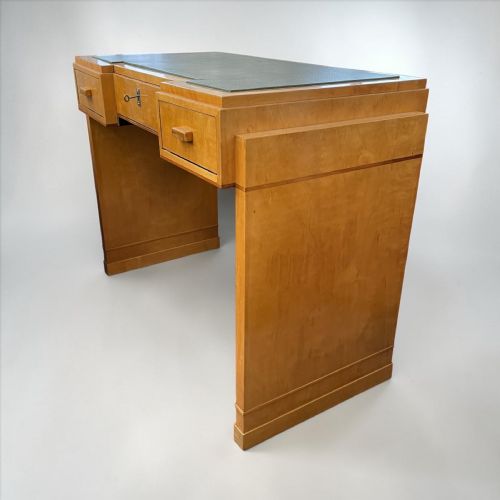
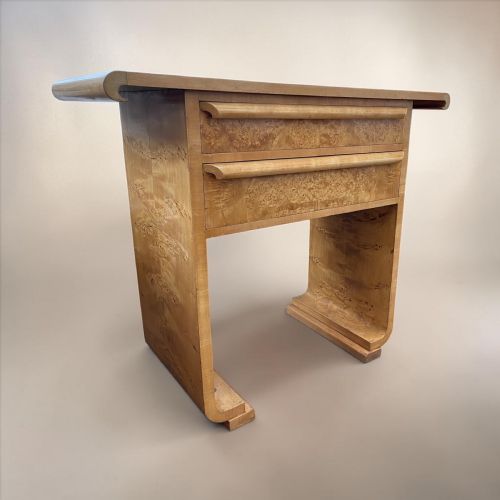
A blonde wood art deco desk represents the lighter end of the twentieth-century design spectrum, typically dating from the nineteen-twenties and nineteen-thirties. These pieces combine clean architectural lines with the distinctive pale tones of timbers such as satin birch, birdseye maple, and satinwood.
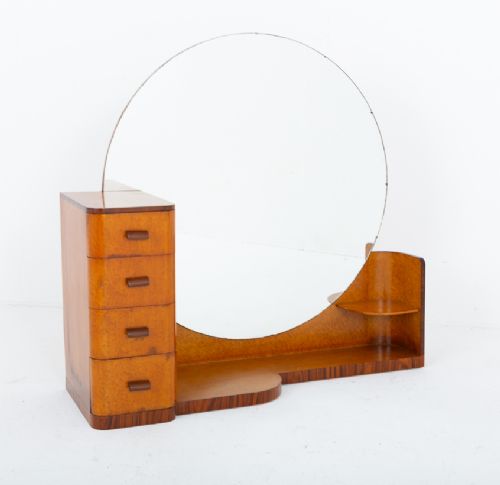
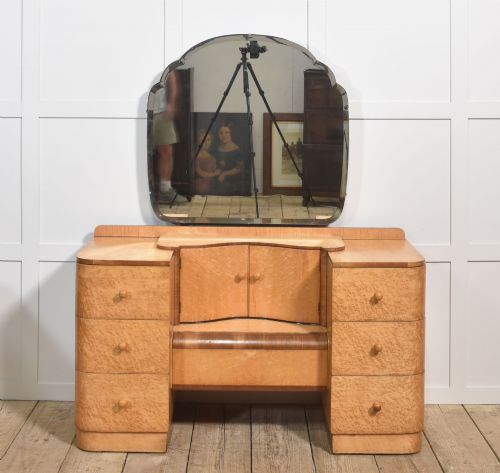
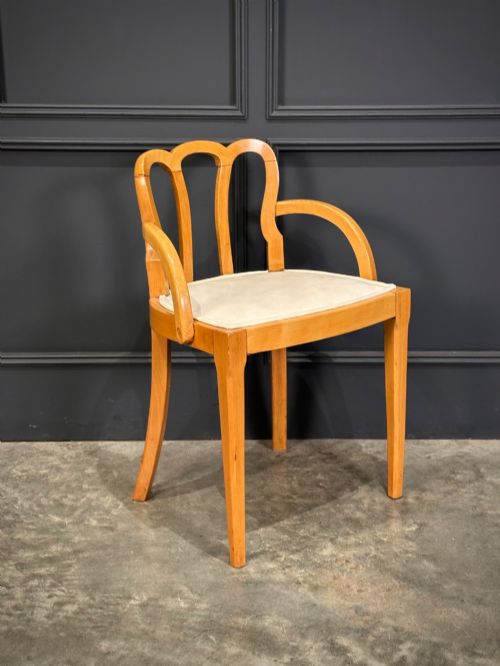
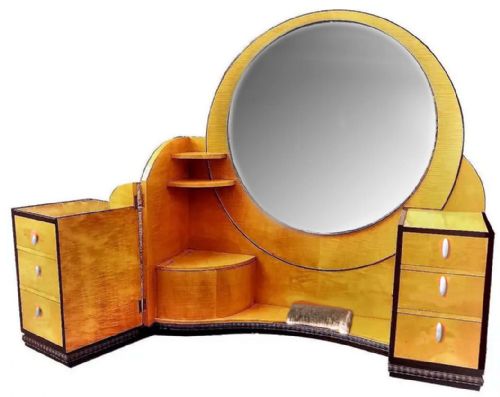
While the search targets writing surfaces, the selection on this page naturally includes related forms from the same workshops, such as dressing tables and console tables. Pedestal desks form the core of the workspace offerings, often paired with matching armchairs or side chairs.
Origins span British cabinetmakers and Scandinavian designers, reflecting a broader European movement towards simplified ornamentation. The palette relies on the natural grain of light hardwoods rather than heavy dark stains, creating an airy feel within a modernist framework.
How these pieces were constructed
Cabinetmakers utilised pale veneers like birdseye maple and satin birch applied over sturdy carcases, allowing the natural patterning of the wood to dictate the visual impact of the surface. These veneers were carefully matched and arranged to create symmetrical geometric patterns across drawer fronts and desk tops.
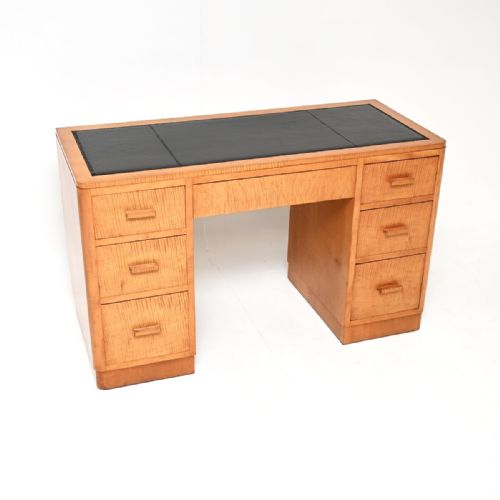
Desks frequently incorporated contrasting elements, pairing light wooden surfaces with inset leather writing panels or glass tops. Selected examples combined maple and mahogany or introduced subtle inlay work to define the edges of pedestals and tops.
Listings span the nineteen-twenties and nineteen-thirties, featuring satin birch, birdseye maple, walnut, glass, and leather.
What distinguishes the quality
Quality rests in the precision of the veneer work and the integrity of the timber selection. Finer examples display continuous grain matching across multiple drawers and balanced figuring that enhances the pale surface without distraction.
Construction methods and hardware integration separate standard production from high workshop output. Robust internal joinery, well-fitted drawers, and the thoughtful incorporation of contrasting materials like leather or fine metalwork mark the superior tier of design.
Fortnum and Mason·Harry and Lou Epstein·Hille·Betty Joel
The Blonde Wood Art Deco Desk Glossary
- Satin birch
- A pale timber with a natural sheen, frequently utilised in twentieth-century cabinetmaking for its reflective qualities. It provides a smooth surface that takes a polished finish well.
- Birdseye maple
- A decorative figure in maple wood resembling small, swirling eyes, prized for its distinctive appearance. Makers used this timber on prominent surfaces to create visual texture.
- Pedestal desk
- A freestanding writing table supported by two vertical banks of drawers rather than four legs. This form offers substantial storage whilst maintaining a formal silhouette.
- Veneer
- A thin layer of superior wood glued to a base material of lesser quality to produce a decorative surface. This technique allows cabinetmakers to display striking grain patterns economically.
Blonde Wood Art Deco Desk: Frequently Asked Questions
What defines an art deco desk?
An art deco desk relies on streamlined geometric shapes, symmetrical layouts, and minimal ornamentation to create a modern silhouette.
Pale timbers like birch and maple replace traditional dark woods, emphasising natural grain patterns over heavy carving.
How do I care for satin birch?
Satin birch surfaces require protection from direct sunlight and excessive moisture to prevent fading and warping.
Regular dusting with a soft dry cloth maintains the natural sheen without the need for heavy chemical polishes.
Are these desks suitable for daily work?
These desks provide functional workspace with integrated pedestals and drawers for storage.
Leather writing inserts offer a durable surface for writing, though modern electrical management requires careful placement.
What is Swedish Grace?
Swedish Grace is a classical-modern architectural and design style that emerged in Sweden during the nineteen-twenties.
It bridges neoclassical proportions with simplified modernist details, often utilising pale Scandinavian birch.