


Art Deco Home Office Desk
An art deco home office desk brings streamlined geometry and rich figured timbers directly into your daily workspace.
Art Deco Home Office Desk
When you search for an art deco home office desk, you encounter sturdy writing tables, pedestal desks, and fitted writing bureaux dating from the nineteen-twenties and nineteen-thirties. These pieces originate from English, French, and Scandinavian workshops, reflecting the international reach of the modernist movement.
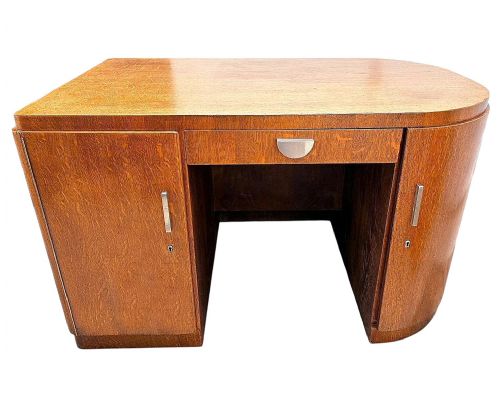
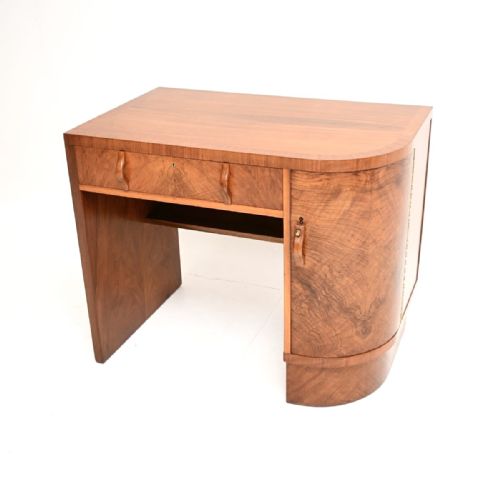
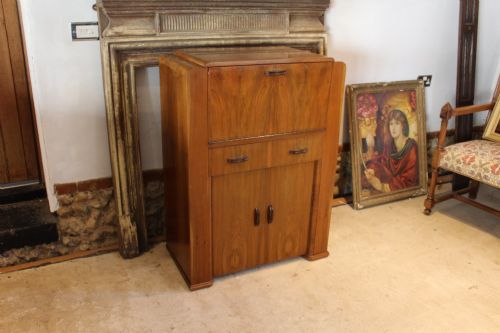
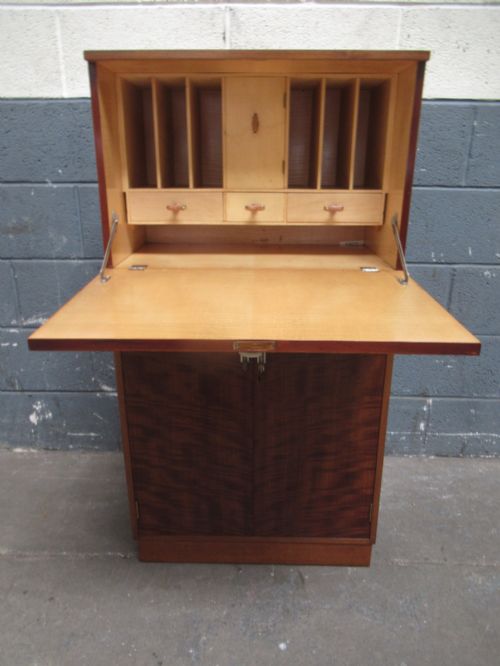
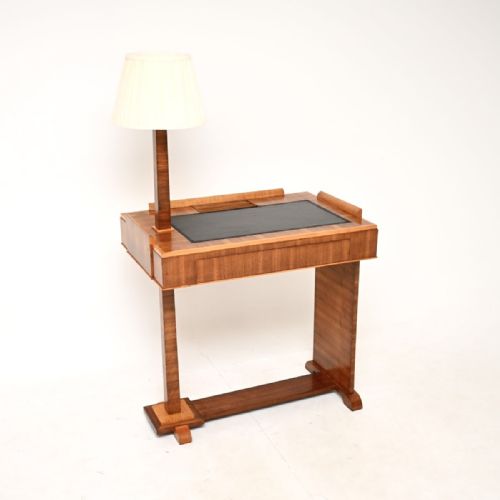
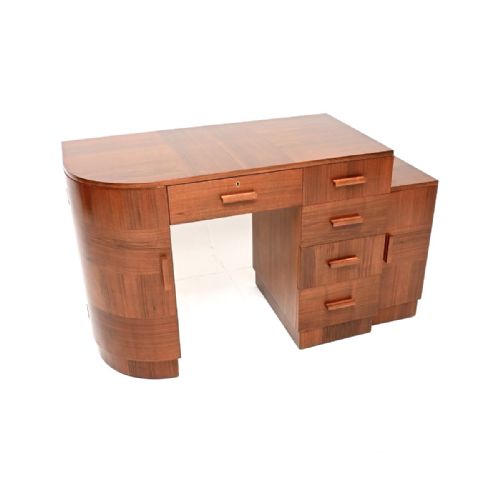
The version you are most likely to meet on this page is a figured walnut pedestal desk or a compact writing bureau, often incorporating clever internal compartments and integrated lighting. Forms range from simple rectilinear shapes to sweeping D-end and modernist designs.
Makers and retailers of the period utilised distinctive timbers and architectural silhouettes to create functional furniture for the modern study. Pieces span simple writing tables to complex dual-sided desks suited for central room placement.
Materials and construction
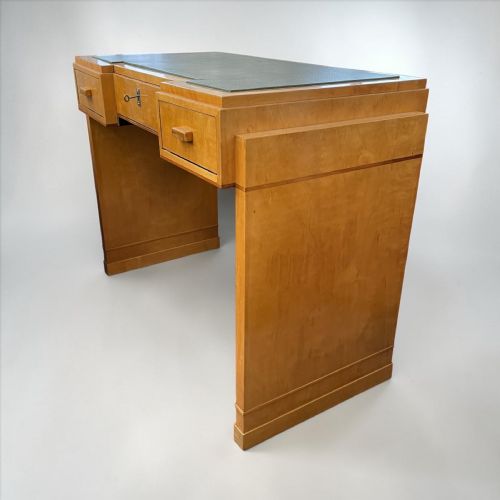
Cabinet makers constructed these desks using solid woods and intricate veneers, notably figured walnut, satin birchwood, and sycamore. The application of carefully matched veneers created striking grain patterns across the main writing surfaces and drawer fronts.
Metal elements played a crucial structural and decorative role, with brass and chrome handles, trims, and integrated lamp fittings appearing frequently. Leather inserts often lined the top surfaces to provide a durable writing area.
Several desks come equipped with integrated lamps, proving that early twentieth-century designers worried about late-night paperwork just as much as we do.
Judging the standard
Quality in these desks rests upon the selection and matching of timber veneers, particularly figured walnut and satin birchwood. Superior examples display seamless grain continuity across drawers and panels, whereas simpler versions rely on plain timber surfaces.
The complexity of the form and the integration of hardware set finer pieces apart from standard production. Desks featuring integrated lighting, specialist metalwork, and dual-sided functionality demonstrate higher ambition in design and execution.
F.H. Marshall & Co Glasgow·Étienne Kohlmann·Heal’S·Maurice Adams
The Art Deco Home Office Desk Glossary
- Writing bureau
- A desk featuring a fall-front flap that opens to reveal internal compartments and pigeonholes for correspondence. These often combine with bookcase sections above.
- Walnut veneer
- A thin layer of figured walnut timber applied over a secondary wood base to create decorative patterns. Cabinet makers prized this technique for achieving symmetrical grain displays.
- D-end
- A curved desk termination shaped like the letter D, which softens the linear geometry typical of modernist furniture. This shape often appears on double-sided executive tables.
Art Deco Home Office Desk: Frequently Asked Questions
Where were these desks made?
The pieces originate from workshops and retail houses across England, France, and Scandinavia during the interwar period. Major cities like London and Glasgow served as centres for their design and distribution.
Craftsmen adapted international modernist trends to suit domestic and executive interiors, resulting in diverse regional interpretations of the style.
How do I use one today?
These desks suit modern home offices by providing generous surface space and practical storage drawers for laptops and stationery. Double-sided models allow you to float the furniture in the middle of a room.
Compact writing bureaux offer concealed storage for paperwork, letting you close the desk at the end of the working day to restore a tidy living space.
What woods were used?
Cabinet makers relied heavily on walnut, both in solid form and as figured veneer, alongside lighter timbers such as satin birchwood and sycamore. Oak also appears in specific regional pieces.
Makers contrasted these warm natural tones with cold metallic accents in brass and chrome, defining the aesthetic of the period.
How do I identify the period?
Look for architectural geometry, clean lines, and the absence of traditional revivalist carving. The use of exotic veneers combined with chrome or brass hardware points directly to the interwar decades.
Proportions tend to be compact and purposeful, reflecting the changing interior requirements of homes during the nineteen-twenties and nineteen-thirties.