


Stoneware Water Vessel
These stoneware water vessel examples combine robust utility with Victorian artistry, offering both historical charm and practical display appeal for your home.
Stoneware Water Vessel
A stoneware water vessel represents a durable category of utilitarian and decorative ceramic containers originating primarily from the nineteenth century. Buyers searching for a stoneware water vessel encounter functional filters, large ewers, and ornamental jugs spanning Victorian and continental European traditions.
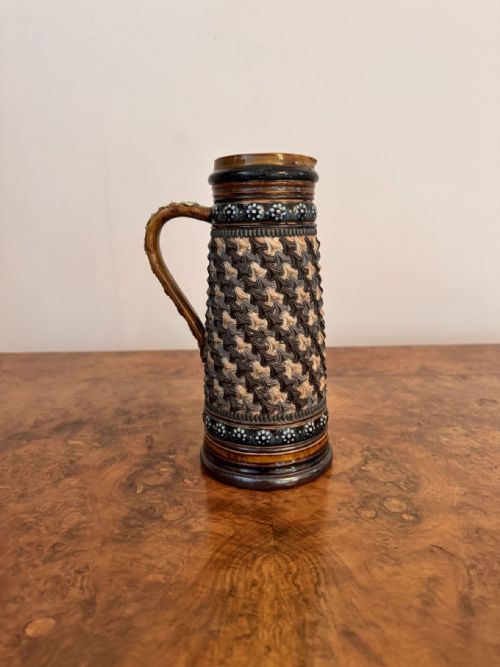
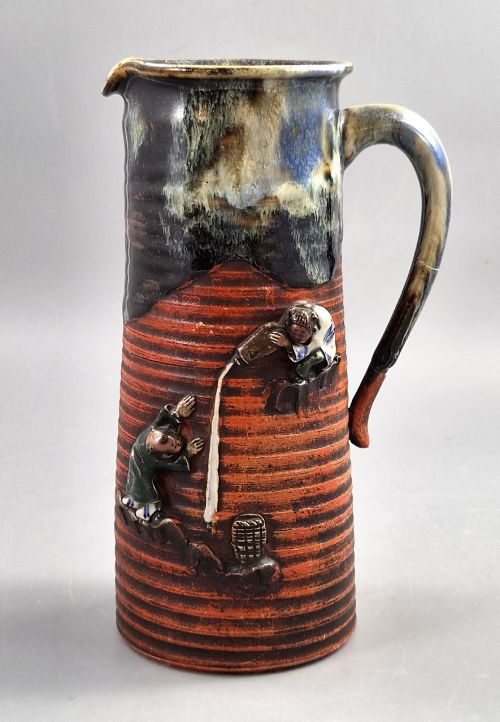
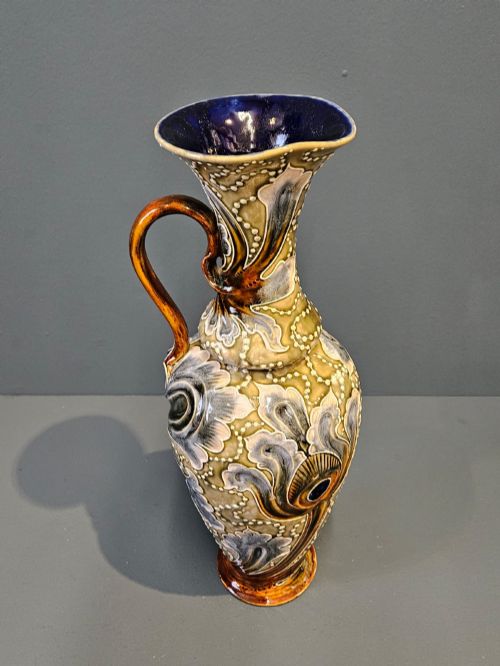
The selection ranges from utilitarian patent filters and French walnut oil jugs to highly decorative Victorian art pottery and Meiji period Japanese pitchers. Most pieces date from the Victorian era, utilising dense ceramic bodies designed to hold liquids securely.
Makers focused on both domestic utility and aesthetic presentation, resulting in items that served practical household roles before becoming collectable display objects. The assortment available reflects diverse international styles, including salt-glazed finishes and relief-moulded ornamentation.
Materials and construction
Potters utilised robust stoneware and terracotta bodies, often finished with salt glazes or ceramic glazes to ensure liquid retention and surface texture. These dense clays required high-temperature firing, resulting in durable vessels capable of withstanding daily use.
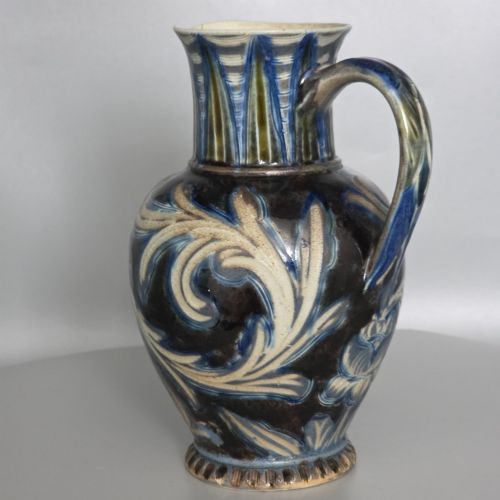
Decoration involved incised patterns, applied cream sprigs, and intricate relief-moulding techniques executed by skilled hands. Artisans applied glazes directly to the clay body before firing, creating varied surface sheens ranging from smooth salt-glaze finishes to rich decorative colourations.
Listings feature stoneware bodies, salt glazes, and terracotta forms primarily originating from Victorian Britain, France, and Japan.
Defining quality and craftsmanship
Superior examples display crisp relief moulding, precise incised decoration, and even glaze application without structural distortion. The clarity of stamped factory marks and the finesse of applied sprigs distinguish standard utilitarian pieces from exhibition-grade works.
The sophistication of the design and the balance of the form dictate the visual impact of the piece. Well-preserved surfaces retain their original glaze lustre and structural integrity, reflecting the skill of the potter during production.
Doulton Lambeth·Charles Meigh·Dee Filter Company
The Stoneware Water Vessel Glossary
- Stoneware
- A type of pottery fired at high temperatures until vitrified, making it impermeable to water even without glaze. This dense material forms the durable body of most nineteenth-century liquid containers.
- Salt Glaze
- A glossy, slightly textured finish achieved by throwing common salt into the kiln during high-temperature firing. The salt vaporises and reacts with the clay body to create an orange-peel texture.
- Sprigged
- A decorative technique where moulded clay motifs are applied to the surface of an unbaked vessel using slip. These raised ornamental details add tactile contrast to the body.
- Ewer
- A large pitcher or jug with a wide spout and flared base, traditionally designed for holding and pouring water. Many surviving examples served decorative functions in grand Victorian interiors.
- Relief-Moulded
- Ornamentation produced by pressing clay into a patterned mould to create raised designs on the vessel exterior. This technique allowed makers to achieve consistent classical or mythological scenes.
Stoneware Water Vessel: Frequently Asked Questions
How were these vessels used historically?
These vessels served various domestic functions, including filtering drinking water, storing household liquids like oil, and serving beverages at the table. Patent filters provided cleaner water for households before modern plumbing systems.
Larger decorative ewers and jugs also functioned as ornamental display pieces in Victorian parlours, reflecting the status and refined tastes of the household.
How do I identify a Victorian piece?
Victorian examples often feature characteristic design motifs such as salt-glazed finishes, applied sprigged decorations, or incised floral patterns typical of late nineteenth-century workshops. Stamped factory marks provide definitive clues to the origin and date of manufacture.
The weight, dense stoneware body, and specific stylistic cues like Art Nouveau influences also point directly to the Victorian manufacturing period.
How should I display my vessel?
These vessels suit stable surface placements where their sculptural forms and glazed surfaces can be appreciated safely. Placing them away from high-traffic edges protects their heavy ceramic bodies from accidental knocks.
Their substantial presence makes them effective focal points on large sideboards, tables, or open shelving alongside other antique ceramics.