



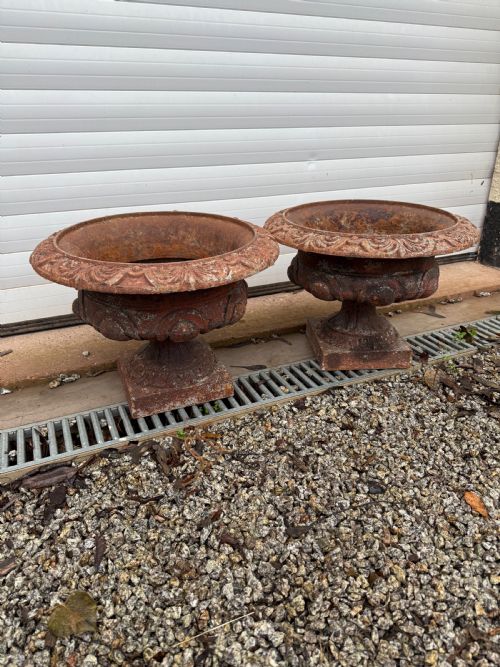
Stone Pedestal Garden Urns
Stone pedestal garden urns anchor a lawn or terrace with classical proportion, bringing enduring architectural presence to outdoor spaces.
Stone Pedestal Garden Urns
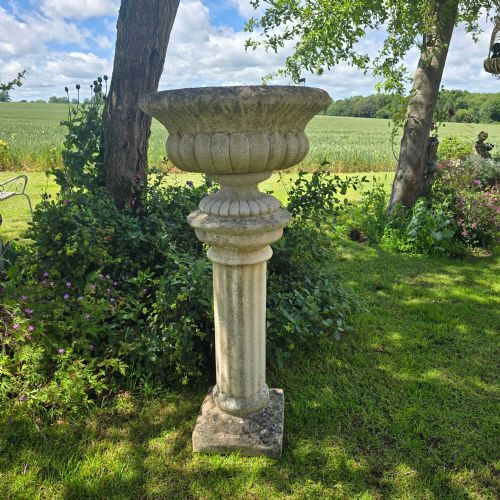
Stone pedestal garden urns combine elevated plinths with classical vessel forms to create focal points for grounds and formal paths. These compositions emerge from nineteenth-century designs, drawing on neoclassical, Gothic revival, and Victorian classical traditions to shape outdoor landscapes.
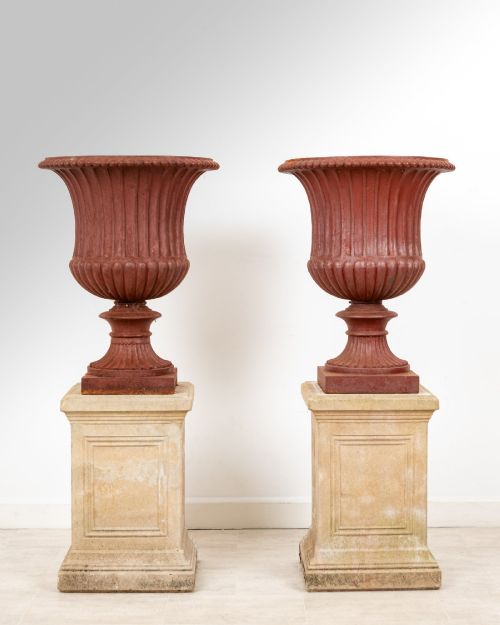
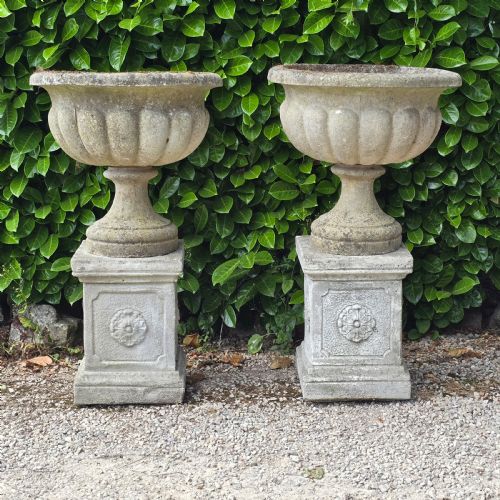
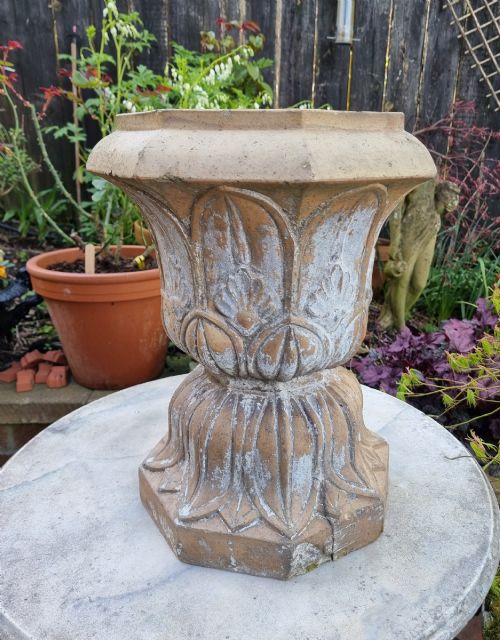
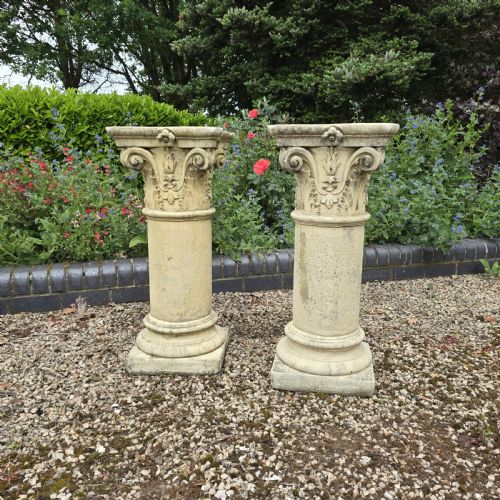
The pieces listed here most frequently appear as pairs of cast stone or cast iron campana urns resting upon matching stone pedestals and plinths. Alongside these standard campana shapes, the selection includes terracotta vessels, limestone urns, and columns originating from the nineteenth century through the mid-twentieth century.
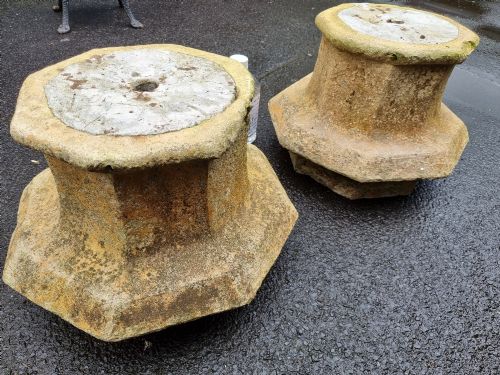
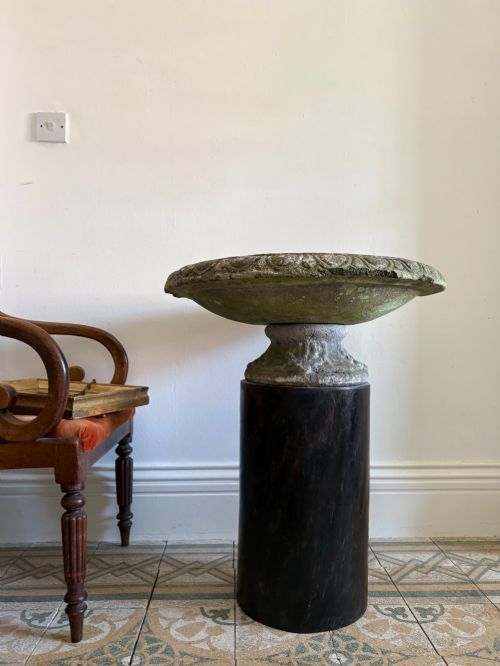
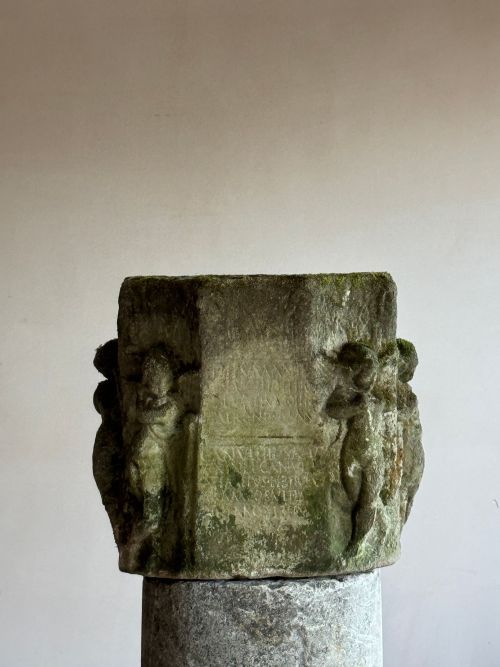
Buyers encounter architectural elements ranging from simple square plinths to elaborate multi-sided urns and carved stone altars. These structures function primarily to elevate planting bowls above ground level, framing pathways or terminating garden vistas.
Materials and production methods
Foundries and stonemasons utilised durable outdoor media, casting iron or pouring reconstituted stone into moulds to achieve classical relief ornament. Cast iron components provide sturdy metallic strength for campana profiles, while cast stone and composite stone mixtures replicate the texture of natural quarried rock.
Masons carved other examples directly from blocks of limestone, marble, or sandstone using chisels to define acanthus leaves and fluted columns. Terracotta variants required pressing clay into moulds before firing, yielding porous vessels suited to traditional garden cultivation.
Listings feature nineteenth-century cast iron, terracotta, and cast stone pieces spanning neoclassical and Gothic revival styles.
Evaluating the pieces
Quality rests upon the crispness of the moulded or carved detail, where sharp acanthus leaves and well-defined rims distinguish finer architectural work from soft or worn castings. The integration between the urn and its pedestal also matters, as balanced proportions create a cohesive silhouette rather than an mismatched assembly.
The degree and character of natural weathering influence the visual success of each piece, with organic mossing and stable patination adding depth to the stone or iron surfaces. Structural integrity remains essential, determining whether heavy cast elements and columns support their own weight securely over decades outdoors.
Andrew Handyside
The Stone Pedestal Garden Urns Glossary
- Campana urn
- A bell-shaped garden vessel with an everted rim and a tapering lower body, frequently mounted upon a matching pedestal. This classical profile derives from ancient Roman bronze and marble models.
- Plinth
- A heavy rectangular or square block that serves as the base for an urn, column, or statue. Plinths elevate garden ornaments to improve their sightlines within a landscape.
- Terracotta
- Fired unglazed clay exhibiting warm reddish-brown earthen tones. It provides a traditional porous container for growing plants in formal gardens.
- Reconstituted stone
- A durable composite material made from crushed stone aggregate bound with cement or resin, cast into moulds to imitate natural carved stone.
- Neoclassical
- A decorative style inspired by the classical architecture and art of ancient Greece and Rome. It emphasises symmetry, restrained ornament, and formal proportion.
Stone Pedestal Garden Urns: Frequently Asked Questions
How do I secure stone pedestal garden urns on grass?
Heavy stone and cast iron urns often stand safely on level ground under their own considerable weight without special foundations. For softer lawns or exposed windy sites, a concealed concrete pad or flagstone base prevents settling and keeps the column plumb.
Ensuring the pedestal rests on a flat, stable surface protects the joints between the base and the vessel above from uneven stress and potential fracture.
Can cast iron urns stay outside in winter?
Cast iron and heavy stone garden urns withstand winter frost effectively, provided adequate drainage prevents trapped water from expanding inside the bowl. Raising the base slightly off the ground with small slate shims prevents moisture absorption from wet winter soil.
Terracotta vessels require more careful observation, as freezing moisture can crack porous clay if the damp soil inside freezes solid.
What plants suit a campana urn?
Trailing plants such as ivy, cascading lobelia, and small evergreen shrubs complement the high profile of a campana urn by spilling gracefully over the rim. Boxwood spheres or formal bay trees also provide architectural contrast against classical stone pedestals.
The elevated position of the planting bowl ensures trailing varieties receive adequate light and air circulation.
How do I clean weathered garden stone?
Gentle washing with warm water and a soft bristle brush removes accumulated surface dirt while preserving the desirable weathered patina built up over decades outdoors. Harsh chemical cleaners and pressure washers strip away the aged surface character and erode softer stone or cast composite materials.
Allowing natural moss and lichen to remain adds visual depth to nineteenth-century garden ornaments.