


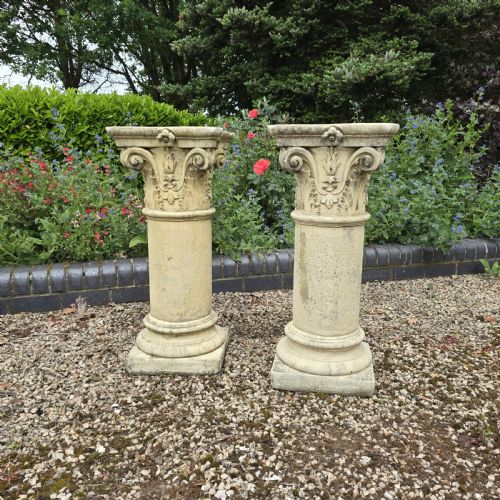
Classical Stone Pedestal Urns
Classical stone pedestal urns bring architectural dignity and classical proportion to gardens and interiors.
Classical Stone Pedestal Urns
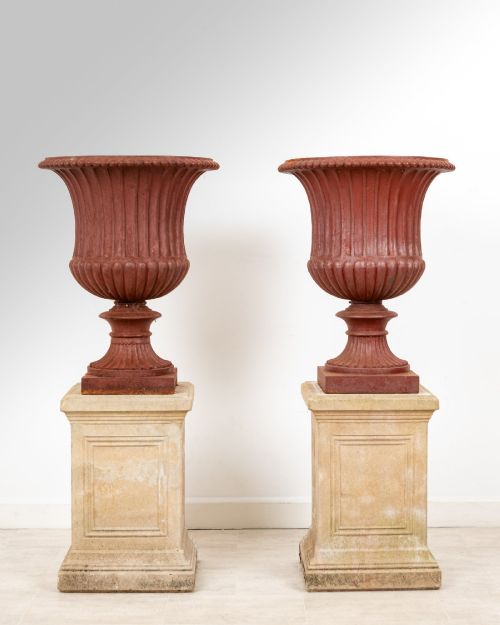
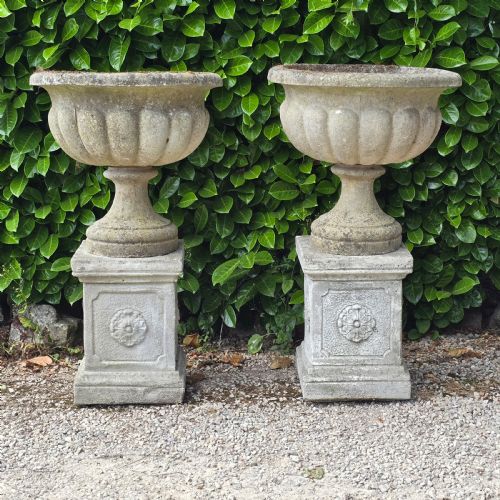
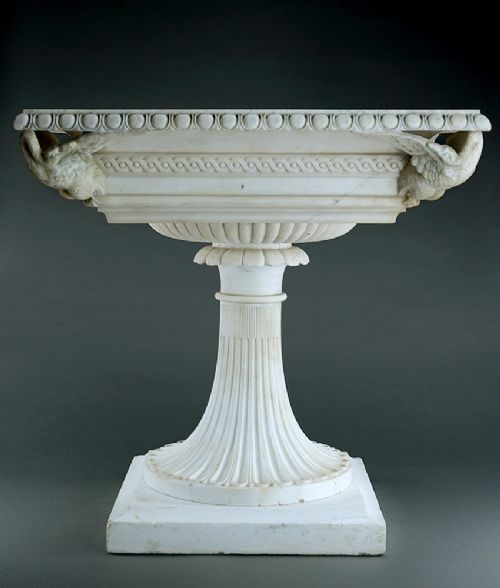
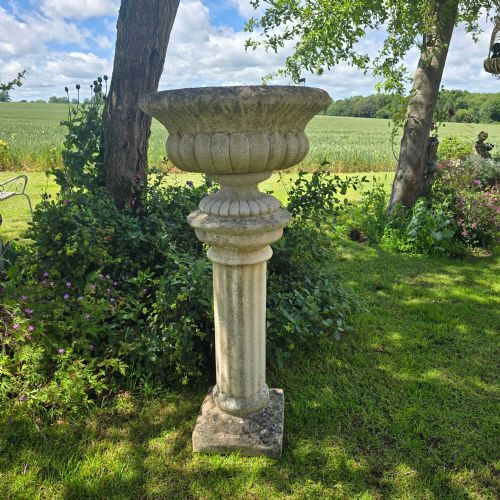
Classical stone pedestal urns combine raised vessels with sturdy plinths or columns, taking forms such as campana shapes, tazzas, and labrums. These pieces emerge predominantly from nineteenth century workshops, drawing heavily on neoclassical design principles and Grand Tour influences.
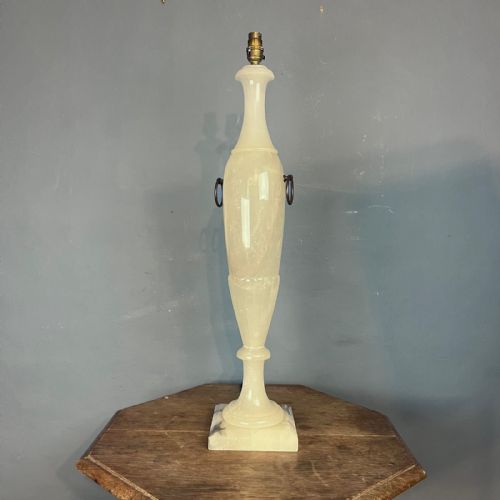
Buyers encounter garden urns alongside indoor forms like alabaster table lamps and decorative tazzas. Materials range from durable cast stone and terracotta to carved marble and alabaster, reflecting both garden statuary and interior display items.
Materials and construction methods
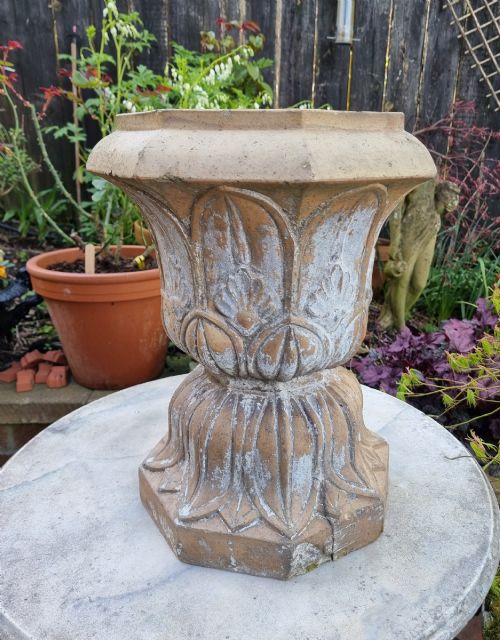
Makers utilised durable outdoor mediums including cast stone, reconstituted stone, and terracotta alongside heavy metals like cast iron for garden urns. These outdoor vessels often display the effects of weathering and patination over decades of exposure.
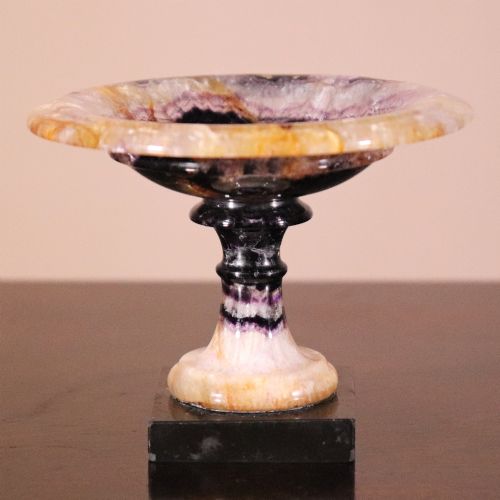
Indoor pieces and decorative tazzas relied on fine stones such as Sienna marble, Blue John, and alabaster, shaped through meticulous carving and turning techniques. Architectural elements and pedestals frequently incorporate carved stone and marble to support the heavy vessels above.
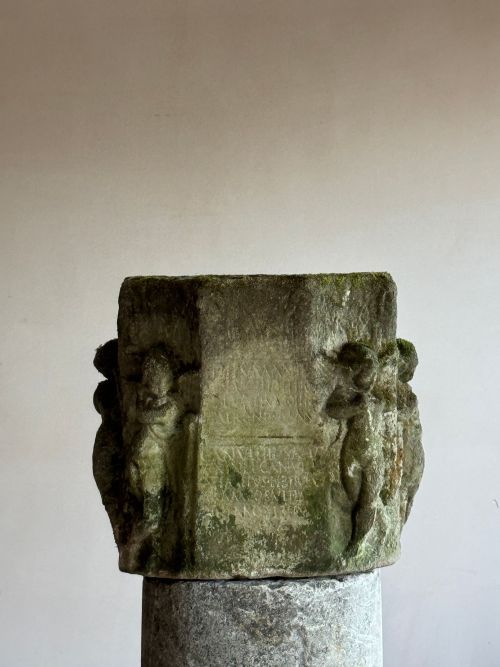
Listings feature nineteenth century Victorian pieces alongside eighteenth century carved stone examples and twentieth century garden accessories.
Assessing quality in stone and marble urns
Quality rests in the crispness of the carving, particularly on decorative elements like acanthus leaves and classical relief work. Finer examples show superior geological selection in marbles and alabaster, displaying rich natural veining and unblemished surfaces.
Proportion and structural integrity distinguish exceptional pedestals and urns from simpler utilitarian versions. Pieces that retain matched pairs, original patination, and harmonious scale between vessel and plinth command greater architectural presence.
Andrew Handyside·Boschetti
The Classical Stone Pedestal Urns Glossary
- Campana urn
- A bell-shaped garden vessel with an everted rim and a flared body, commonly mounted on a pedestal or plinth.
- Tazza
- A shallow saucer-shaped ornamental vessel or cup mounted on a stem and foot, frequently carved from marble or alabaster.
- Labrum
- A large classical basin or bowl, often associated with Roman architecture and Grand Tour marble carvings.
- Terracotta
- Fired clay used extensively for garden urns and planters, developing rich patination when exposed to the elements.
- Alabaster
- A fine-grained translucent stone utilised for decorative lamps, urns, and continental table pieces.
Classical Stone Pedestal Urns: Frequently Asked Questions
Where should I place a heavy stone urn?
These substantial garden urns require a firm, level foundation such as stone paving, a reinforced concrete pad, or a dedicated plinth to support their considerable weight.
Placing them directly on bare soil can lead to uneven sinking and potential structural stress over time.
Are marble tazzas suitable for outdoor display?
Most carved marble and alabaster tazzas are intended for interior display or sheltered garden settings rather than harsh winter exposure.
Freezing temperatures can cause moisture trapped within finer marbles or alabaster to crack the stone.
How do I distinguish cast stone from carved stone?
Carved stone displays tool marks and natural geological grain consistent with direct reduction from a larger block.
Cast stone and reconstituted stone typically exhibit a uniform aggregate texture formed within a mould.