





Stone Female Figurine
These stone female figurine carvings are classical representations and allegorical sculptures designed to bring timeless academic grace to domestic interiors.
Stone Female Figurine
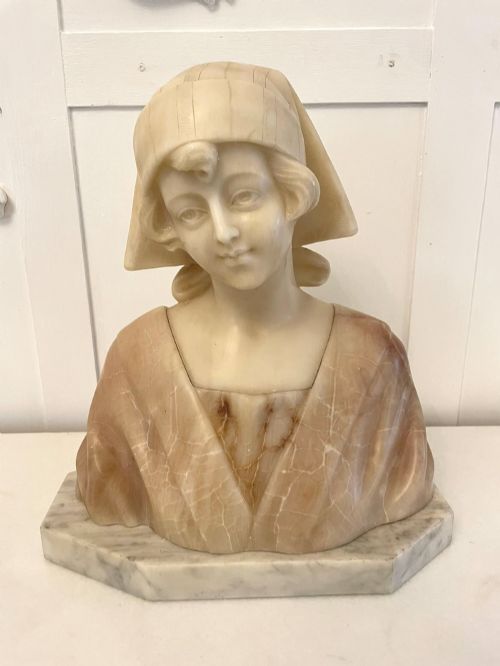
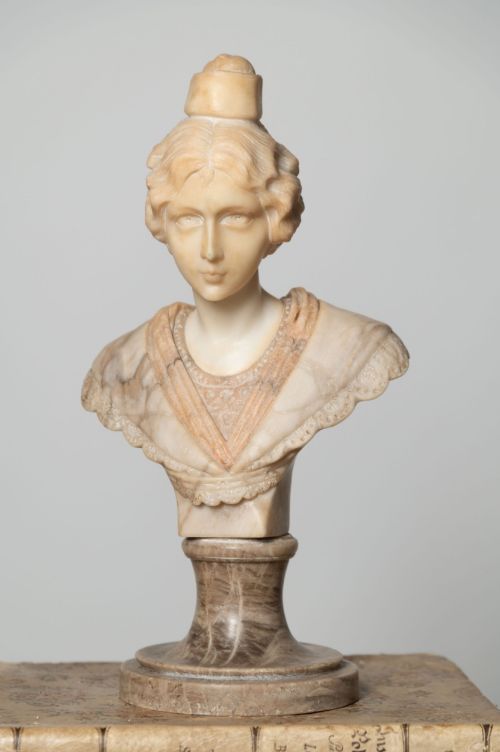
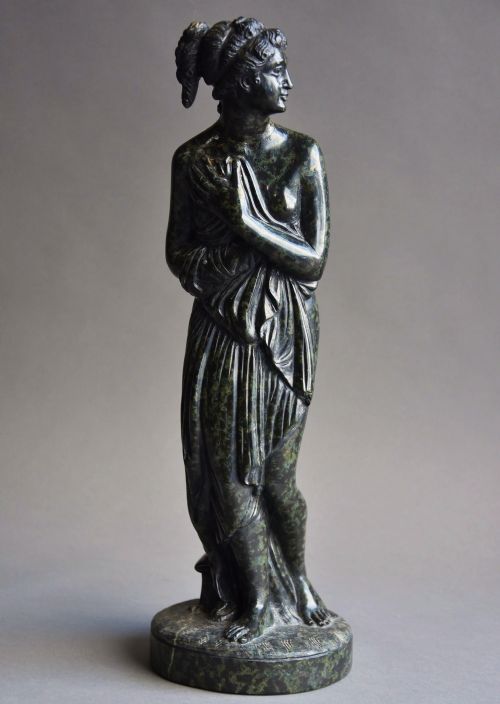
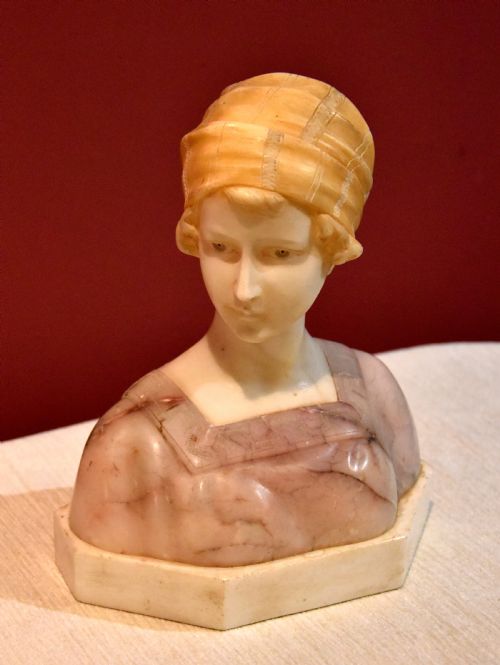
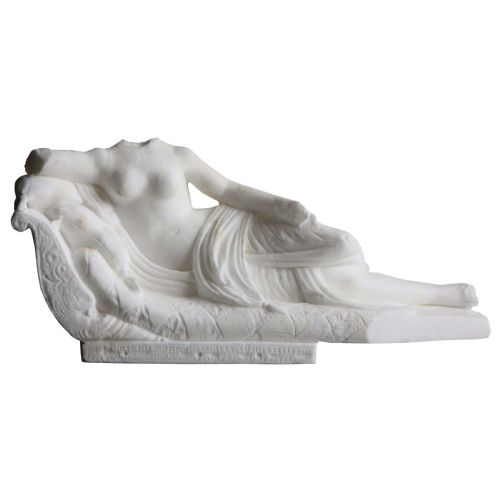
A stone female figurine represents classical goddesses, historical heroines, and idealised feminine forms modelled after antique sculpture. These pieces span the nineteenth century into the early twentieth century, taking the form of busts, reclining nudes, and full-length statues.
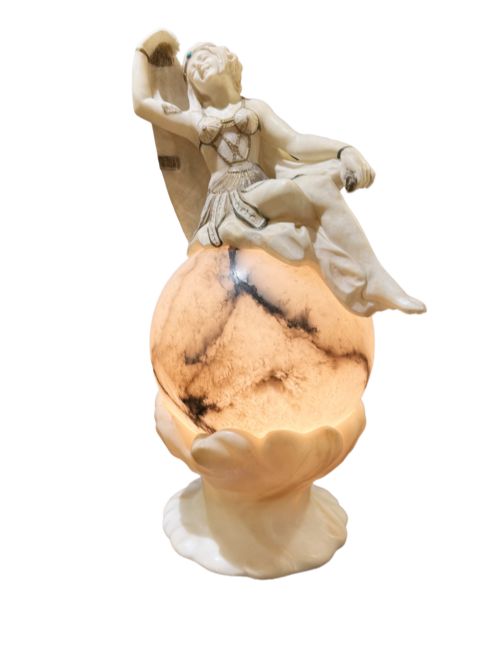
The most frequent examples on this page are carved from alabaster and white marble, often originating from French and Italian workshops. They range from Grand Tour souvenirs and Grand Siècle allegories to Art Nouveau studies of young women bathing or playing instruments.
Makers and sculptors often rendered specific subjects such as Venus, Hestia, and Pauline Bonaparte, alongside anonymous depictions of Dutch girls and ladies holding flowers or lamps. The styles shift from strict Neoclassical revivalism to flowing Belle Epoque naturalism.
Materials and Techniques
Carvers shaped these works primarily from translucent alabaster and dense white marble, including fine varieties like Carrara. Working these stones required precise chisel work and hand polishing to delineate drapery, hair texture, and facial expressions.
Certain pieces combine contrasting materials, pairing alabaster figures with mixed marble bases or incorporating subtle gilt highlights. Sculptors achieved varied textures by leaving parts of the stone matte while polishing skin surfaces to a smooth finish.
Stone Female Figurine Retail Price Guide 2026
Typical asking prices for stone female figurine among the pieces listed under this phrase on Sellingantiques today, from the lower quarter to the upper quarter. They describe what is for sale here now, not the wider market.
Several figures hold functional items, transforming classical goddesses into domestic helpers by having them steady lamps or play lyres.
Assessing Quality in Carved Figures
The choice of stone also dictates refinement, as flawless alabaster without discolouration and finely grained marble allow for greater delicacy in carved detail. Signed works by documented sculptors carry superior execution in both the primary figure and the supporting base.
Auguste Henri Carli·Fritz Kochendorfer·Pugi·R. Lusili·Greuze·A. Cipriani
The Stone Female Figurine Glossary
- Alabaster
- A soft, fine-grained stone that allows for a translucent, glowing finish when carved thinly. It was widely used across European sculpture for domestic display.
- Carrara Marble
- A high-grade white or blue-grey marble quarried in Tuscany, prized by sculptors for its uniform structure and lack of major inclusions.
- Grand Tour
- A traditional trip through Europe undertaken by upper-class scholars and collectors, during which many small marble and alabaster sculptures were acquired.
- Neoclassical
- A style of art and architecture inspired by the classical art and culture of ancient Greece and Rome, dominant during the nineteenth century.
Stone Female Figurine: Frequently Asked Questions
Are these figures solid stone?
The majority of pieces seen here are carved from solid blocks of natural alabaster or marble. A small subset utilise cast stone or plaster compositions designed to mimic carved stone.
Examining the underside or base often reveals the crystalline structure of natural stone versus the uniform texture of cast materials.
Where were these sculptures made?
The evidence points primarily to Italian and French workshops operating throughout the nineteenth and early twentieth centuries. Many pieces were created in artistic centres like Florence and Paris for the domestic and tourist markets.
Italian carvers frequently specialised in alabaster figures, while French studios often produced patinated and mixed-material classical busts.
How can I date a marble bust?
Dating relies on stylistic clues, mounting methods, and signatures, moving from nineteenth-century Neoclassical severity to softer Art Nouveau lines around 1900. Examine the base and underside for tool marks, historical labels, or signature placement.
Comparing the subject matter and dress to known periods like the Belle Epoque or Victorian era helps narrow the production decade.