


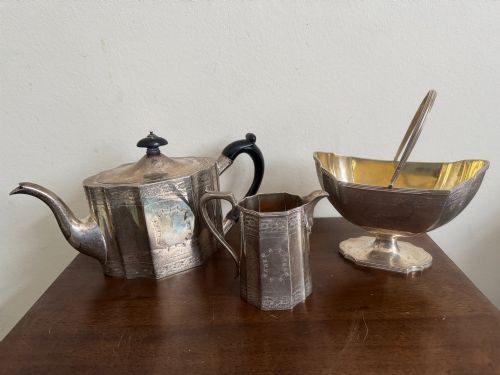
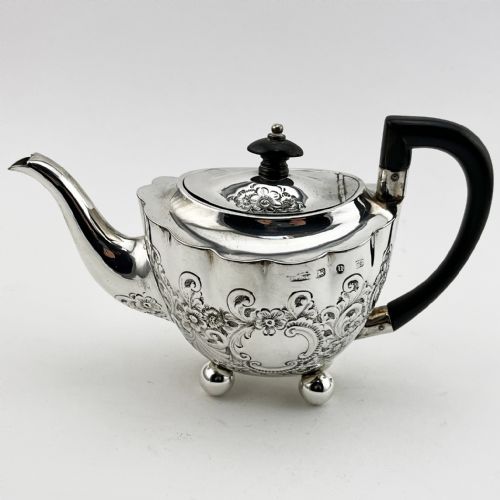
Sterling Silver Tea Service
A sterling silver tea service brings proper weight and polished shine to the table, uniting teapots, cream jugs, and sugar bowls from across the Georgian, Victorian, and Art Deco periods.
Sterling Silver Tea Service
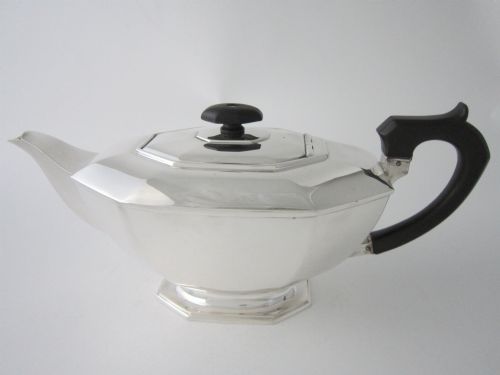
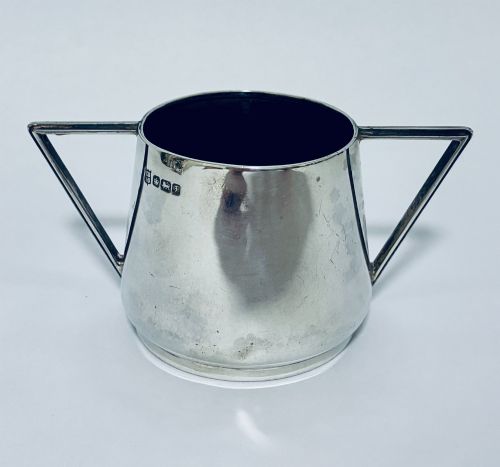
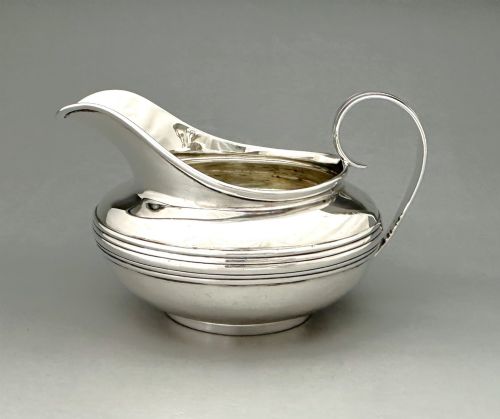
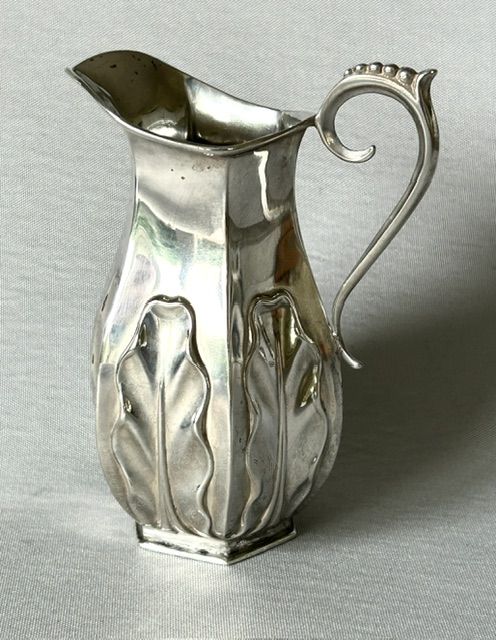
A sterling silver tea service comprises matched or assembled sets of vessels designed for the formal serving of tea and coffee. The pieces in this collection span several centuries, reaching from the balanced elegance of the Georgian period through the ornate flourishes of the Victorian era and into the clean lines of Art Deco design.
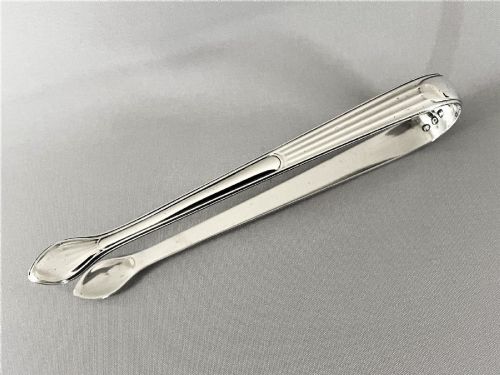
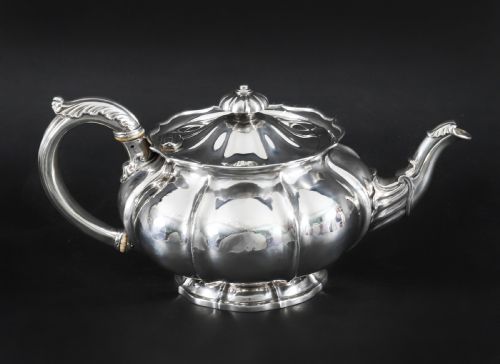
Buyers encounter complete multi-piece sets alongside individual components such as teapots, cream jugs, sugar bowls, and sugar tongs. Smaller bachelor sets appear frequently, offering diminutive proportions intended for single users or small rooms.
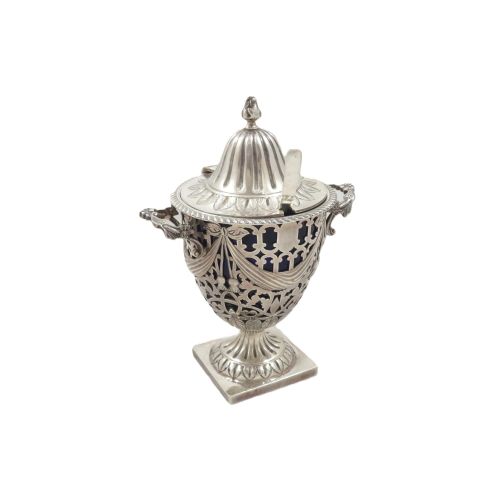
Origins range across English provincial assay offices, London workshops, Scottish makers, and continental European foundries. Forms shift from neoclassical urns and pedestal cream jugs to geometric 1920s trays and modernist service items.
How they were made
Makers shaped sterling silver through hand hammering, spinning, and casting, often raising holloware bodies from flat sheets of metal. Handles and spouts required separate casting before attachment by soldering.
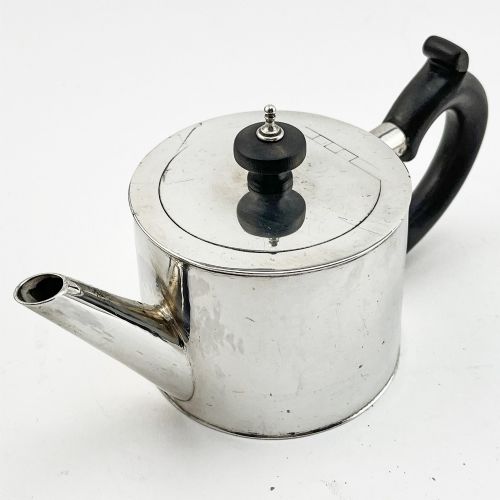
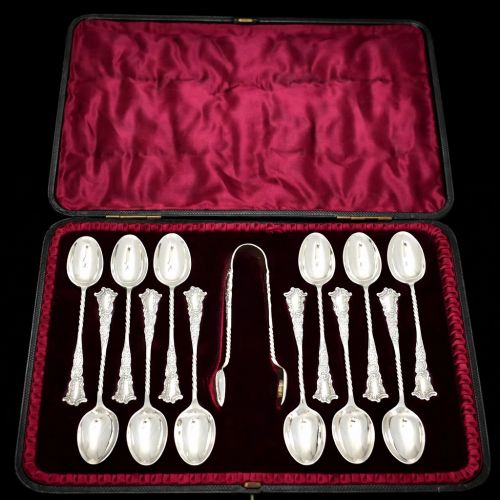
Accoutrements incorporate contrasting natural elements, including wood, ebony, and bone insulators fitted to teapot handles to prevent heat transfer. Interiors occasionally feature silver gilt washes, while fitted presentation cases utilise velvet and leatherette linings.
Listings feature periods spanning Georgian, Regency, Victorian, Edwardian, Art Deco, and Elizabeth II eras, alongside materials like ebony, bone, velvet, and silver gilt.
What varies in quality
Quality rests in the crispness of chased and engraved decoration, the structural integrity of hinged lids, and the balance of handles and spouts. Superior examples maintain thick gauge silver that resists denting and preserves sharp hallmarks through centuries of use.
The skill of the silversmith defines the hierarchy, distinguishing mass-produced commercial output from the precise handwork of recorded makers like Paul Storr or the Bateman family. Matching sets that retain their original fitted cases and associated sifter spoons represent the upper tier of preservation.
Paul Storr·Bateman Family·Peter and Ann Bateman·Robert Hennell I·John Emes·Thomas Tookey·John Rawlings·Joseph Craddock·Edward Barnard·A B Savory Sons·Georg Jensen
The Sterling Silver Tea Service Glossary
- Sterling silver
- An alloy containing 92.5 percent pure silver and 7.5 percent other metals, usually copper, chosen for durability. This standard forms the basis of British silver manufacturing.
- Hallmark
- A series of official marks stamped into metal indicating the maker, assay office, standard of purity, and date of manufacture. These stamps allow precise tracking of British silver history.
- Holloware
- Tableware items such as teapots, coffee pots, cream jugs, and sugar basins that possess hollow three-dimensional bodies. Silversmiths traditionally raised these forms from single sheets of metal.
- Silver gilt
- Sterling silver that has been coated with a thin layer of gold through a chemical or electrochemical process. This treatment protects vulnerable interior surfaces, such as sugar bowls, from the corrosive effects of contents.
- Sugar nips
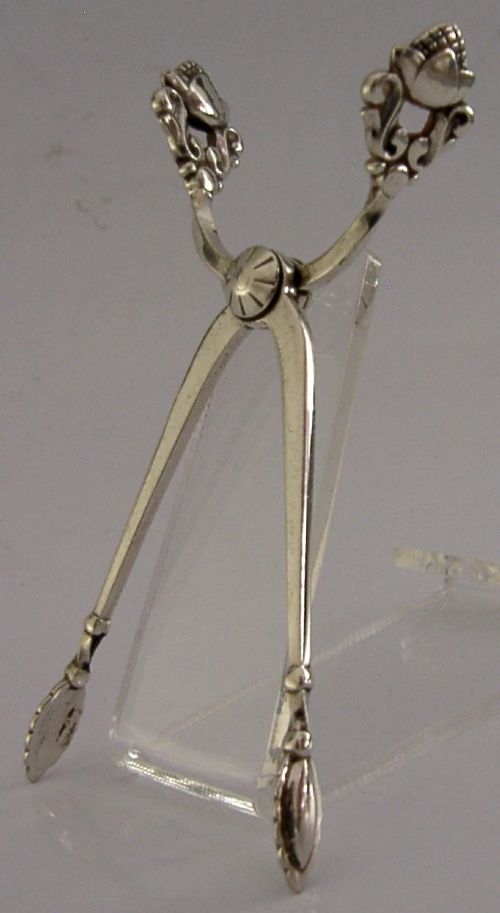
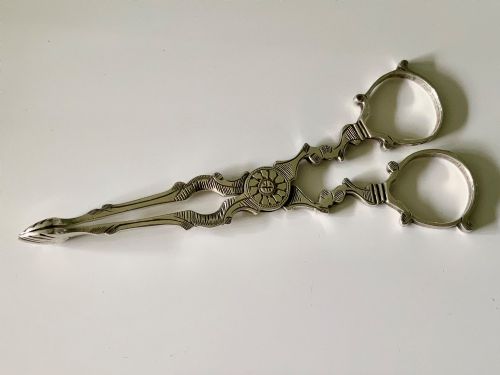
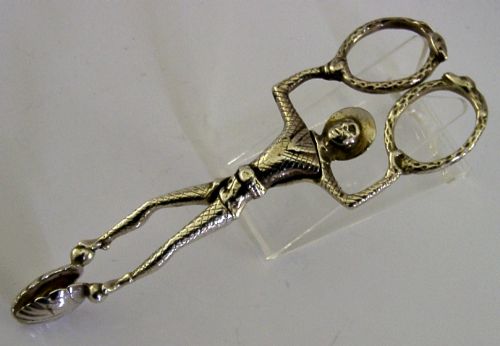
- Spring-form kitchen or table tools used for grasping sugar lumps before the widespread adoption of granulated sugar. They often feature scissor handles or pivoting arms terminating in shell grips.
Sterling Silver Tea Service: Frequently Asked Questions
How do I care for a sterling silver tea service?
Wash pieces gently in warm soapy water using a soft cloth, avoiding abrasive cleaners that wear down fine details and hallmarks. Dry thoroughly immediately after washing to prevent water spotting.
Store items in tarnish-resistant cloths or fitted cases away from direct sunlight and damp environments. Regular handling prevents stubborn tarnish from forming in hard-to-reach crevices.
Can I actually use my antique tea service?
Many buyers choose to use their silver services for special occasions, as sterling silver conducts heat efficiently and cleans up easily. Ensure you avoid boiling water directly in unlined antique vessels if soldering has grown fragile.
Check handle insulators for security before pouring hot liquids. Hand washing remains mandatory, as dishwasher detergents damage historical finishes and decorative patinas.
What is a bachelor tea set?
A bachelor tea set is a scaled-down service featuring a smaller teapot, cream jug, and sugar basin designed for a single person or intimate gatherings. These compact pieces date predominantly from the Georgian and Victorian periods.
Their reduced proportions made them practical for private sitting rooms or smaller households where full-sized service items proved cumbersome.
How do I read silver hallmarks?
Hallmarks typically include a maker's mark, a standard mark such as the lion passant for sterling, an assay office mark indicating the city of testing, and a date letter. Together these symbols provide the exact year and place of production.
Reference books and online guides help match specific leopard heads, anchors, or crowns to London, Birmingham, Chester, or provincial offices.