






Georgian Solid Silver Teapot
A georgian solid silver teapot brings the heft and shine of the eighteenth and early nineteenth centuries straight to your table.
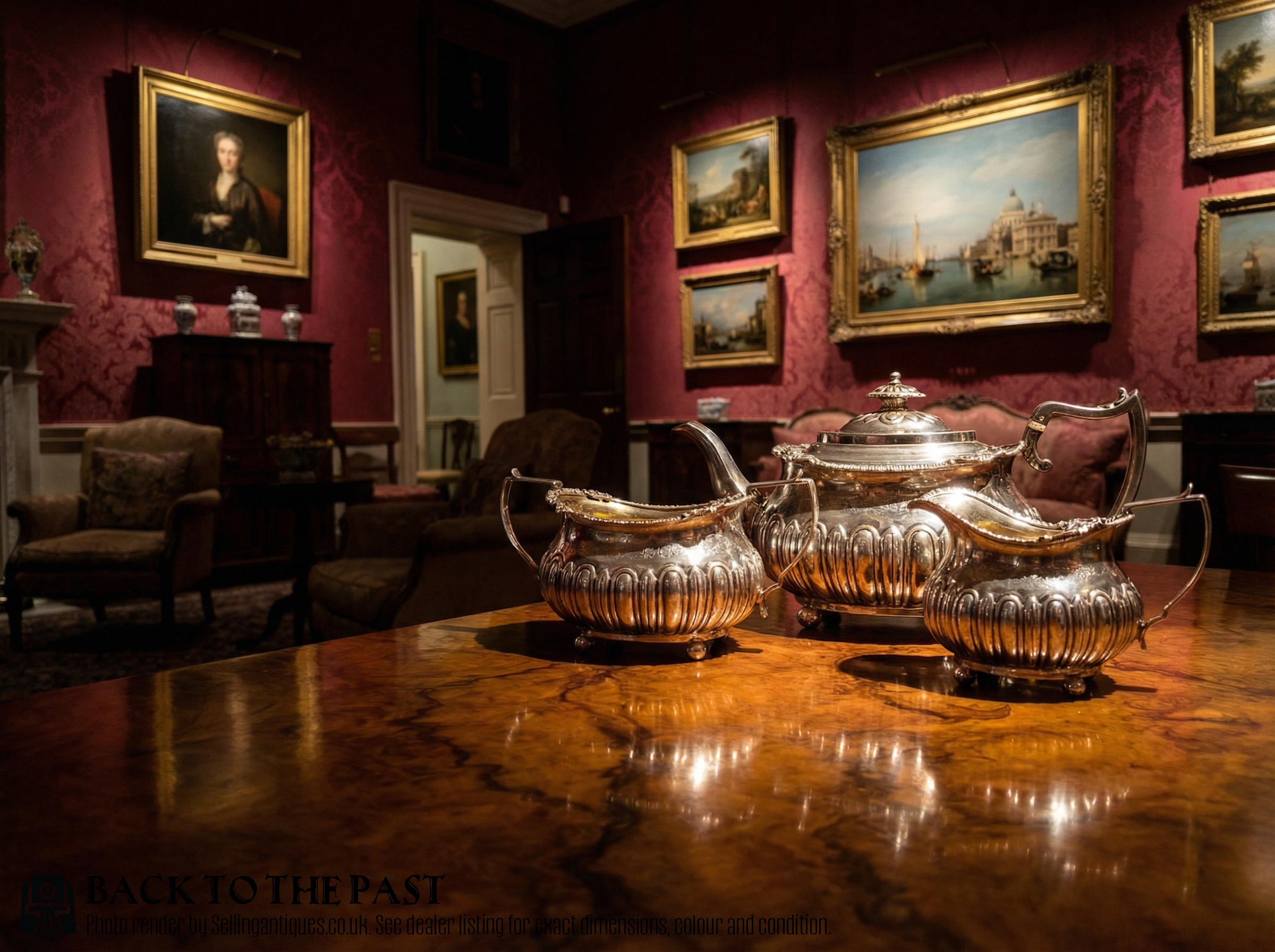
Georgian Solid Silver Teapot
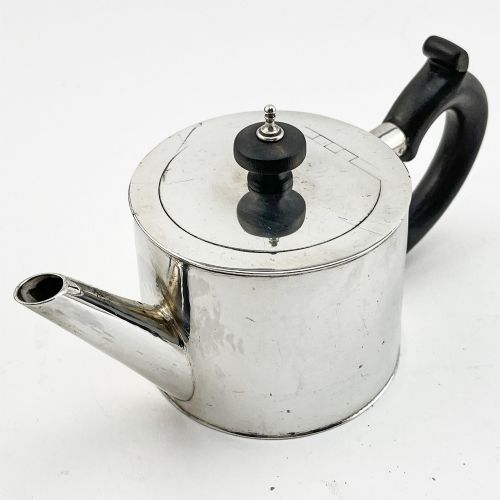
When you search for a georgian solid silver teapot, you encounter vessels shaped for tea service across the Georgian, Regency and William IV eras. The selections range from bachelor size and miniature herb pots to full sized tea sets complete with matching stands.
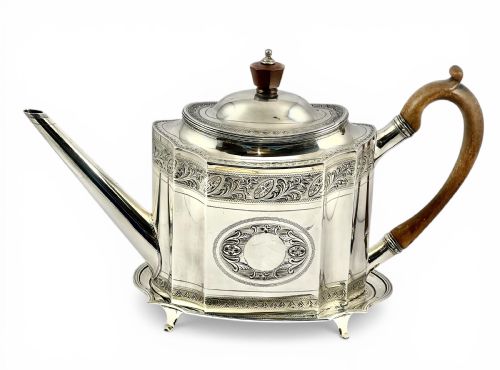
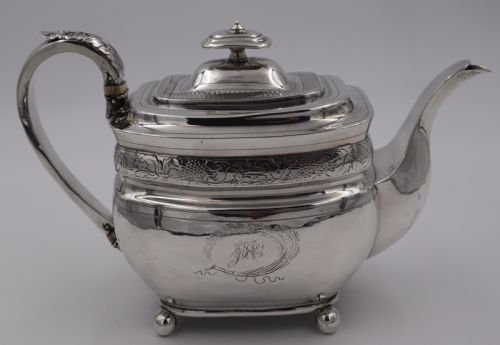
Most examples hail from London silversmiths, alongside provincial pieces from Newcastle, York and the West Country. Forms span traditional fluted and melon shapes adorned with acanthus leaf details or decorative grape vine motifs.
How they were made
Silversmiths hammered and shaped sterling silver into substantial bodies, often incorporating cast elements for handles, finials and spout mounts. Wood, ebony and silver gilt frequently appear as contrasting materials on handles and interior washes.
Detailing relied on skilled hand-chasing, fluting and engraving to apply coronet-like finials and botanical motifs directly onto the silver surface.
Georgian Solid Silver Teapot Retail Price Guide 2026
Typical asking prices for georgian solid silver teapot among the pieces listed under this phrase on Sellingantiques today, from the lower quarter to the upper quarter. They describe what is for sale here now, not the wider market.
Listings feature sterling silver, silver-gilt, wood and ebony across pieces originating from London, Newcastle, York and the West Country.
What varies in quality
The distinction between standard pieces and the finest work rests on the crispness of the chased ornamentation and the weight of the silver used in the body. Master silversmiths achieved deeper relief in melon shapes and cleaner lines in neoclassical forms.
The presence of matching stands and complete multi-piece services elevates the stature of a set, whilst provincial assay marks add historical depth for collectors.
Robert Hennell I·Joseph Craddock·Benjamin Smith·Robert Hennell II·Daniel Pontifex·John Bridge·Barnard
The Georgian Solid Silver Teapot Glossary
- Sterling silver
- A silver alloy containing 92.5 percent pure silver by mass and 7.5 percent other metals, usually copper. This standard composition provides the durability required for functional hollowware.
- Silver-gilt
- Sterling silver that has been coated with a thin layer of gold on its surface. It was frequently applied to the interior of teapots to protect the silver from tea staining.
- Bachelor size
- A smaller scale of teapot designed for individual use or intimate gatherings rather than large households. These compact pots are particularly sought after by collectors with limited space.
- Finial
- The decorative knob or ornament attached to the lid of a teapot for lifting. Georgian makers shaped these into distinct forms such as coronets or floral buds.
- Provincial silver
- Silverware made and assayed outside of London, in regional centres such as Newcastle, York or West Country towns. These pieces often bear unique maker marks characteristic of local guilds.
Georgian Solid Silver Teapot: Frequently Asked Questions
How do I date a Georgian silver teapot?
Dating relies heavily on the hallmarks stamped onto the silver, which include date letters, assay office symbols and maker marks. Stylistic shifts from neoclassical severity to ornate melon shapes also help narrow down the decade of production.
Provincial pieces often carry distinct regional stamps that reveal their exact town of origin alongside the maker's punch.
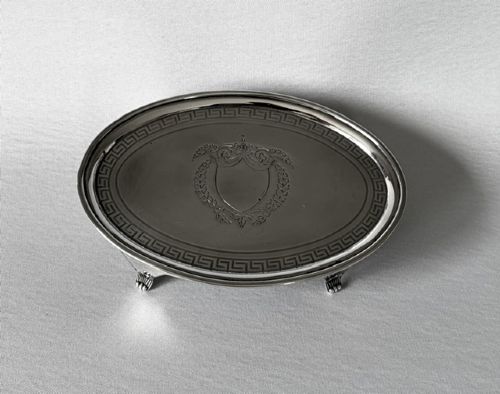
What is a teapot stand?
A teapot stand is a matching small plate or tray designed to sit underneath the teapot on a table or sideboard. It protected polished wood furniture from the heat of the freshly brewed pot.
Finding a teapot accompanied by its original matching stand is a desirable bonus for collectors.
Why do some teapots have wooden handles?
Wood and ebony handles were fitted to prevent the heat of the boiling water from transferring to the handler's hand. These organic elements provide a practical contrast to the heavy silver body.
Insulating spacers were often fitted between the silver mounts and the wooden grip for added thermal protection.