



Sterling Silver Salt Spoon
These sterling silver salt spoon examples are tiny implements designed for open cellars, bringing precision and scale to the traditional dining table.
Sterling Silver Salt Spoon
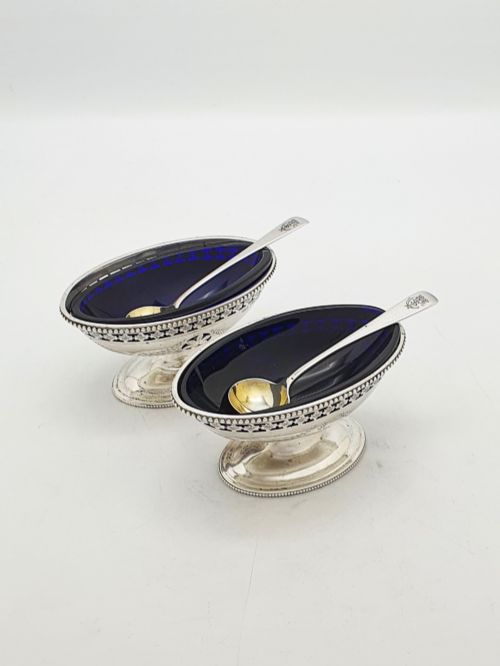
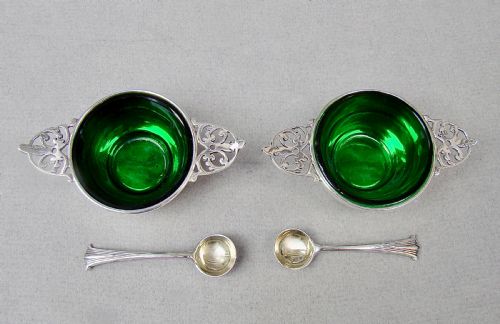
When you search for a sterling silver salt spoon, you find small tableware items made to accompany open salt cellars, mustard pots and cruet sets. These pieces appear across Victorian, Edwardian and Georgian periods, often accompanying glass liners or fitted presentation cases.
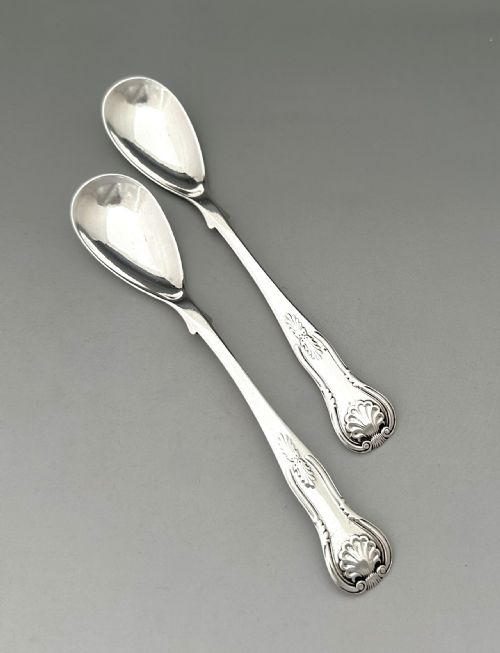
The versions most frequently met on this page date from the nineteenth and early twentieth centuries, spanning stylistic movements from Aesthetic to Art Nouveau. They emerge in various forms, from simple shovel bowls to shell designs matching larger condiment sets.
How They Were Made
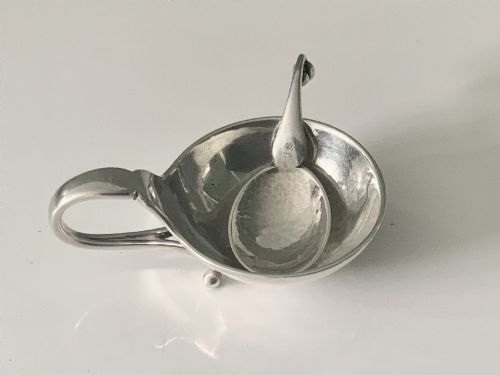
Silversmiths formed these utensils from solid sterling silver, frequently shaping bowls through hammering and joining them to slender stems. Many instances incorporate cast or chased decorative elements on the handles, reflecting the prevailing styles of their respective decades.
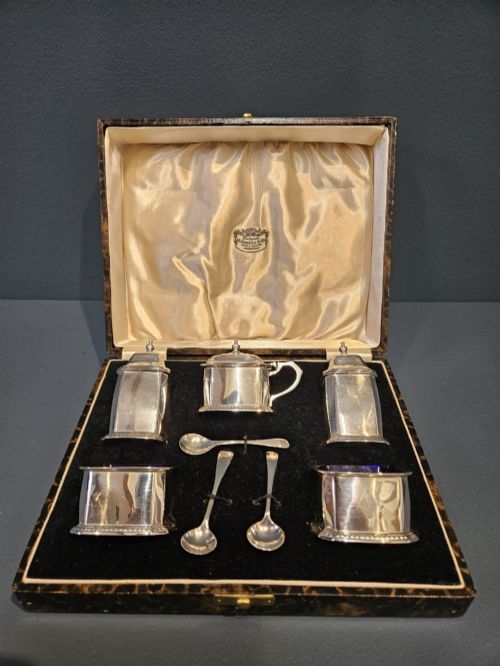
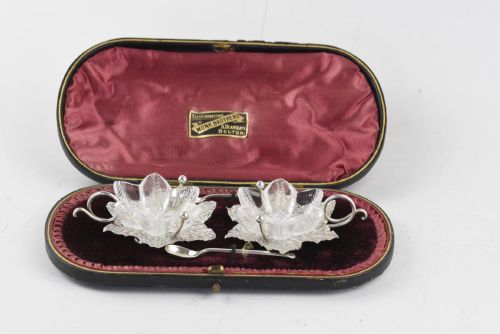
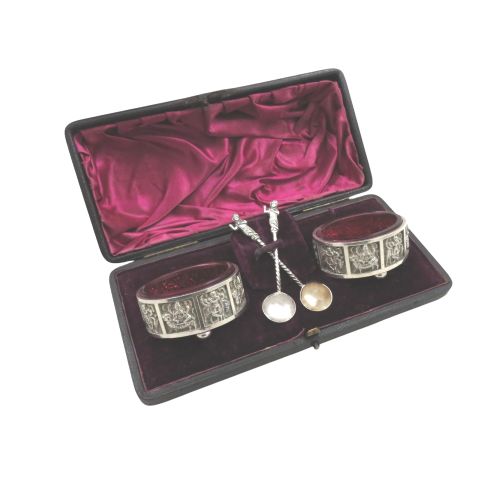
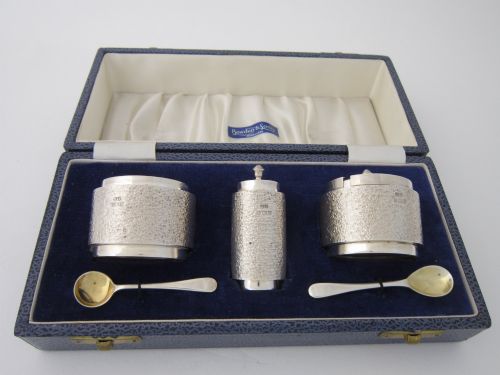
Where sets include glass components, makers combined the silver spoons with cobalt glass liners or fitted velvet and silk interior boxes. This multi-material construction defined the presentation of cruet sets throughout the Victorian and Edwardian eras.
Materials appearing alongside these utensils include cobalt glass, leather, velvet, and silk within fitted presentation boxes.
What Varies in Quality
Distinctions in quality rest upon the crispness of the handle ornamentation and the balance of the utensil in the hand. Pieces bearing clear hallmarks and matching maker marks demonstrate superior workshop origin.
The retention of original fitted cases and matching glass liners elevates the integrity of a set. Finer examples display deliberate weight in the metal and precise detailing on miniature bowls.
Georg Jensen·Josiah Williams And Co·Hamilton And Inches·John Edmonstone·Wilmot Manufacturing Co·William H Leather·Joseph Gloster·HJ Lias And Son·Vale Brothers And Sermon
The Sterling Silver Salt Spoon Glossary
- Sterling silver
- An alloy comprising ninety-two point five percent silver and seven point five percent other metals, typically copper. This standard ensures durability for small domestic tableware.
- Cruet set
- A collection of small bottles or open vessels designed to hold condiments like salt, mustard, and pepper. These sets often incorporate matching spoons and fitted presentation boxes.
- Hallmark
- An official stamp applied by an assay office to indicate metal purity, the maker, and the year of manufacture. British pieces generally carry stamps for cities such as London, Birmingham, or Edinburgh.
- Navette
- A boat-shaped decorative form featuring pointed ends, commonly found on eighteenth and nineteenth-century salt cellars and associated spoons.
- Cobalt glass
- Deep blue glass utilised for liners inside open salt cellars, creating a striking visual contrast against the surrounding polished silver.
Sterling Silver Salt Spoon: Frequently Asked Questions
What is a sterling silver salt spoon used for?
These utensils transfer dry salt from an open tabletop cellar to an individual plate. They prevent diners from using fingers or larger cutlery during meals.
Their miniature scale corresponds directly to the small opening of Victorian and Edwardian condiment vessels.
How do I date a silver salt spoon?
Dating relies upon the stamped assay office hallmarks located on the reverse of the stem or handle. These marks reveal the specific year letter and maker's stamp.
Stylistic cues such as Aesthetic movement engraving or Art Nouveau curves also help determine the era.
Are these spoons usually found in sets?
Many examples survive alongside matching open salt cellars inside original velvet or silk-lined presentation cases. Single spoons also appear independently from larger dispersed condiment collections.
Cased pairs and sets of four represent common configurations from the nineteenth century.
How should I care for silver salt spoons?
Regular gentle cleaning with a specialised silver cloth prevents tarnish accumulation on detailed handle decorations. Contact with residual salt should be rinsed away promptly to protect the metal surface.
Storage in dry conditions keeps fitted presentation boxes and fabric linings preserved over time.