
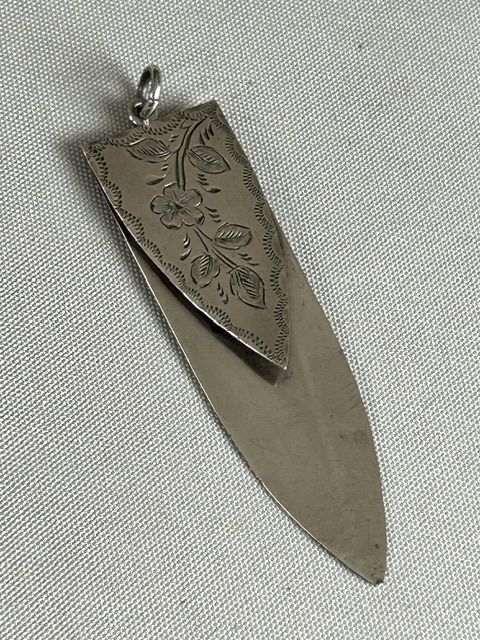


Sterling Silver Page Clip
These sterling silver page clip pieces are small desk accessories designed to hold your place in a book with style.
Sterling Silver Page Clip
The designs range from plain engraved surfaces to distinctive trowel forms and whimsical novelties such as teddy bears or advertising pieces. You are most likely to meet silver trowel bookmarks bearing Birmingham assay marks from the late nineteenth or early twentieth century. Makers such as Crisford & Norris and Adie & Lovekin produced notable examples that survive in good condition today.
Materials and construction methods
Makers fashioned these bookmarks from sterling silver, occasionally combining the precious metal with natural materials like banded agate or mother of pearl. Silversmiths utilised stamping, casting, and hand engraving techniques to shape the thin metal sheets into functional trowels and detailed novelty figures.
Assay office marks stamped directly onto the silver surface provide official confirmation of the metal standard and year of manufacture. Skilled artisans finished the pieces with careful hand polish and precise engraving, ensuring the metal remained smooth enough to protect delicate book pages.
Listings feature items spanning the Victorian and Edwardian periods, extending into the 1920s with Art Deco and novelty designs.
Distinctions in quality
The clarity of the hallmarks and the reputation of the specific silversmith firm add considerable weight to a piece's standing. Finer examples retain their original spring tension and surface detail without excessive thinning from decades of polishing.
Crisford & Norris·Adie & Lovekin
The Sterling Silver Page Clip Glossary
- Sterling silver
- A silver alloy containing 92.5 percent pure silver and 7.5 percent other metals, usually copper. This standard composition provides the durability required for functional desk objects.
- Assay mark
- A stamp or group of stamps applied to precious metal items to indicate the standard of purity, the assay office, and the year of production. These marks offer definitive historical context for antique silver.
- Banded agate
- A variety of chalcedony quartz featuring distinct parallel layers or bands of colour. Craftsmen inset this decorative stone into silver mounts to create visually striking handles.
- Novelty bookmark
- A desk accessory shaped to represent an animal, tool, or advertising subject rather than a standard geometric form. These playful designs appealed strongly to collectors of the Edwardian period.
- Trowel bookmark
- A specific form modelled after a miniature garden trowel, featuring a flat blade and a decorative handle. This shape dominated Victorian and Edwardian bookmark production.
Sterling Silver Page Clip: Frequently Asked Questions
What is a sterling silver page clip used for?
These pieces serve as decorative bookmarks designed to hold a specific page in a book without damaging the paper. Readers placed them between pages at the desk or in the library.
Beyond simple utility, they functioned as personal accessories and gift items among the literate classes during the Victorian and Edwardian periods.
How do I date an antique bookmark?
You determine the age by examining the hallmarks stamped into the silver, which reveal the assay office and the exact year of manufacture. Stylistic clues such as Art Deco geometry or Victorian ornamentation also help place the item in a specific era.
Matching the maker's mark against historical records confirms the workshop responsible for its creation.
What styles are common in these bookmarks?
The most frequent style is the miniature trowel, often featuring detailed engraving on the flat silver blade. Novelty shapes including animals and advertising subjects appear frequently in Edwardian and later twentieth-century examples.
Simpler engraved rectangular or shaped designs also represent the mainstream output of period silversmiths.
How should I care for silver bookmarks?
Store your bookmarks in a dry environment away from direct sunlight and excessive humidity to preserve the metal finish. Gentle cleaning with a soft cloth prevents the buildup of tarnish without wearing away delicate engraving.
Avoid harsh chemical dips that can damage inset materials like mother of pearl or banded agate.