


Silver Reading Accessories
Silver reading accessories are practical desk and library tools forged in precious metals to turn pages and magnify text.
Silver Reading Accessories
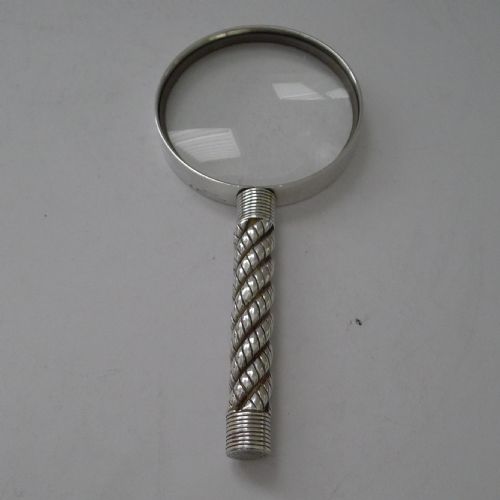
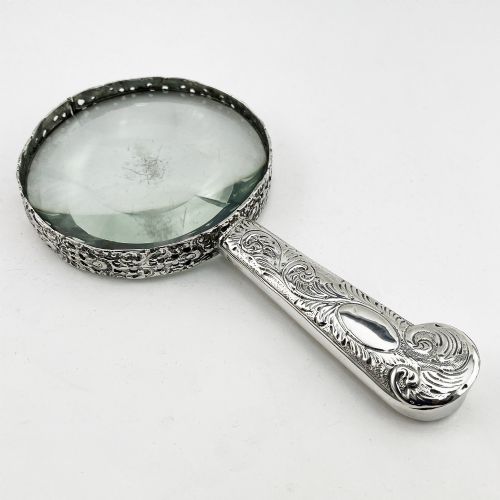
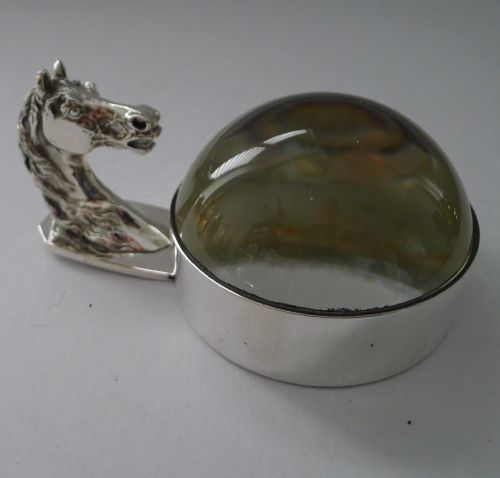
Silver reading accessories comprise magnifying glasses, page turners, bookmarks, and bookends designed for the study and the library. These pieces range from Victorian desk aids to Art Deco library fittings.
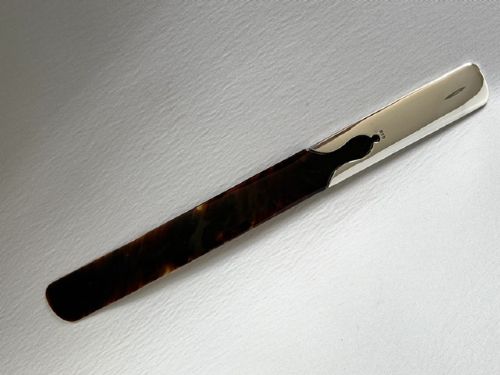
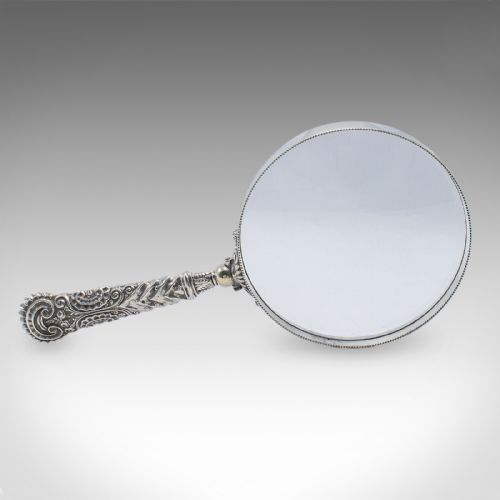
Magnifying glasses and page turners appear most frequently, often paired with tortoiseshell, shagreen, glass, or horn. Edwardian and Victorian examples sit alongside mid-century interpretations.
Bookmarks take the form of small silver trowels, sometimes accented with banded agate or modelled as novelty figures. Bookends provide structural support in chromed metal or related materials.
What varies in quality
The weight of the silver and the precision of the bezel or mount separate standard production from finer workshop output. Maker marks and clear hallmarks indicate specific silversmiths and assay offices.
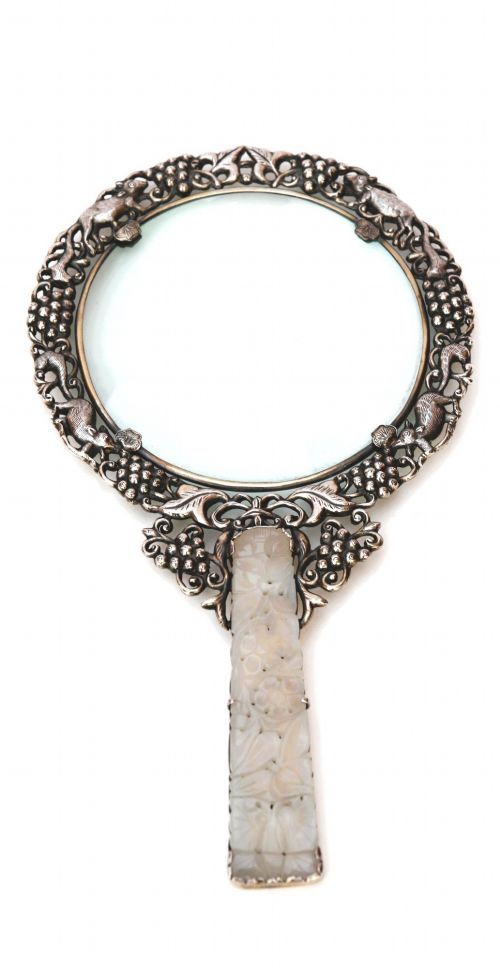
The choice of secondary material dictates the character of the piece, from polished shagreen and tortoiseshell to banded agate and carved jade. Intact, unblemished glass lenses and secure handles maintain the structural integrity of each tool.
Listings feature items from the Victorian, Edwardian, and Art Deco periods, incorporating sterling silver, shagreen, and tortoiseshell.
Hermes Paris·Broadway And Co·Crisford And Norris·Mappin And Webb·P H Vogel And Co·Asprey
The Silver Reading Accessories Glossary
- Page turner
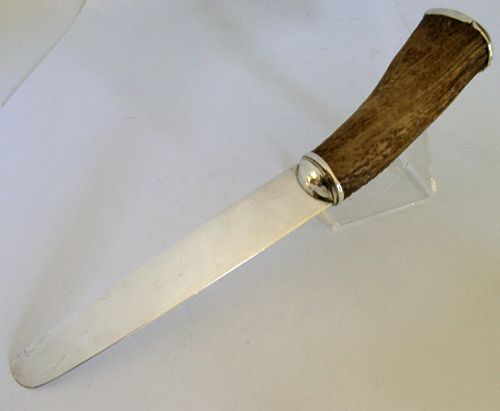
- A flat, knife-like implement used to separate the uncut pages of books. They appear in silver, horn, and tortoiseshell.
- Guilloche enamel
- A decorative technique where a precise pattern is mechanically engraved under a translucent layer of enamel. This finish is frequently found on Art Deco compacts and magnifying glasses.
- Shagreen
- Undyed skin from shark or ray, salted and dried to produce a granular, pebbled texture. It was favoured by luxury houses for desk sets and magnifying glasses.
- Trowel bookmark
- A flat bookmark shaped like a miniature bricklayer trowel, often sliding between the pages of a volume. Victorian and Edwardian silversmiths produced them with plain or engraved blades.
- Sterling silver
- An alloy consisting of silver and other metals, usually copper, to increase durability. British pieces typically bear a lion passant hallmark denoting this standard.
Silver Reading Accessories: Frequently Asked Questions
How do I care for silver reading accessories?
Keep silver components clean with a soft cloth and avoid abrasive polishes that can damage surrounding materials like enamel or shagreen. Store them away from damp environments to protect organic inlays and glass settings.
Handle magnifying glasses by the frame rather than the lens to reduce smudging and strain on the mount. Regular, gentle dusting preserves the finish of both metal and organic elements.
What periods do these pieces date from?
The selection spans the Victorian era through the Edwardian period and into the Art Deco style of the interwar years. Mid-century examples from the nineteen-fifties and sixties also appear.
Earlier pieces often feature ornate scrollwork, while later twentieth-century items lean towards geometric lines and simpler forms.
How are page turners used?
Page turners were designed to slip between uncut pages in bound volumes to separate them cleanly without tearing the paper. They rest flat on a desk when not in use.
Many collectors display them alongside books or utilise them as decorative desk paperknives.
What materials accompany the silver?
Makers incorporated natural materials including tortoiseshell, shagreen, horn, jade, and banded agate into handles and backing plates. Glass lenses form the optical core of the magnifiers.
Base metals such as brass and chromed steel provide internal structure or support for bookends.