


Antique Book Marker
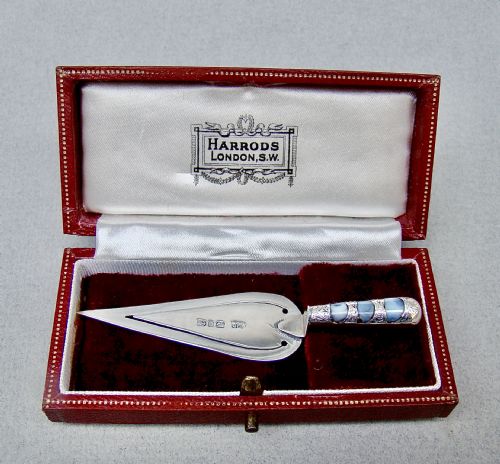
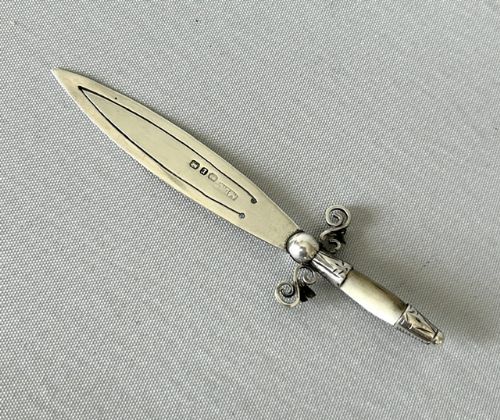
These antique book marker pieces are small desk accessories crafted in sterling silver, mother-of-pearl, and banded agate.
Antique Book Marker
An antique book marker is a desk accessory designed to hold a place in a volume, most frequently encountered in this collection as trowel-shaped pieces or novelty designs in sterling silver. These items date from the Victorian period through to the 1930s, encompassing Edwardian and George V eras. Buyers examining this category will find various forms including page turners, trowels, and novelty animals.
The materials and styles span late Victorian workmanship to 20th century novelty items, reflecting the changing tastes of readers across several decades. Birmingham and Glasgow assay offices feature among the origins, alongside pieces associated with makers such as Crisford & Norris. The assortment centres on functional desk accessories that doubled as decorative items for personal libraries.
Materials and construction methods
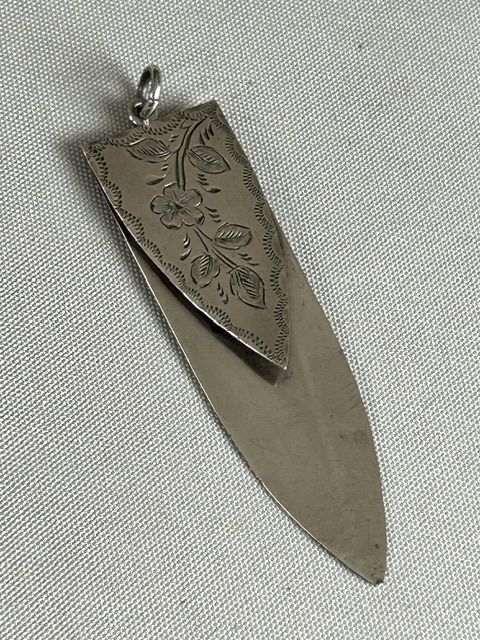
The construction of these items relies heavily on sterling silver, paired with organic or mineral elements like mother-of-pearl and banded agate. Silversmiths utilised sheet silver to form blade shapes, often incorporating engraved decoration to add surface pattern and texture.
Handles and blades were joined using traditional techniques, with mother-of-pearl carved and pinned to silver hafts. Novelty items required casting or detailed modelling to achieve figurative forms such as teddy bears and trowels.
Listings span the Victorian era through to the 1930s, featuring materials such as sterling silver, mother-of-pearl, and banded agate.
Distinctions in quality and execution
Quality in these pieces rests on the crispness of the silversmith's engraving and the successful integration of mixed materials like banded agate or mother-of-pearl. Finer examples display precise hallmark stamps, clean junctions between metal and natural materials, and well-proportioned novelty detailing.
Plainer or later examples rely on simpler stamped decoration without the hand-engraved touches seen on higher grade Victorian pieces. The presence of specific novelty forms or regional assay marks adds distinct character to the construction.
Crisford & Norris
The Antique Book Marker Glossary
- Sterling silver
- A standard of silver alloy containing 92.5 percent pure silver by mass, widely utilised in British desk accessories and marked with specific assay office symbols. This metal forms the primary structural body for the majority of these pieces.
- Mother-of-pearl
- An iridescent inner layer of shell used for handles and decorative panels on bookmarks and page turners. It is shaped and polished to create smooth tactile surfaces.
- Banded agate
- A variety of chalcedony featuring distinct natural alternating bands of colour, sometimes incorporated into the handles of desk items. Its inclusion denotes a more decorative material choice.
- Assay mark
- A stamp indicating the purity of the precious metal and the office where it was tested, helping to date and localise the item. Birmingham and Glasgow are examples of such testing locations.
- Page turner
- A desk accessory resembling a miniature paper knife, used historically to cut and turn uncut pages in bound volumes. These objects often share materials and makers with standard bookmarks.
Antique Book Marker: Frequently Asked Questions
What materials make up these bookmarks?
The pieces combine sterling silver with natural elements such as mother-of-pearl and banded agate. Manufacturers selected these materials for durability and decorative contrast during the Victorian and Edwardian periods.
Silver provides the structural strength for blades and hafts, while the shell and stone components serve as decorative handles.
How were trowel bookmarks used?
Trowel-shaped items functioned as both bookmarks and miniature page manipulation tools within personal libraries. Victorian readers used them to keep a page without damaging the paper.
The flat metal blade slipped easily between leaves of text, while the decorative handle remained visible at the top of the volume.
How can I tell the period?
Hallmarks stamped directly onto the silver provide precise indications of the year of manufacture and the assay office involved. Stylistic details such as Victorian hand-engraving also distinguish earlier items from later 20th century novelty pieces.
Comparing the decorative motifs against known production eras helps confirm whether a piece originates from the 1880s or the 1930s.
Are novelty designs common?
Novelty forms appear frequently among the listings, ranging from miniature trowels to animal figures like teddy bears. These playful designs became popular in the late 19th century and continued into the 20th century.
Craftsmen produced these whimsical shapes to appeal to collectors and gift buyers of the period.