




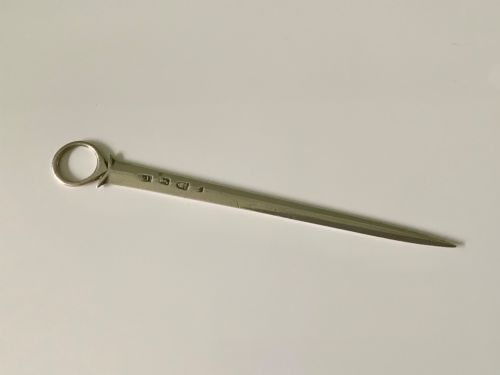


Sterling Silver Opener
A sterling silver opener brings desk work and dining rooms of past centuries into the hand through crisp metal and carved handles.
Sterling Silver Opener
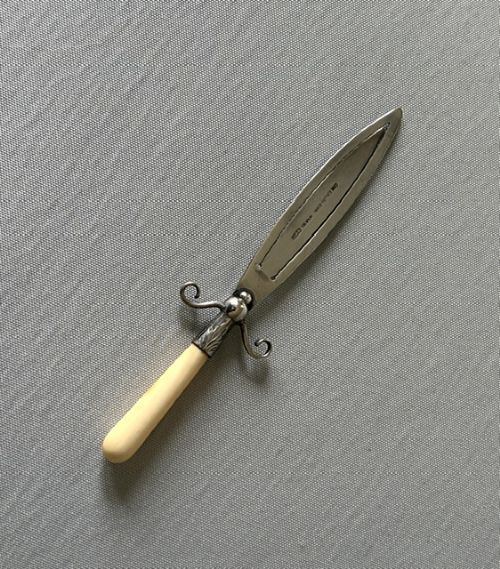
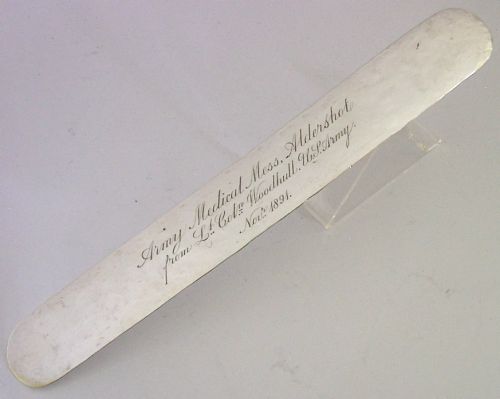
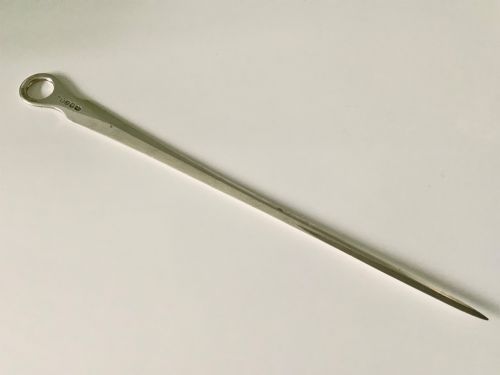
A sterling silver opener primarily takes the form of a desk accessory or tableware, spanning letter openers, page turners, and meat or game skewers. You will encounter Georgian skewers alongside Victorian and Edwardian paper knives.
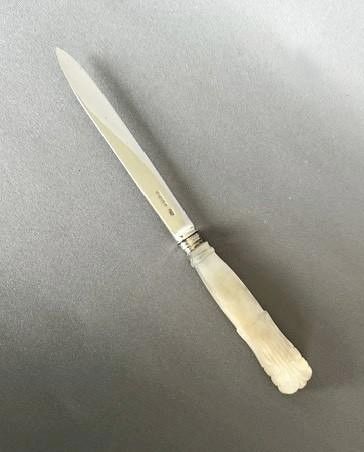
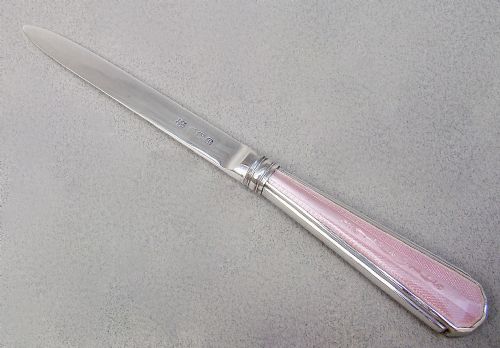
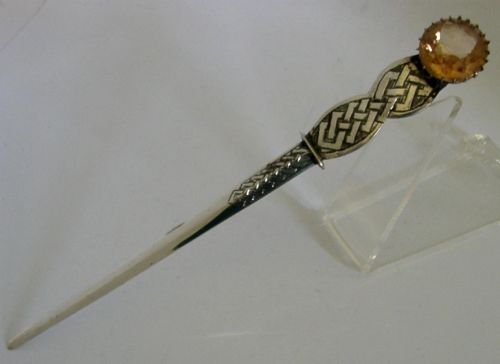
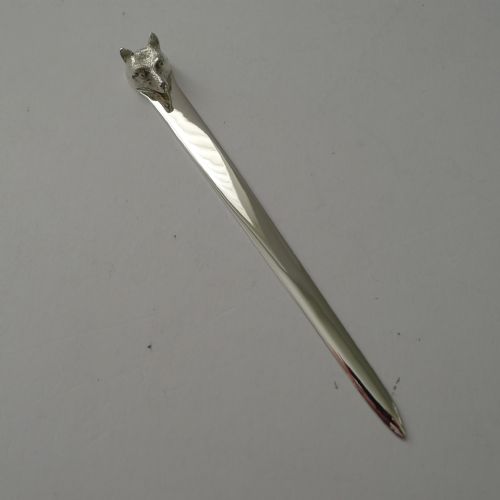
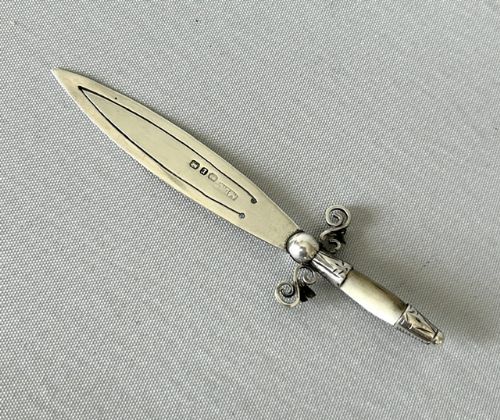
The material combination frequently joins solid silver blades with organic handles such as mother-of-pearl, tortoiseshell, or enamel, whilst novelty pieces introduce figural handles shaped as animals.
Objects range from plain functional desk tools bearing simple hallmarks to elaborate figural designs incorporating sporting motifs or military association pieces from various British eras.
Materials and construction methods
Makers forge the primary working parts from sterling silver or steel, hammering and shaping the metal to form blades and skewers. Hallmarks are stamped directly into the surface to indicate the assay office, standard, and date.
Handles combine silver with natural materials including tortoiseshell, mother-of-pearl, and citrine, secured via pins or mounts. Enamel work is applied using guilloche techniques over textured silver bases for decorative colour.
Sterling Silver Opener Retail Price Guide 2026
Typical asking prices for sterling silver opener among the pieces listed under this phrase on Sellingantiques today, from the lower quarter to the upper quarter. They describe what is for sale here now, not the wider market.
Current listings span the Georgian, Victorian, and Edwardian periods, featuring materials such as tortoiseshell, mother-of-pearl, and enamel.
Assessing craftsmanship and design
Quality rests upon the crispness of the casting in figural handles and the precise integration of organic materials with the metal shank. Superior examples maintain intact enamel and firm joints between the blade and handle.
Engraving depth and the legibility of Birmingham, London, or Chester assay marks distinguish standard production pieces from finer workshop commissions.
The Barker Brothers·Asprey·A Barrett Piccadilly·Sampson Mordan Co
The Sterling Silver Opener Glossary
- Guilloche enamel
- Decorative metalwork covered with translucent enamel over an engine-turned pattern. This technique adds depth and rich colour to the handle.
- Hallmark
- Official stamps applied to precious metals indicating purity, maker, and assay year. These marks provide the primary clue to an item's origin.
- Page turner
- An extended implement designed for separating uncut book pages. They frequently utilise long ivory, tortoiseshell, or silver blades.
- Meat skewer
- A tapered metal spike utilised for securing joints of meat during roasting or carving. Georgian examples often feature decorative ring handles.
- Novelty
- An item shaped to represent an animal, figure, or familiar object. These pieces combine utility with whimsical sculptural design.
Sterling Silver Opener: Frequently Asked Questions
What is a sterling silver opener used for?
These items serve various desktop and dining functions, from slicing envelopes and turning pages to securing meats during carving.
Desk variants were essential tools in nineteenth-century offices and studies, while skewer forms managed joints in large country kitchens.
How do I date a silver opener?
Dating relies heavily upon the stamped hallmarks, which record the assay office, metal standard, and specific year letter.
Stylistic indicators such as Art Deco geometric enamel or Georgian ring handles also point to distinct periods of manufacture.
What are novelty openers?
Novelty pieces feature figural handles shaped as animals, birds, or human figures rather than standard plain grips.
Common animal forms include ducks, greyhounds, and foxes, often produced by specialist silversmith workshops.