
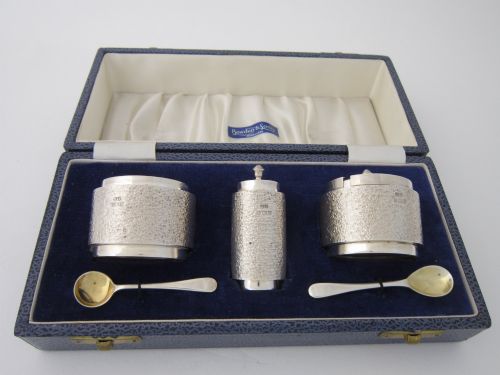


Sterling Silver Dining Condiments
These sterling silver dining condiments bring functional elegance to the table, offering lasting silverwork for everyday dining.
Sterling Silver Dining Condiments
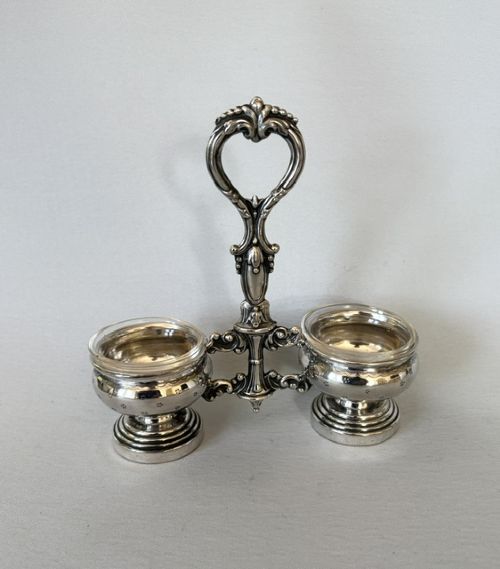
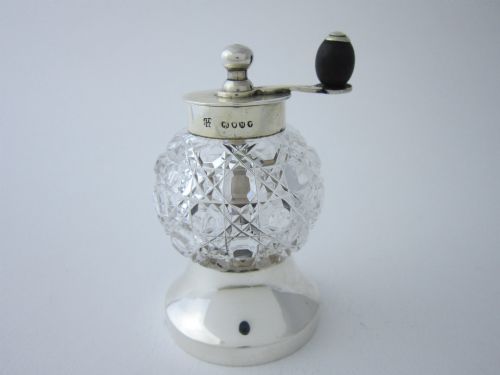
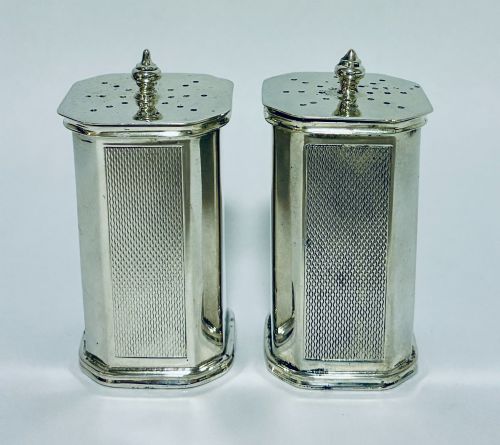
Sterling silver dining condiments encompass table items like salt cellars, pepper pots, mustard pots, cruet sets, and sauce boats designed to hold seasonings at the dining table. Buyers searching for sterling silver dining condiments will encounter a strong representation of Victorian pieces alongside Edwardian, George V, and Mid-Century Modern examples.
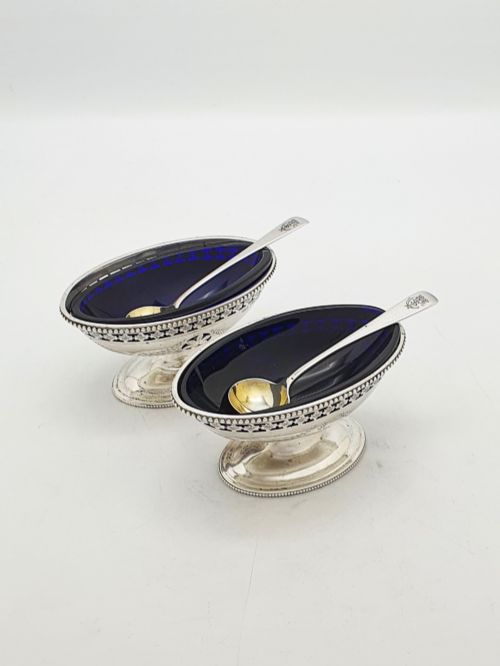
The forms span from practical sets and casters to novelty designs such as owls, chicks, and double-headed swans. Glass liners, particularly in cobalt blue, frequently accompany open salt cellars to protect the metal from corrosive salts.
Cruet stands and multi-bottle sets appear alongside pairs of salt cellars and individual mustard pots. Most pieces originate from the nineteenth and twentieth centuries, demonstrating varied domestic dining traditions.
Materials and construction
Silversmiths utilised sterling silver alongside clear, cut, and cobalt blue glass for liners and bottles. Steel components occasionally appear within mechanical elements such as pepper grinders.
Casting, piercing, and hammering shaped the silver bodies, while glass liners were blown and cut to fit salt cellars and cruet bottles. Interior gilding is sometimes applied to mustard pots and salt cellars to prevent vinegar and salt staining.
Victorian dining tables once featured silver salt cellars shaped like double-headed swans gliding across the damask.
Assessing quality and craftsmanship
Quality rests in the crispness of chased or cast ornamentation, such as the feather detail on novelty animal pieces or the depth of Rococo revival scrolling. Substantial gauge silver provides a reassuring weight in the hand compared to lighter, thinner alternatives.
Complete sets with matching hallmarks and original cobalt glass liners command greater attention than assembled groups with replacement parts. Crisp, legible hallmarks confirm the maker and date of manufacture, adding historical clarity.
Elkington & Co·Charles Stuart Harris
The Sterling Silver Dining Condiments Glossary
- Sterling silver
- An alloy containing 92.5 percent silver and 7.5 percent other metals, usually copper, chosen for durability in tableware. It forms the primary material for the majority of these condiment vessels.
- Cobalt glass
- A deep blue glass produced by adding cobalt oxide to the molten batch. It provides a striking visual contrast inside open silver salt cellars.
- Cruet set
- A fitted stand holding multiple bottles or containers for condiments such as oil, vinegar, salt, and pepper. These frames often incorporate a central carrying handle.
- Caster
- A small jar or pot with a pierced lid used for sprinkling sugar or dry seasonings like pepper. The upper dome is typically removable for refilling.
- Novelty condiment
- A functional table vessel shaped to resemble an animal, bird, or familiar object. Victorian silversmiths produced humorous salt cellars and pepper pots in forms like owls and chicks.
Sterling Silver Dining Condiments: Frequently Asked Questions
What is a cruet set?
A cruet set is a collection of bottles or pots held within a dedicated frame or stand for the dining table.
These sets typically held liquid condiments like oil and vinegar, or dry seasonings, allowing guests to serve themselves during a meal.
Why do salt cellars have blue glass?
Cobalt blue glass liners protect the sterling silver from the corrosive nature of salt.
Salt can pit and damage bare silver over time, making removable glass inserts a practical addition to open salt cellars.
How do I clean silver condiments?
Sterling silver condiments require gentle cleaning with a specialist silver cloth and warm soapy water.
Avoid harsh abrasive dips that can strip away the natural patina built up over decades of use.
Are novelty pepper pots functional?
Novelty pepper pots shaped as animals or birds are fully functional tablewares with removable heads or base plugs.
They combine Victorian decorative humour with practical seasoning distribution.