


Victorian Sterling Condiment Pot
A victorian sterling condiment pot brings nineteenth-century dining tables to life with solid silver weight and ingenious miniature forms.
Victorian Sterling Condiment Pot
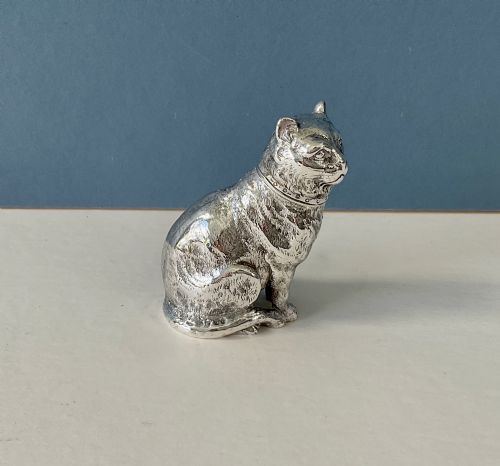
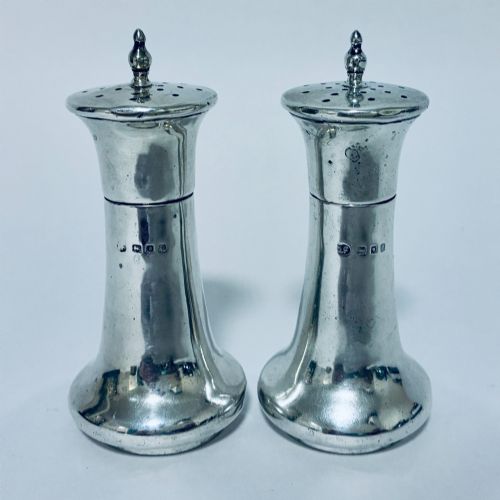
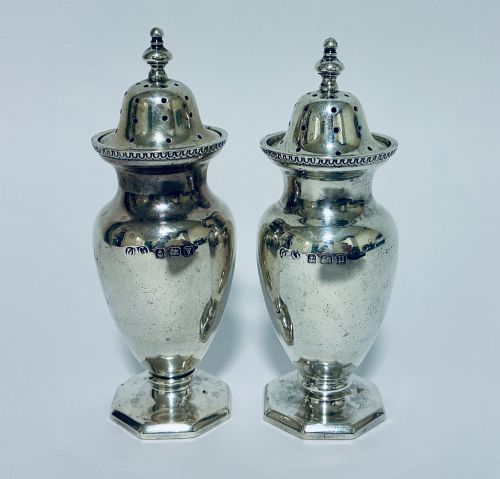
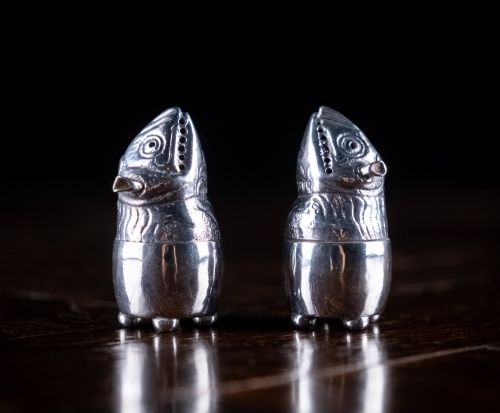
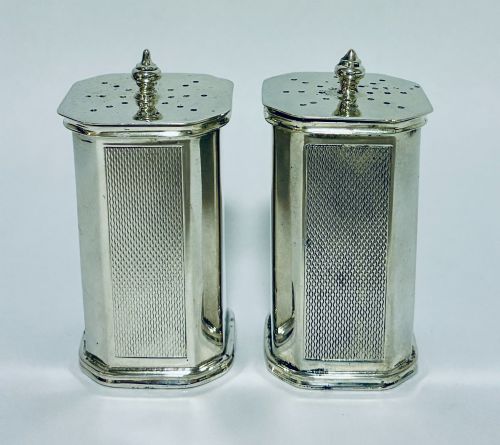
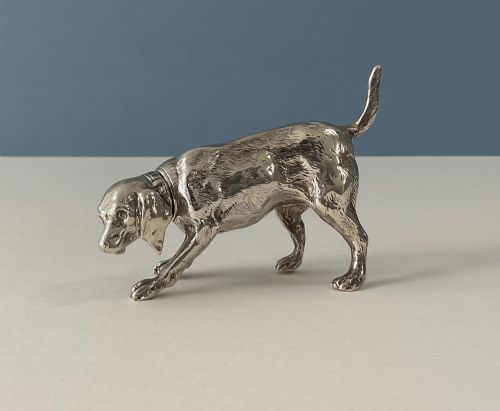
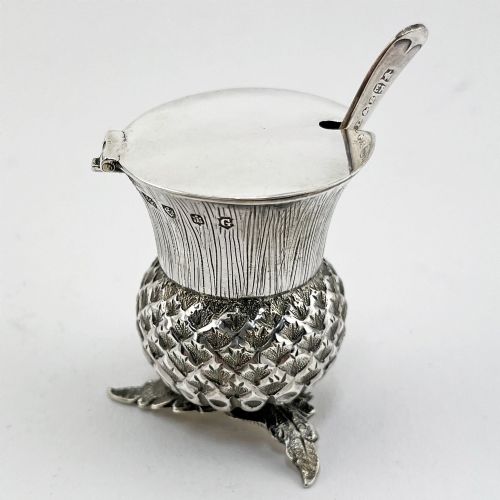
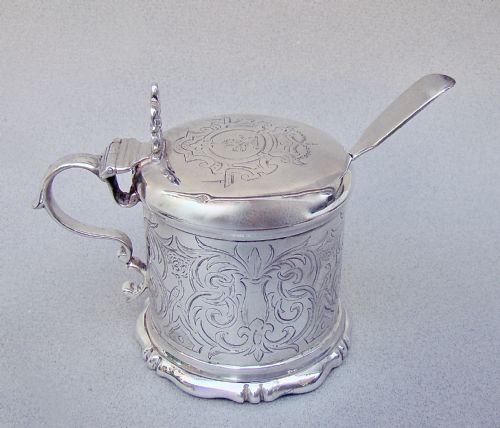
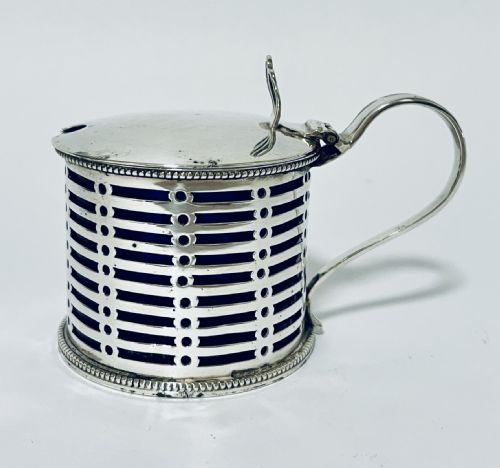
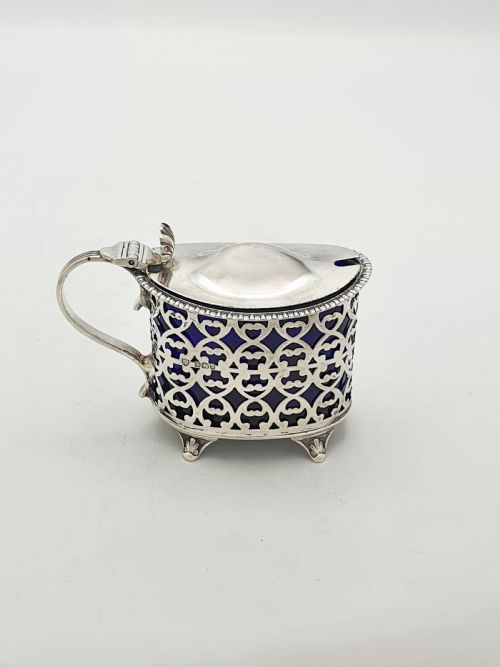
A victorian sterling condiment pot spans mustard pots, pepper pots, salt cellars, and multi-bottle cruet sets made for formal dining. Buyers encounter drum, oval, and octagonal shapes alongside playful novelty figures such as birds, cats, dogs, owls, and grotesque characters.
The pieces originate predominantly from the Victorian period, with examples reaching back to Georgian influences and forward into the Edwardian era. Makers utilise structured pierced designs or solid walls paired with coloured glass liners.
Sets appear both as matched pairs and boxed assemblages containing multiple condiment vessels. The selection here reflects domestic British dining tables of the nineteenth century through functional tableware and sculptural novelties.
Materials and Technique
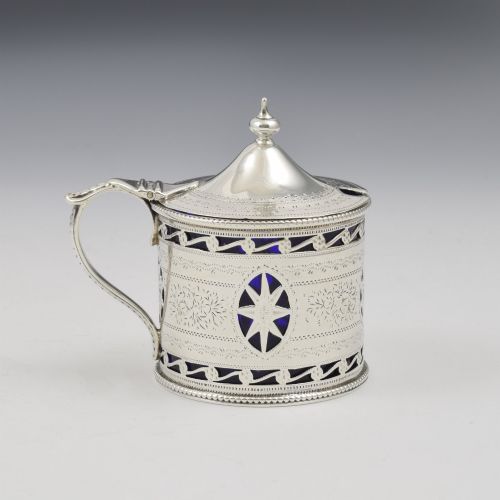
Silversmiths constructed these pots using solid sterling silver, shaping bodies through piercing, casting, and repoussé techniques. Pierced examples reveal intricate geometric or scroll patterns that expose glass liners fitted within.
Makers integrated internal glass elements, notably cobalt glass and ruby red liners, to protect the silver from corrosive condiments like mustard. Interiors frequently held fitted linings of satin and velvet within presentation boxes.
Listings feature mustard pots, pepper casters, and salt cellars spanning the Victorian, Edwardian, and Georgian periods in sterling silver and cut glass.
Craftsmanship and Weight
Superior examples distinguish themselves through crispness of cast detail and substantial gauge silver that resists denting. Finer novelty pots maintain accurate proportions and secure hinges that align perfectly with the body.
The intricacy of pierced work separates standard production from exceptional pieces where hand-piercing creates sharp, clean apertures without distortion to the surrounding metal. Original glass liners that fit securely add significantly to the integrity of the piece.
Frederick Brasted·Nathan & Hayes·Charles & George Fox·Sampson Mordan·Charles Stuart Harris
The Victorian Sterling Condiment Pot Glossary
- Pierced silver
- Metalwork cut through with a saw or punch to create decorative openwork patterns. This technique lightens the object and displays coloured glass liners placed inside.
- Cruet set
- A matched collection of small bottles or pots for holding condiments like mustard, pepper, and salt. These sets typically sit together on a dedicated stand or within a fitted presentation box.
- Novelty pepper
- A condiment container shaped to resemble an animal, human figure, or inanimate object rather than a standard pot. Silversmiths modelled these as dogs, cats, owls, and grotesque characters with removable heads or base plugs.
- Ruby red liner
- A deep red glass insert placed inside silver mustard pots and salt cellars. The glass prevents acidic condiments from tarnishing the interior silver.
- Pepperette
- A small shaker used specifically for dispensing ground pepper at the dining table. These often form matching pairs alongside mustard pots in larger condiment services.
Victorian Sterling Condiment Pot: Frequently Asked Questions
How do I clean a silver condiment pot?
Wash the silver gently using warm soapy water and a soft cloth to remove residue from mustard or salt. Avoid harsh dips that strip historical patination from engraved or pierced details.
Remove glass liners before cleaning the metal. Dry the silver thoroughly with a microfiber cloth to prevent water spots.
What is a novelty condiment pot?
A novelty pot takes the form of an animal, bird, or character rather than a traditional cylindrical shape. Makers cast these pieces as dogs, cats, owls, and grotesque figures to amuse diners.
The head or base typically removes to allow refilling of mustard or pepper. These sculptural pieces served as functional conversation pieces on Victorian dining tables.
How do I identify the date of a silver pot?
Examine the hallmarks stamped on the silver body, lid, or base. British silver carries maker marks, standard marks indicating sterling silver, and date letters corresponding to specific assay offices.
Stylistic clues also help determine the era, such as the heavy rococo revival curves of mid-nineteenth-century pieces versus cleaner Edwardian lines.
Did these pots always have glass liners?
Mustard pots and open salt cellars frequently required glass liners to protect the sterling silver from corrosion caused by acidic contents. Cobalt blue and ruby red glass were common choices.
Pepper pots generally did not require liners because dry pepper does not damage silver. Many surviving pieces retain their original coloured glass inserts.
How were condiment sets used?
Victorian dining involved multiple condiments served at individual places or shared across the table in cruet stands. Boxed sets brought together matching mustard pots, pepper shakers, and salt cellars for formal meals.
Servants filled the vessels before the meal, and guests used miniature spoons or shaker holes to season their food. After dining, the sets returned to storage boxes.