
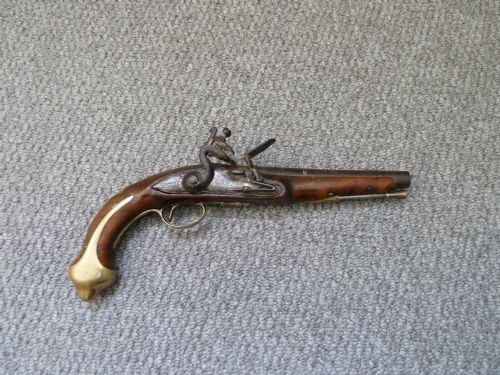
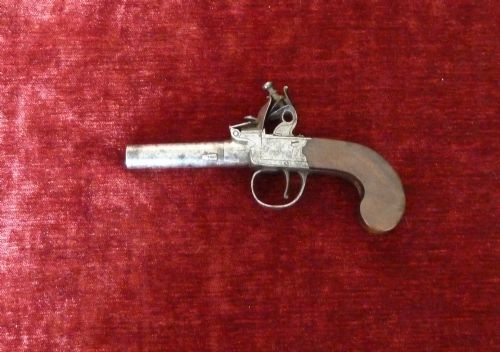


Steel Barrel Flintlock Pistol
A steel barrel flintlock pistol combines lethal mechanical ingenuity with the heavy, satisfying heft of eighteenth and nineteenth century craftsmanship.
Steel Barrel Flintlock Pistol
A steel barrel flintlock pistol represents an essential piece of personal defence and military hardware from the Georgian and Napoleonic eras. When examining this category, a buyer encounters everything from robust government contract service arms to delicate pocket pieces designed for discreet carry. The examples on this page span the eighteenth and nineteenth centuries, taking forms such as heavy dragoon sidearms, naval sea service patterns and pocket turn-off variants.
The regional variety is substantial, ranging from London makers and provincial English workshops in Liverpool and Birmingham to French military pieces and Balkan holster arms. Military regulation models, such as the Tower Armoury dragoon pistols and light cavalry pieces, sit alongside civilian pocket pistols featuring cannon barrels and silver wire inlay. Each specimen records the specific requirements of its original owner, whether intended for a cavalry saddle holster or an officer's greatcoat pocket.
Distinctions in Quality
Proportion and finish reveal the intended market for the arm, as luxury pocket pistols receive meticulous file work and delicate scroll engraving. Conversely, military issue pieces prioritise utilitarian robustness to withstand harsh service conditions during the Napoleonic wars. The presence of clear proof marks and legible maker signatures on the lock plate provides definitive context regarding the origin and grade of manufacture.
T Potts·Twigg·Henry Nock·La Motte·James Barber·Thomas Henshaw·I Parr·J Robinson
The Steel Barrel Flintlock Pistol Glossary
- Flintlock
- An ignition mechanism that uses a piece of flint held in a cock to strike a steel frizzen, creating sparks to fire the powder charge. This system dominated personal and military firearms through the eighteenth and early nineteenth centuries.
- Cannon barrel
- A barrel featuring a flared muzzle reminiscent of artillery pieces, commonly found on eighteenth century pocket pistols. This design allowed the breech end to be constructed thicker for strength while maintaining a lighter overall balance.
- Turn-off
- A barrel that unscrews entirely from the breech to facilitate loading a lead ball directly into the chamber. This configuration eliminates the need for a ramrod and ensures a tight seal upon firing.
- Frizzen
- The vertical steel plate struck by the flint to produce sparks and simultaneously cover the priming pan. Its hardened surface is crucial for consistent ignition.
- Holster pistol
- A large arm designed to be carried in a saddle holster by cavalry troopers or travellers. These pieces prioritised stopping power over concealment.
Steel Barrel Flintlock Pistol: Frequently Asked Questions
How do I clean a steel barrel flintlock pistol?
Maintenance requires gentle cleaning of the metal surfaces with a light oil to prevent oxidation without disturbing the aged patina. Wood stocks benefit from occasional applications of appropriate wax to nourish the grain.
Harsh abrasives and modern chemical solvents must be avoided entirely to preserve original markings, stamps and the historic finish of the steel and brass.
Are these pistols safe to fire?
These antique arms are sold as historic artefacts and collector pieces rather than functioning modern firearms. Attempting to load and fire an eighteenth century piece carries significant risk due to material degradation over centuries.
Professional inspection by a qualified gunsmith is mandatory before any mechanical demonstration or testing is considered by an owner.
What is the difference between a holster pistol and a pocket pistol?
Holster pistols were built large and heavy for carriage on horseback by military officers and travellers, offering substantial stopping power at greater range. Pocket pistols were scaled down significantly for discreet personal defence inside a coat or muff.
The smaller variants often utilised short cannon barrels and concealed triggers to prevent snagging on clothing when drawn quickly.
How can I identify a military issue pistol?
Military pieces typically feature government inspection stamps, crown marks, and designations such as Tower or ordnance acceptance marks on the lock plate and wood stock. The furniture is frequently brass, and designs adhere to strict regulation patterns for specific corps like the light dragoon or sea service.
Private purchase officer arms often displayed finer finishes and maker signatures rather than standard government acceptance stamps.