

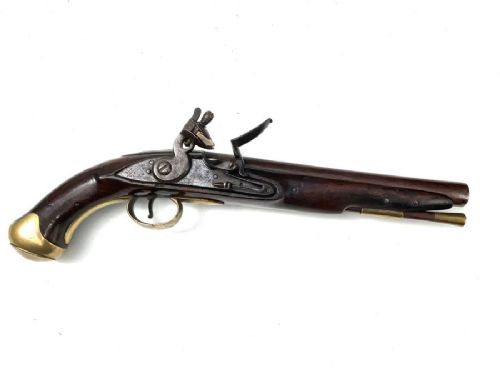


18th Century Flintlock Firearm
When collecting an 18th century flintlock firearm, you examine mechanical ingenuity and period craftsmanship that defined centuries of personal defence and military combat.
18th Century Flintlock Firearm
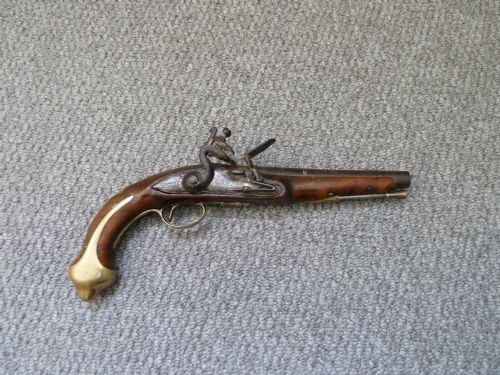
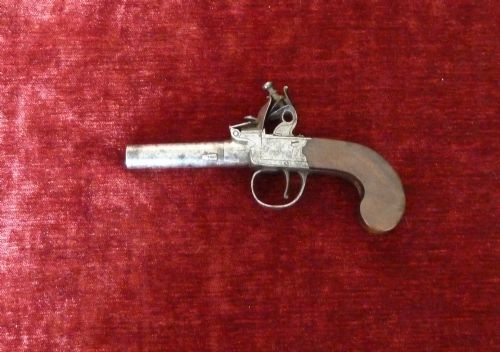
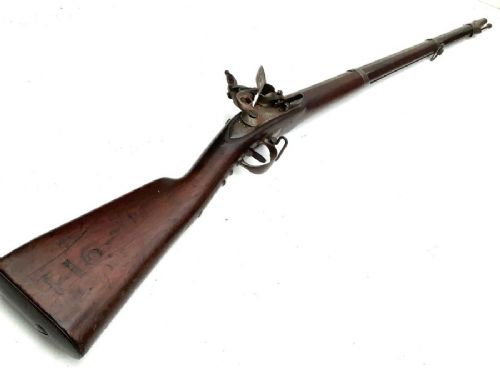
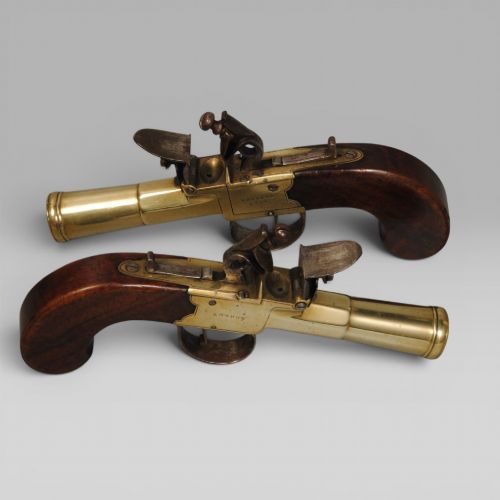
An 18th century flintlock firearm encompasses a range of ignition-system weaponry including pocket pistols, heavy holster arms, blunderbusses and military muskets. These pieces reflect the technological standards of Georgian Britain, Napoleonic Europe and the Ottoman Empire.
Pocket pistols and overcoat variants designed for civilian self-defence appear alongside military horse pistols and shoulder arms bearing government or contractor stamps.
Regional variations span from London maker-signed Queen Anne turn-off pistols to highly ornamented Balkan, Ottoman and Scottish Highland scroll-butt arms featuring brass mounts and silver wire inlay.
Materials and Construction
Makers constructed stocks predominantly from figured walnut or local hardwoods, often embellishing the grips with intricate silver wire inlay, cast brass furniture, and grotesque butt caps.
Barrels and lock mechanisms utilised forged steel and iron, occasionally rendered in brass or decorated with gilt inlay, while mechanisms relied on the precise friction of a flint striking a steel frizzen to ignite priming powder.
Current listings feature steel, walnut, brass, silver, iron, bone and mother-of-pearl across Georgian, Napoleonic and Ottoman periods.
Judging Quality and Execution
Quality rests upon the crispness of the lock mechanism's action, the depth and execution of hand-engraving on the metal mounts, and the balance of the stock.
Master makers signed their work on the lock plates or barrels, elevating pieces beyond standard military issue through superior metal finish, precise silver wire execution, and harmonious regional decoration.
Harrison of London·T. Potts·John Campbell of Doune·La Motte·James Barber·Thomas Henshaw·Timothy Hughes·R. Willoughby·John Rimes
The 18th Century Flintlock Firearm Glossary
- Flintlock
- An ignition mechanism that uses a flint held in a cock to strike a steel frizzen, creating sparks to ignite the gunpowder charge. This system dominated personal and military firearms throughout the 1700s.
- Turn-off barrel
- A barrel that unscrews entirely from the breech to facilitate loading from the front with a tight-fitting ball. This design appears frequently on pocket and Queen Anne type pistols.
- Miquelet lock
- A distinct form of flintlock mechanism utilising an external mainspring and a combined steel and frizzen, common on Spanish, Italian, and Ottoman firearms.
- Brass furniture
- Decorative and structural metal components such as trigger guards, sideplates, and butt caps cast or wrought from brass rather than iron.
- Bore
- The interior diameter of the barrel, often measured in antique arms by the number of lead balls of that diameter weighing a pound.
18th Century Flintlock Firearm: Frequently Asked Questions
How do I care for my flintlock firearm?
Keep the metal components lightly oiled with a suitable gun oil to prevent active oxidation, and store the piece in a dry, stable environment away from direct sunlight.
Inspect the wood periodically and apply conservation wax sparingly to stabilise the walnut stock and preserve any silver wire inlay without softening the timber.
Were these pistols used in duels?
Certain designated officer and civilian arms served as duelling pistols, engineered for balance and accurate single-shot delivery at measured distances during disputes.
Many other surviving handguns functioned as pocket protectors for travellers or standard equipment for cavalry officers rather than formal duelling arms.
How can I distinguish military from civilian pieces?
Military arms typically display government inspection marks, broad arrow stamps, or ordnance acceptance ciphers like the Crown and GR stamps found on Tower contract pieces.
Civilian pieces usually feature private maker signatures, finer decorative engraving, silver wire inlays, and brass mounts tailored to personal taste and gentlemanly carriage.