

Standing Reading Desk
A standing reading desk brings proper height and purpose to a room, holding books, scores and papers at a comfortable angle for study.
Standing Reading Desk
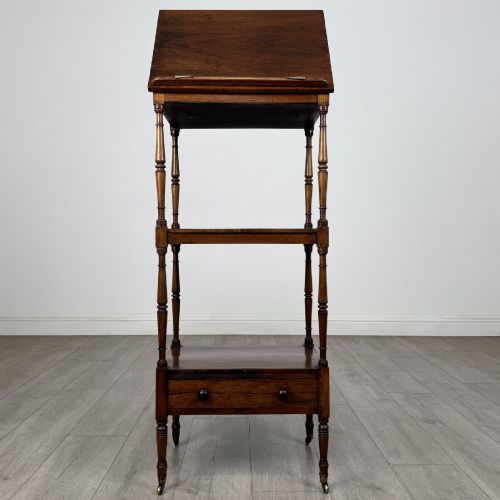
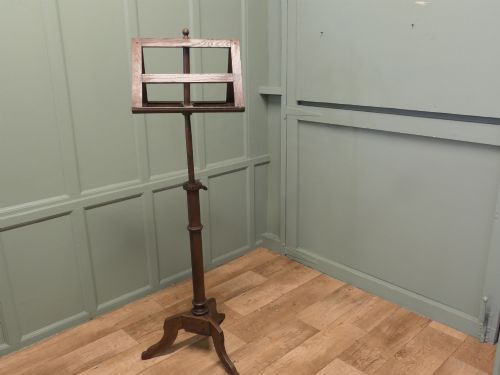
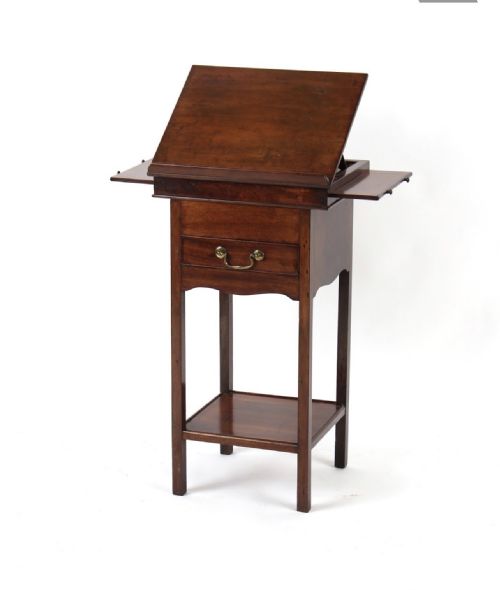
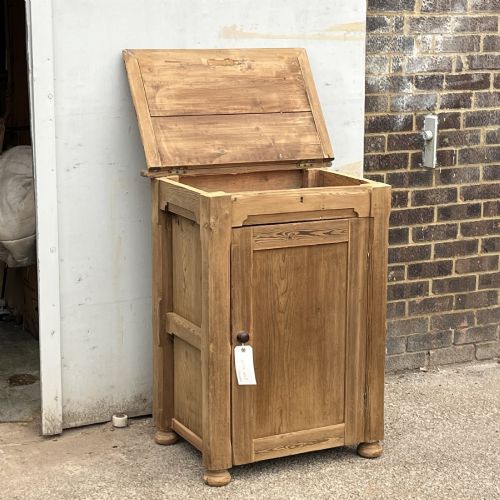
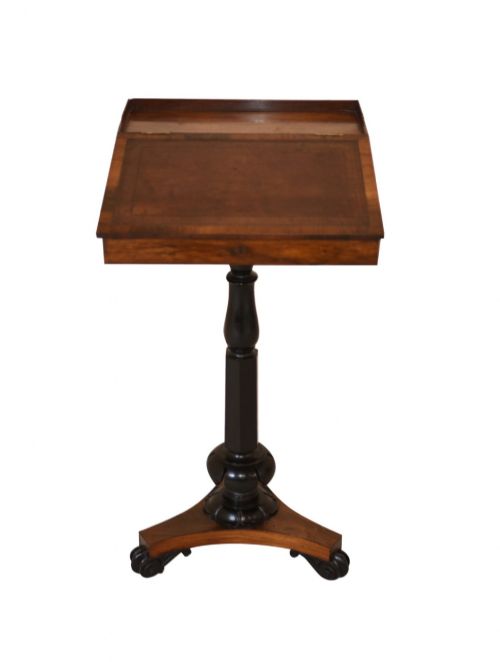
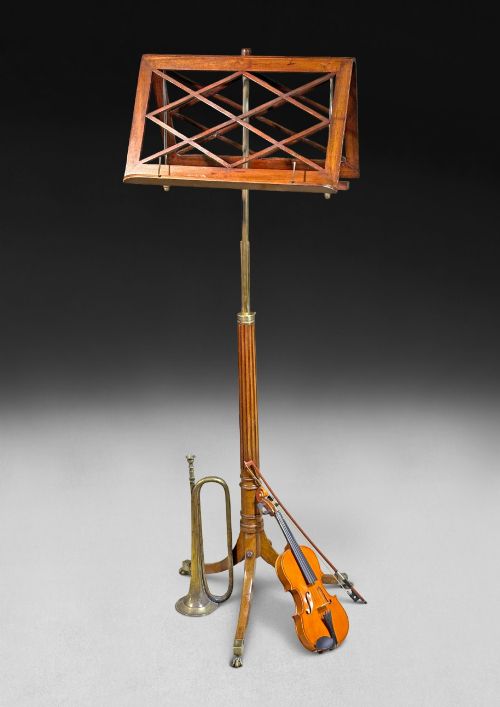
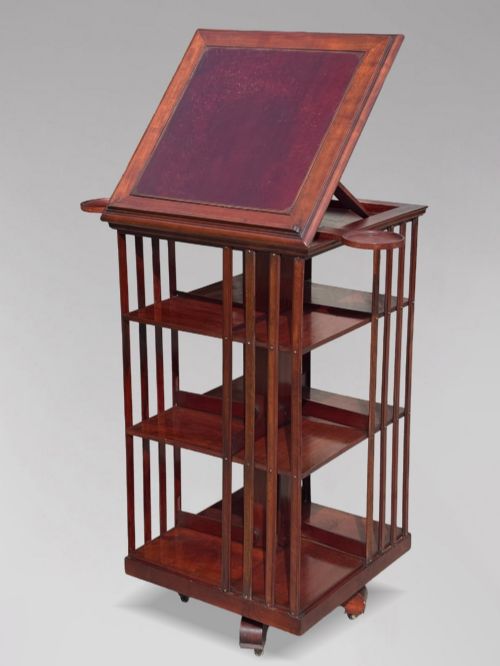
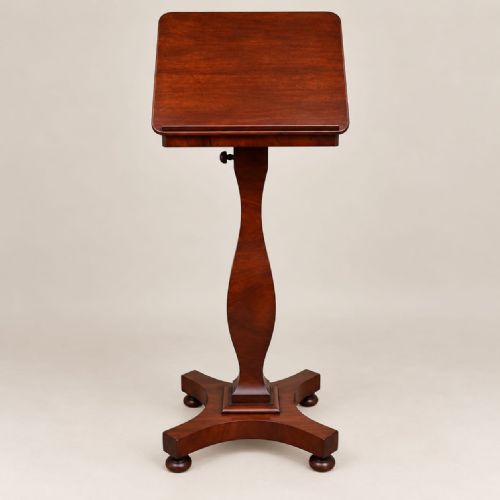
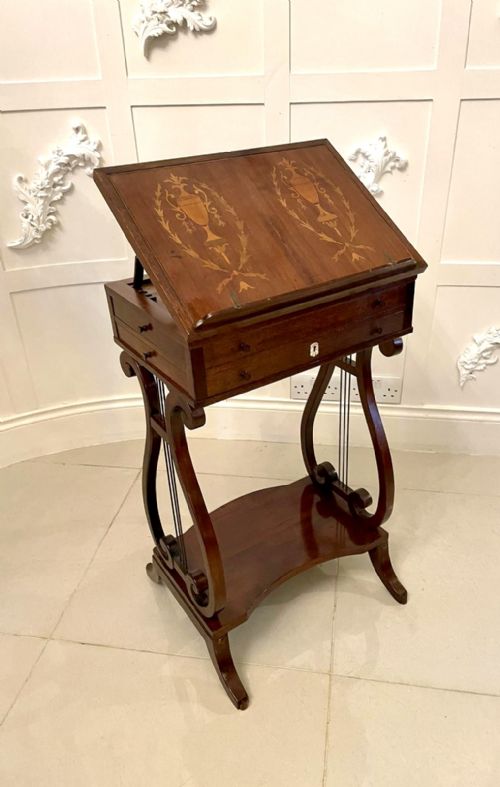
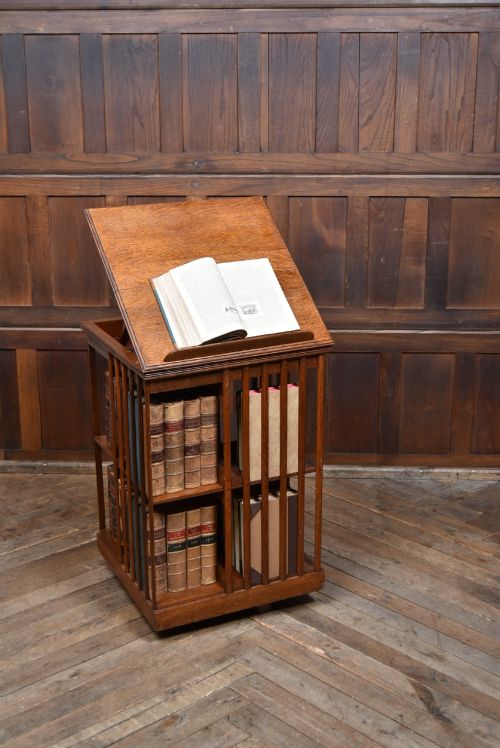
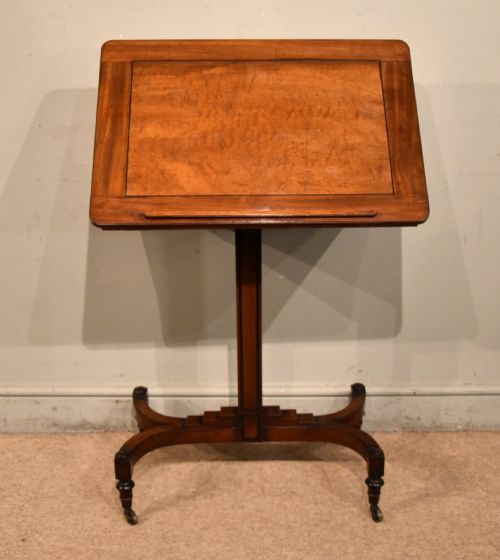
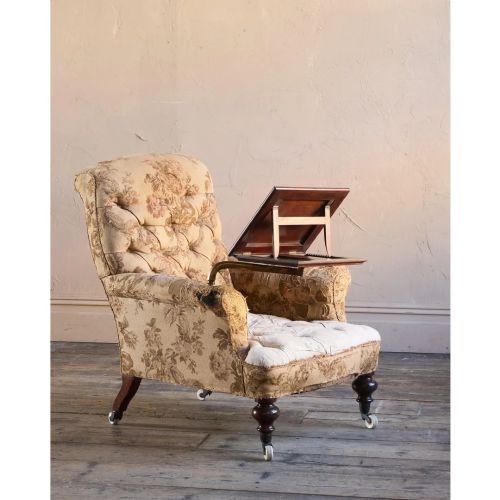
A standing reading desk encompasses lecterns, music stands, and adjustable reading tables designed to elevate texts for upright use. These pieces emerge in styles ranging from Regency and William IV to Victorian and Edwardian, reflecting shifting domestic and institutional habits.
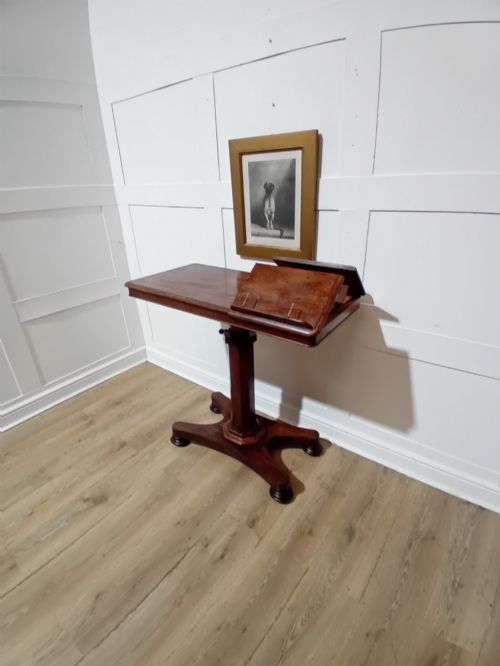
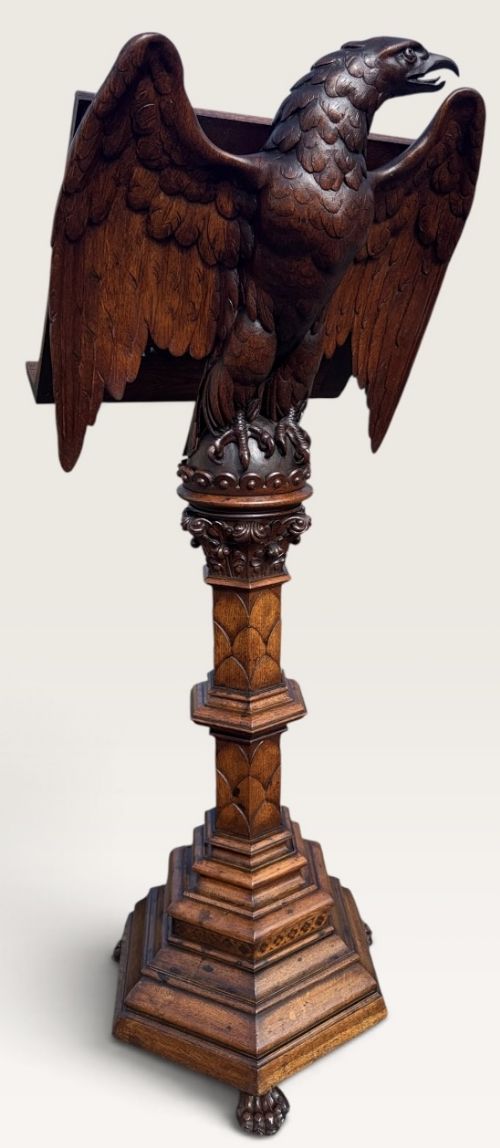
The most common examples encountered here are mahogany reading tables and oak lecterns dating from the nineteenth and early twentieth centuries. Pieces often combine storage or adjustable mechanisms, serving libraries, studies, and churches alike.
Materials and construction
Cabinetmakers relied heavily on dense hardwoods like mahogany, walnut, oak, and rosewood, frequently employing pine for secondary framing and interior elements. Brass fittings, pivots, and ratchets provided the necessary mechanical adjustments for tilting book supports.
Cast iron appears in industrial and ecclesiastical contexts, particularly for heavy church lecterns and patent stands. Joinery methods varied from traditional cabinet construction to robust pegged joints and mechanical ratchets designed for daily manipulation.
Standing Reading Desk Retail Price Guide 2026
Typical asking prices for standing reading desk among the pieces listed under this phrase on Sellingantiques today, from the lower quarter to the upper quarter. They describe what is for sale here now, not the wider market.
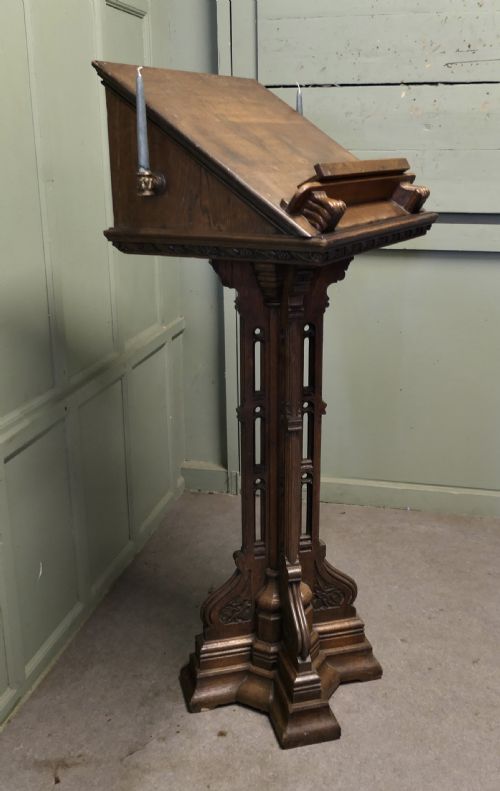
Some nineteenth-century reading tables include discreet candle slides, proving that serious study once required a steady flame.
Judging execution and refinement
Quality rests in the precision of the adjusting mechanism and the integrity of the timber selection. Finer examples display carefully figured veneers, such as burr walnut or flame mahogany, alongside smooth, reliable brass ratchets that hold their position securely.
The degree of hand-carving and architectural detail separates standard utility items from grander library or Gothic Revival pieces. Solid construction without undue play in the joints marks the work of superior makers.
Carters Of London·Osborne Garrett & Co
The Standing Reading Desk Glossary
- Lectern
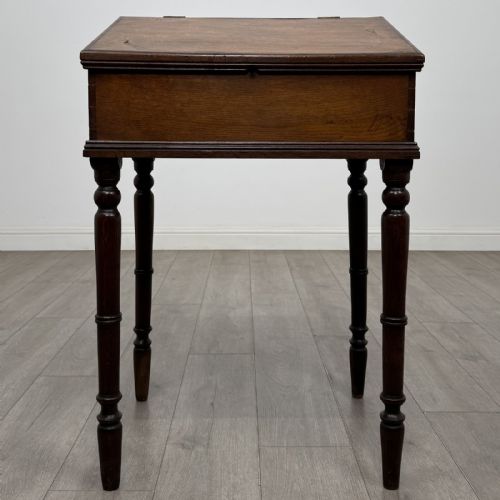
- A tall desk with a slanted top designed to hold a book or speech for a standing reader. These often appear in oak or pine for ecclesiastical or institutional use.
- Ratchet
- A mechanical adjustment device utilising a notched bar and catch to secure a reading surface at various angles. Fine versions operate smoothly and lock firmly into place.
- Gothic Revival
- An architectural and decorative style drawing inspiration from medieval forms, frequently seen in carved oak lecterns with pointed arches and tracery. The style enjoyed widespread popularity during the Victorian period.
- Gonçalo Alves
- A dense, highly figured tropical hardwood sometimes utilised in high-end Regency and William IV furniture. Its striking contrasting grain makes it easily distinguishable from standard mahogany.
Standing Reading Desk: Frequently Asked Questions
What is a standing reading desk?
A standing reading desk is an elevated piece of furniture designed to support books, manuscripts, or music sheets at a comfortable viewing angle for a person standing or sitting high. These items include lecterns, music stands, and adjustable tables.
Historically, they served libraries, studies, churches, and drawing rooms to facilitate reading and writing without hunching over a low surface.
How do I adjust the height?
Adjustment mechanisms vary depending on the period and specific form, ranging from brass ratchets and pivoting arms to mechanical screw posts. Many nineteenth-century examples utilise sliding columns secured by thumbscrews.
Care should be taken when operating older metal and wood mechanisms to avoid straining the original components.
Where were they used?
These pieces found places in domestic libraries, studies, and music rooms for holding large folios, sheet music, or reference volumes. Churches and chapels also utilised sturdy wooden or cast iron lecterns for holding service books.
Architects and cartographers utilised specialised riser desks for large plans and drawings.
How do I date a piece?
Dating relies on observing the prevailing timber choices, hardware, and stylistic details such as Gothic Revival tracery or Regency reeding. The presence of patent brass mechanisms or maker stamps also helps narrow the production era.
Construction techniques, such as the transition from hand-sawn secondary woods to later machine methods, provide further chronological clues.