



Standing Oil Lamp
These standing oil lamps bring a warm, adjustable glow and striking vertical presence to a room, offering both period character and adaptable height.
Standing Oil Lamp
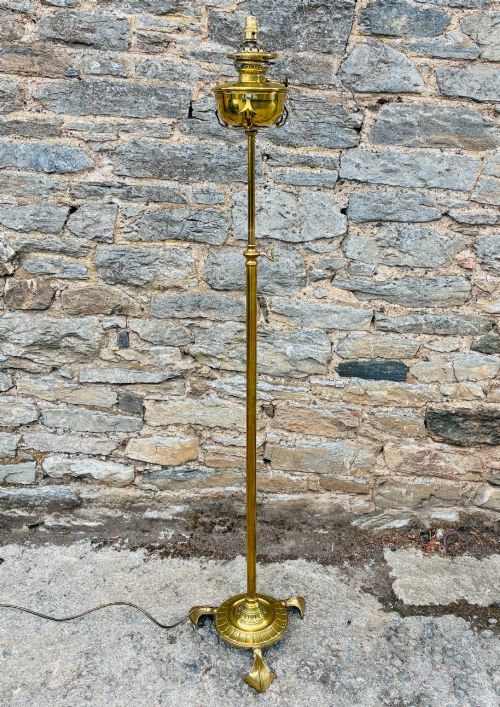
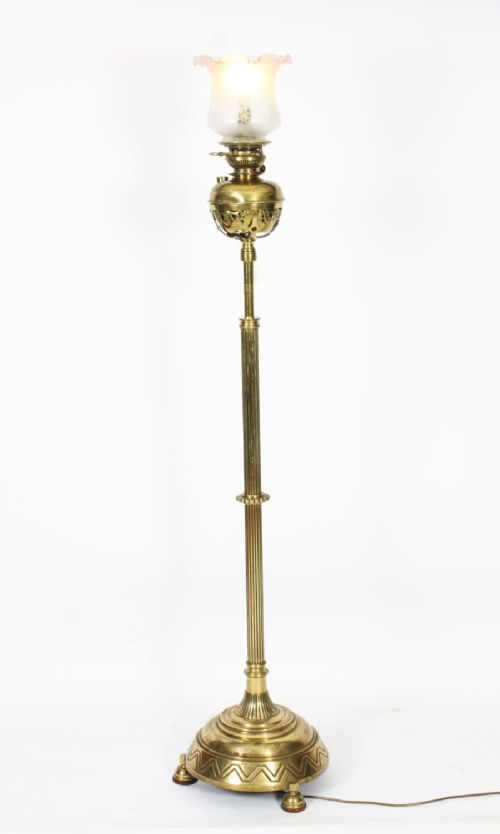
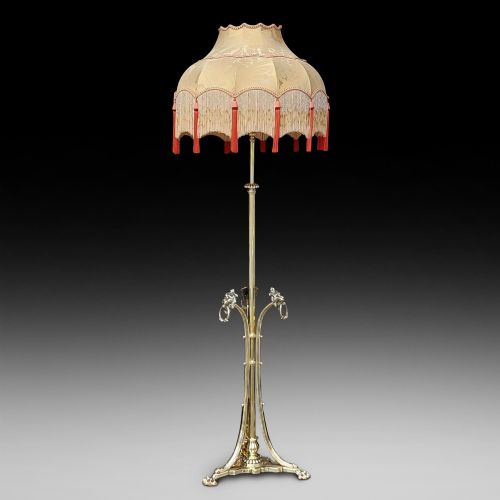
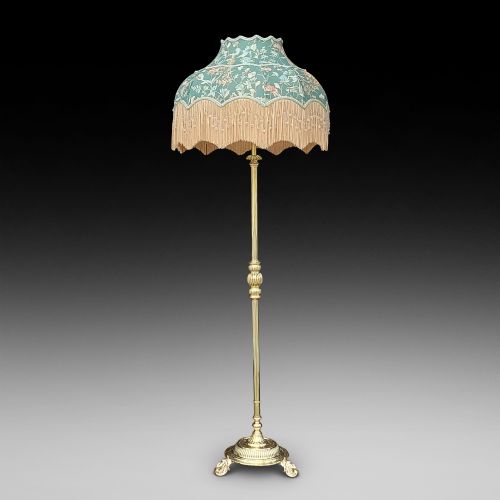
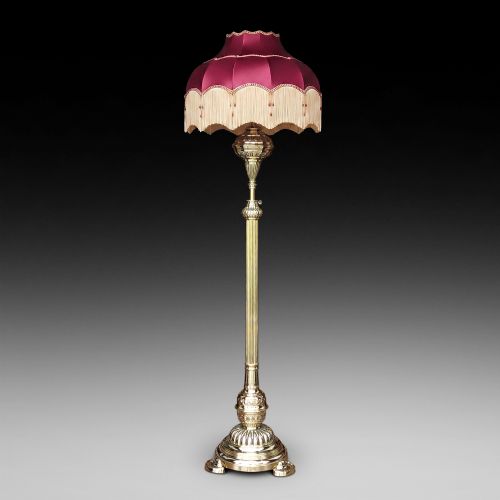
A standing oil lamp provides a tall, floor-standing light source designed to illuminate a room with adjustable height and steady presence. The pieces available here span the Victorian era, the nineteenth century, and the early twentieth century, showing a strong concentration of brass and copper construction.
Makers and designers of these lamps utilised extending mechanisms, telescopic shafts, and tripod bases to make the height adjustable for reading or general illumination. Buyers encounter forms ranging from simple utility stands to elaborate figural and architectural columns.
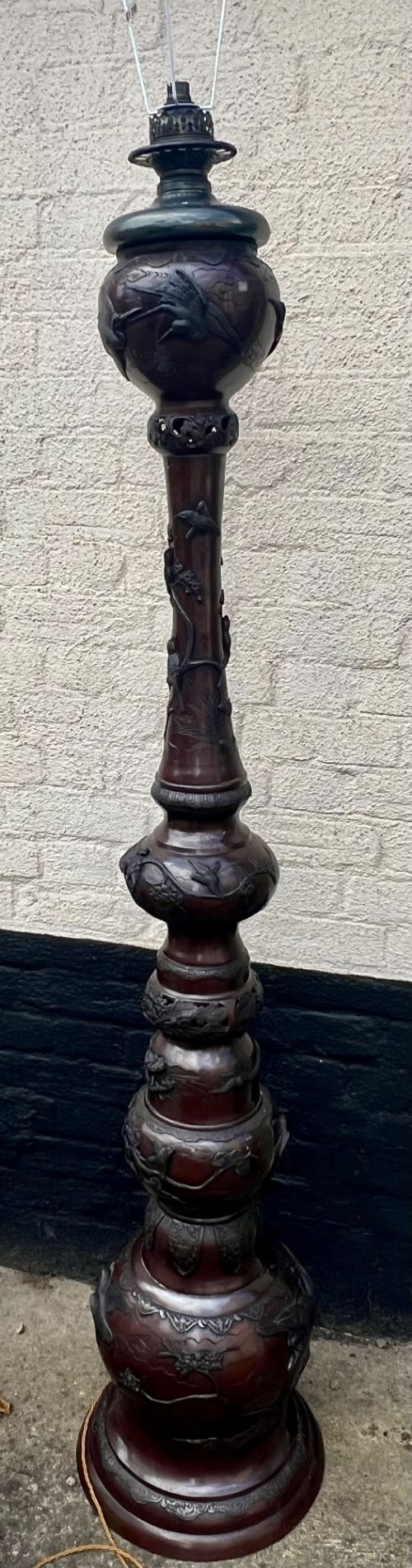
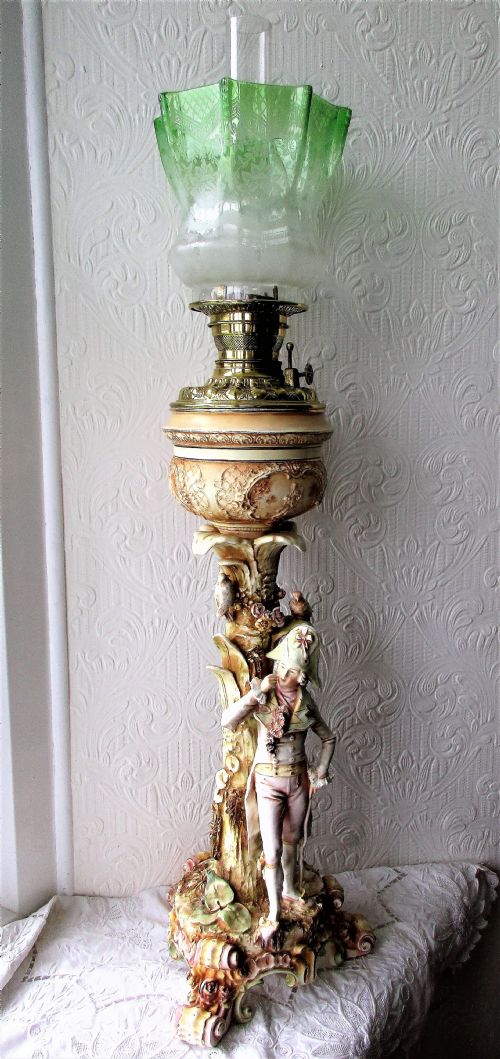
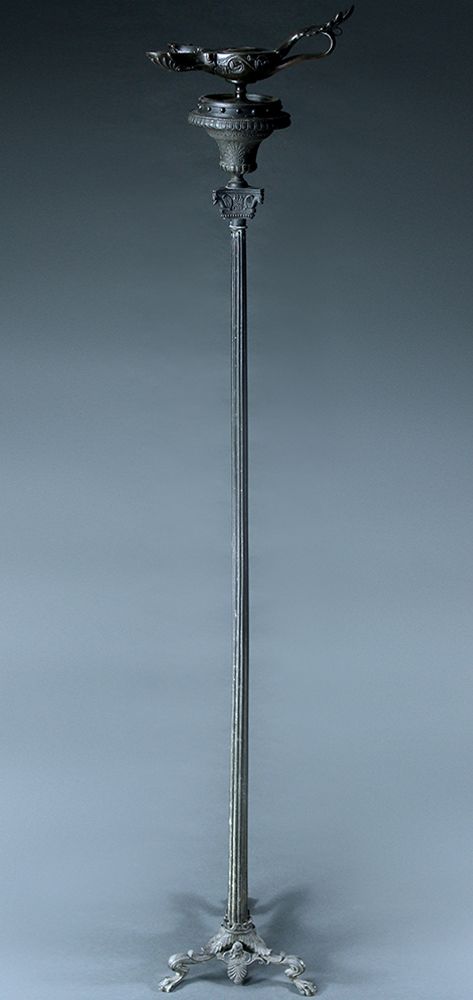
The decorative styles on this page include Victorian, Arts and Crafts, Neo-Classical, Japanese Meiji, and Italian Baroque Revival. Many examples retain or feature glass reservoirs, fabric or silk shades, and heavy metal bases.
Materials and Construction
Makers constructed these lamps predominantly from brass, copper, bronze, and occasional carved woods such as padouk and teak, combining metals for structural weight and visual contrast. Heavy cast bases and weighted columns ensured stability when the telescopic or extending mechanisms were raised to their full height.
Reservoirs and shades brought colourful glass, crystal, and porcelain into the design, utilising cranberry glass, opal glass, and hand-painted ceramic bodies. Metalwork techniques included spinning, casting, and patination, while surviving wiring indicates later conversion from oil burning to electricity.
Standing Oil Lamp Retail Price Guide 2026
Typical asking prices for standing oil lamp among the pieces listed under this phrase on Sellingantiques today, from the lower quarter to the upper quarter. They describe what is for sale here now, not the wider market.
An unusual Anglo-Burmese standard combines teak, padouk, and heavy brass to bring tropical timber into the Victorian parlour.
Distinctions in Quality
The calibre of a standing oil lamp rests on the heft of its metalwork, the precision of its telescopic adjustment, and the integrity of its original components. Substantial brass columns, heavy cast bases, and signed mechanisms by notable makers distinguish superior examples from lighter utility pieces.
The artistic ambition of the design dictates the upper tier, seen in sculptural bronze figures, intricate Neo-Classical column capitals, and finely coloured glass reservoirs. Craftsmanship shows in the smoothness of the extending stem and the crispness of chased or carved details.
Hinks of B'ham·Messenger·W A S Benson
The Standing Oil Lamp Glossary
- Telescopic
- An extending shaft mechanism that allows the lamp height to be adjusted up and down. This feature was essential for altering the reach of the light in a room.
- Reservoir
- The container that held the lamp oil before combustion. These are often formed from coloured glass, crystal, or decorated porcelain.
- Standard Lamp
- A term frequently used interchangeably with floor lamp or standing lamp. It refers to any tall, freestanding lighting support.
- Ormolu
- Gilt bronze ornamentation applied to decorative metalwork. It provides a rich, golden surface finish on high-status nineteenth-century pieces.
- Corinthian Column
- A classical architectural column capital featuring acanthus leaves. Makers applied this motif to brass lamp standards to evoke ancient stone architecture.
Standing Oil Lamp: Frequently Asked Questions
How do I adjust the height safely?
Most standing oil lamps utilise a telescopic stem or a thumbscrew collar near the upper section of the shaft. Loosen the mechanism gently while supporting the weight of the top assembly to prevent sudden drops.
Take care not to force rusted or stiff extending parts, and ensure any electrical cord has enough slack to move freely as the height changes.
Are these lamps still wired for oil?
The majority of standing oil lamps encountered today have been converted to electricity for modern household use. This conversion allows them to function as standard floor lamps while retaining their original nineteenth-century stands and reservoirs.
Some pieces retain fittings that show their oil-burning origins, but buyers should check the specific listing details to confirm the current wiring status.
Where should I place a floor lamp?
These tall standards suit corners, reading areas, or spaces beside armchairs where their height and adjustable reach can direct light downward. Their substantial metal or carved wood bases provide a strong vertical accent in a period interior.
Ensure the lamp stands on a level floor, particularly when extended fully, to maintain stability.
How do I identify the period?
Period markers include the manufacturing style, such as the geometric simplicity of Arts and Crafts brasswork or the ornate classical motifs of Victorian columns. Materials like cranberry glass and patinated bronze also point toward the nineteenth century.
Maker stamps on the metal collar or burner mechanism offer the most precise indication of origin and date.