



Victorian Brass Floor Light
These heavy metal stands and converted oil vessels bring warmth and height to a room.
Victorian Brass Floor Light
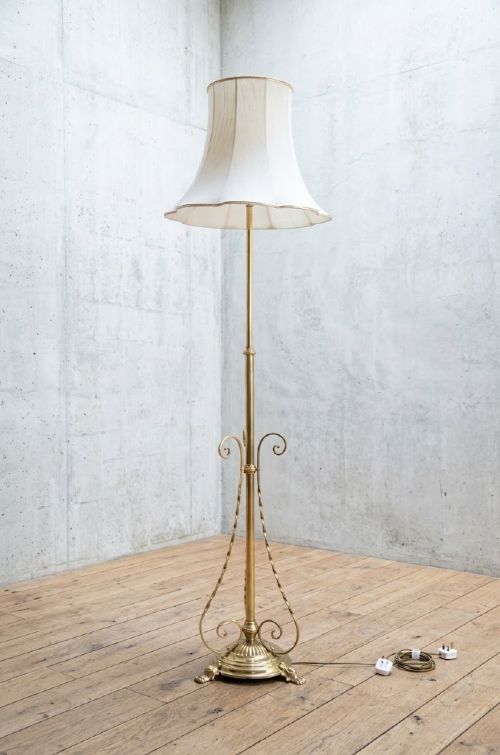
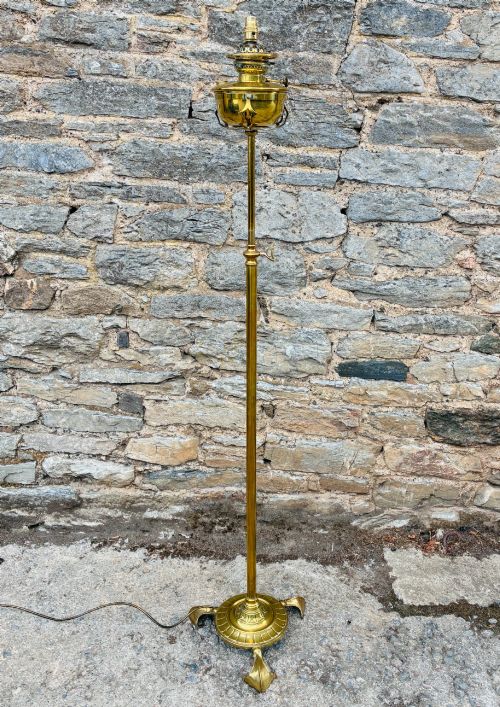
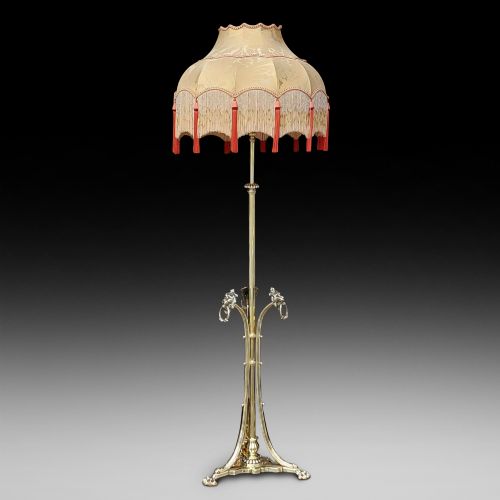
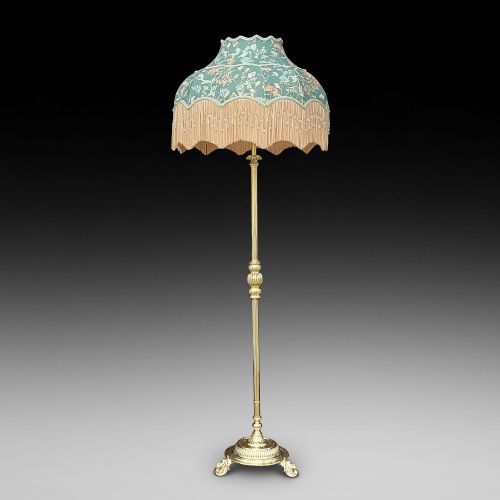
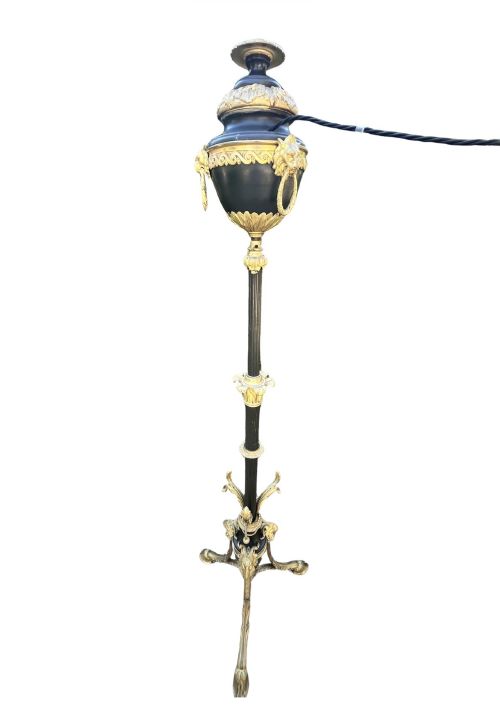
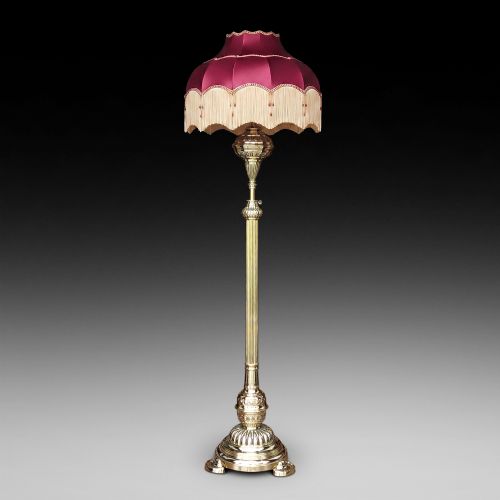
A victorian brass floor light is a tall standing standard lamp or converted oil reservoir designed to illuminate a corner from above. Buyers search for these pieces to anchor a traditional room with sturdy metal construction and adjustable height.
Most examples found on this page date from the nineteenth century through the early twentieth century, spanning Victorian, Edwardian, and Arts and Crafts periods. The forms range from simple telescopic columns to ornate church candle holders and converted oil lamps.
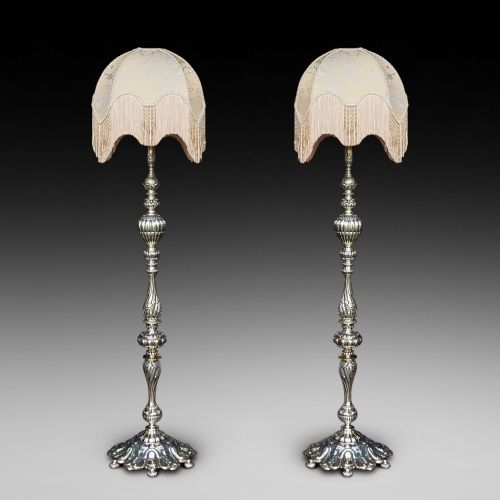
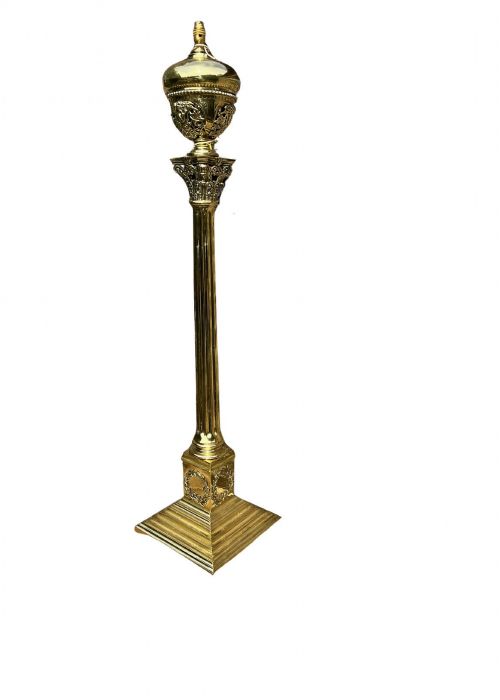
Makers utilised various decorative vocabularies including Gothic Revival, Art Nouveau, and Neoclassical styles. Corinthian columns and floral openwork bases appear frequently among the standard lamps listed here.
How they were made
Makers constructed these floor stands predominantly from brass, frequently combining it with copper, gilt bronze, and cast iron. Heavier pieces incorporate bases of marble or onyx to stabilise the tall upright shafts.
Telescopic mechanisms allowed the height to be adjusted manually, often using internal keys or collar screws. Many originals began as oil lamps with burners before being converted to electricity later in life.
Paired materials such as silk, fabric, and decorative fringe completed the top shades, though many survive today as bare standards without original textile hoods.
One scarce surviving set includes three graduated Masonic candlesticks made of decorated and painted brass Corinthian columns.
What varies in quality
The weight and gauge of the metal separate ordinary production from superior workshop output. Heavier castings and solid columns provide better balance and durability than lighter tubular alternatives.
Complexity of ornamentation also defines the tier of a piece, from plain spun bases to finely chased Corinthian capitals or elaborate openwork brass. Signed examples by established makers command distinct recognition for their engineering.
The integrity of the extending mechanism dictates daily usability. Smooth telescopic movement without excessive wobble marks a superior standard of nineteenth-century metalwork.
Hinks of B'ham
The Victorian Brass Floor Light Glossary
- Telescopic
- A shaft design featuring nested tubes that allow the overall height of the standard lamp to be raised or lowered. This mechanism relies on friction collars or internal screws.
- Standard Lamp
- A British term for a floor lamp designed to stand upright on its own heavy base. These fixtures typically support a shade and bulb at eye level or above.
- Corinthian Column
- An architectural column style featuring an ornate capital decorated with acanthus leaves. This classical motif appears frequently on the shafts of tall brass floor standards.
- Steamer Lamp
- A specialised portable lamp designed with a weighted base to remain stable on moving ships or trains. In domestic settings, these pieces offered robust, tip-resistant illumination.
Victorian Brass Floor Light: Frequently Asked Questions
How do I adjust the height?
Many nineteenth-century standards feature a telescopic shaft with a small thumb screw or collar midway up the pole. Loosening this fastener allows the inner tube to slide up or down before locking securely into place again.
Older mechanisms can stick after decades of disuse, so apply gentle upward pressure without forcing the metal if the inner sleeve resists movement.
Were these originally electric?
Almost none of these tall standards started life with electric wiring. The majority began as oil lamps with burners and glass reservoirs, or as heavy church candle holders.
Conversion to electricity usually happened during the twentieth century, with modern wiring threaded down through the hollow brass core to preserve the exterior appearance.
How do I clean polished brass?
Dust the metal regularly with a soft, dry cloth to prevent grime accumulation in the decorative crevices and openwork bases. Avoid harsh chemical polishes that strip away aged patination.
If the metal requires deeper cleaning, use a mild soapy solution and dry thoroughly immediately afterward to protect the original nineteenth-century surface finish.
Are these lamps heavy to move?
These fixtures carry substantial weight due to solid metal shafts and heavy iron, marble, or onyx bases designed to prevent tipping. Moving them requires care to support both the base and the slender upper column.
Take down any heavy glass shades or fabric hoods before relocating the standard to avoid straining the telescopic joints.