

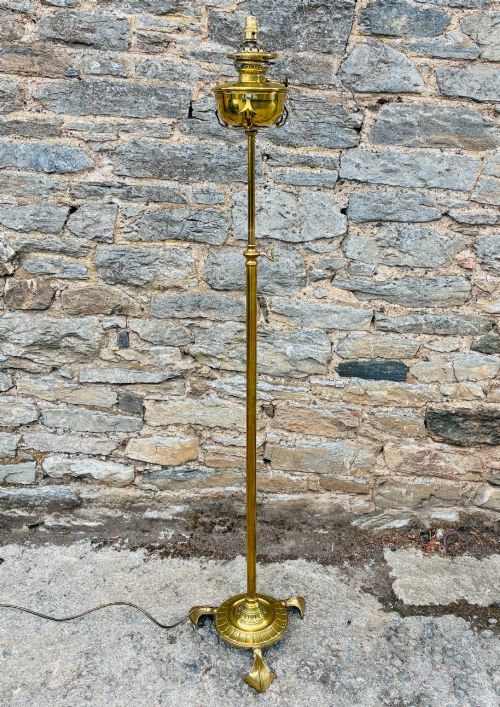
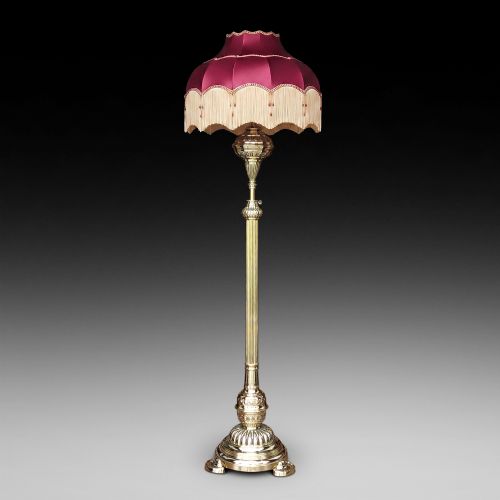


Antique Converted Standard Lamp
These antique converted standard lamps are former oil lamps adapted for modern electricity, bringing practical floor lighting and period character to a room.
Antique Converted Standard Lamp
An antique converted standard lamp transforms a tall domestic lighting source from the nineteenth century into an electric floor lamp for contemporary homes. When you search for an antique converted standard lamp, you encounter tall floor-standing columns originally designed to burn oil.
The selections available here span the Victorian era, the William IV period, and the late nineteenth century, including specific dates such as 1870 and 1890. Forms range from extending brass columns and telescopic standards to copper horns, table combinations, and pole screen conversions.
Brass, copper, mahogany, rosewood, white metal, and wrought iron form the structural bodies of these tall lights, often paired with fabric shades or cranberry glass reservoirs. Styles cover standard Victorian design, Art Nouveau, and Arts and Crafts movements alongside Tibetan ceremonial objects.
How they were made
Maker workshops utilised heavy metals like brass, copper, and wrought iron to construct stable vertical shafts that could support heavy oil reservoirs safely. Telescopic and extending mechanisms allowed users to adjust the height of the flame according to their needs in the room.
Cabinet makers also utilised dense timbers including mahogany and rosewood for floor standards, sometimes adapting older items such as pole screens into standing lamps. Metal components were cast, hammered, and polished, while glass elements like cranberry glass added colourful visual contrast to the metalwork.
Antique Converted Standard Lamp Retail Price Guide 2026
Typical asking prices for converted standard lamp among the pieces listed under this phrase on Sellingantiques today, from the lower quarter to the upper quarter. They describe what is for sale here now, not the wider market.
Materials recorded across the selection include brass, copper, rosewood, mahogany, wrought iron, white metal, and cranberry glass.
What varies in quality
The calibre of an antique converted standard lamp rests on the integrity of its metalwork, the weight of its base, and the sophistication of any extending or telescopic mechanism. Heavier gauge brass and copper provide better stability for a tall floor lamp, while finer pieces display crisp casting and considered proportion.
The nature of the conversion work itself affects the piece, distinguishing items that retain their original structural harmony from those altered with less sympathy. Named makers or distinct stylistic movements such as Arts and Crafts or Art Nouveau also lift specific examples through superior design execution.
Hinks of B'ham
The Antique Converted Standard Lamp Glossary
- Telescopic
- A shaft design featuring nested tubes that slide up and down to alter the overall height of the lamp. This engineering allowed nineteenth-century users to adjust light output levels in a parlour.
- Reservoir
- The container positioned at the top of the standard that once held lamp oil. In many conversions, this glass or metal vessel remains intact above the electrical fitting.
- Pole screen
- A freestanding wooden panel on a vertical pole designed to shield a person's face from a fireplace heat. Some examples were later adapted to hold lighting fixtures instead of the original screen.
- Cranberry glass
- A rich red-pink transparent glass created by adding gold chloride to the molten batch. It frequently appears in Victorian oil lamp reservoirs to catch and colour the light.
- Standard lamp
- A traditional British term for a floor-standing lamp. These tall fixtures were placed beside seating areas to provide ambient or reading illumination.
Antique Converted Standard Lamp: Frequently Asked Questions
What is an antique converted standard lamp?
It is a tall floor-standing lighting fixture originally built during the nineteenth century to burn oil, which has subsequently been wired for electricity.
These pieces retain their period character, metal shafts, and mechanisms while serving modern interior lighting needs.
How do I identify a Victorian standard lamp?
Victorian examples often feature heavy brass columns, extending telescopic shafts, and sometimes cranberry glass reservoirs near the top. They frequently date from the mid to late nineteenth century and reflect period manufacturing methods.
Look for material combinations like brass and copper, or stylistic cues from the Arts and Crafts and Art Nouveau movements.
Were all these lamps originally oil lamps?
Most of the standard lamps listed here started life as oil-burning floor lamps before being adapted for modern electrical use. Some pieces also originate from converted items like wooden pole screens or ceremonial objects.
The adaptation allows historical metalwork and woodwork to function safely in contemporary living spaces.
What materials are common in these lamps?
Brass and copper predominate, often paired with iron bases or timber shafts made from mahogany and rosewood. You will also encounter decorative glass elements such as cranberry glass reservoirs.
Fabric is typically found on the shades rather than the primary structure of the floor standards.