

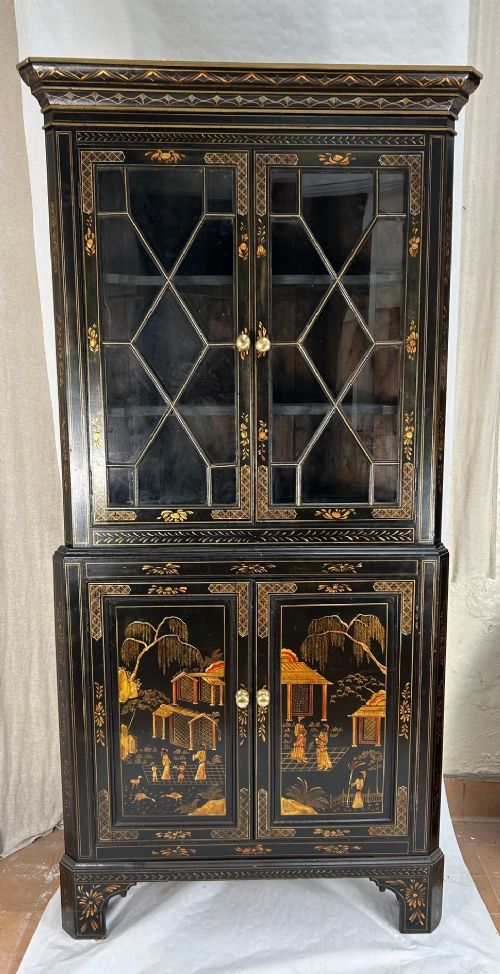
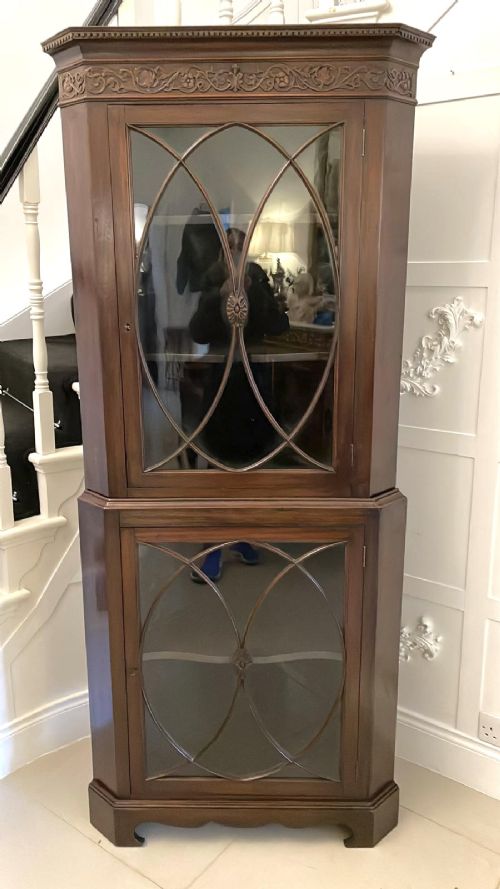
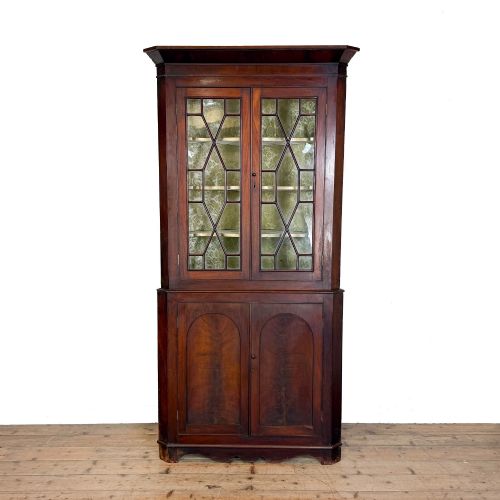
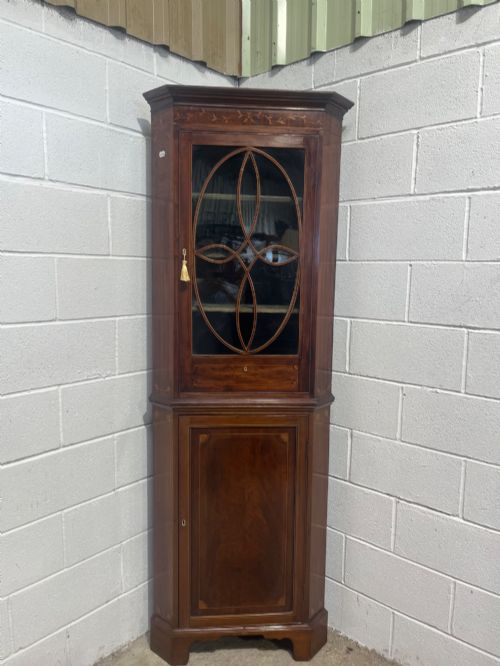
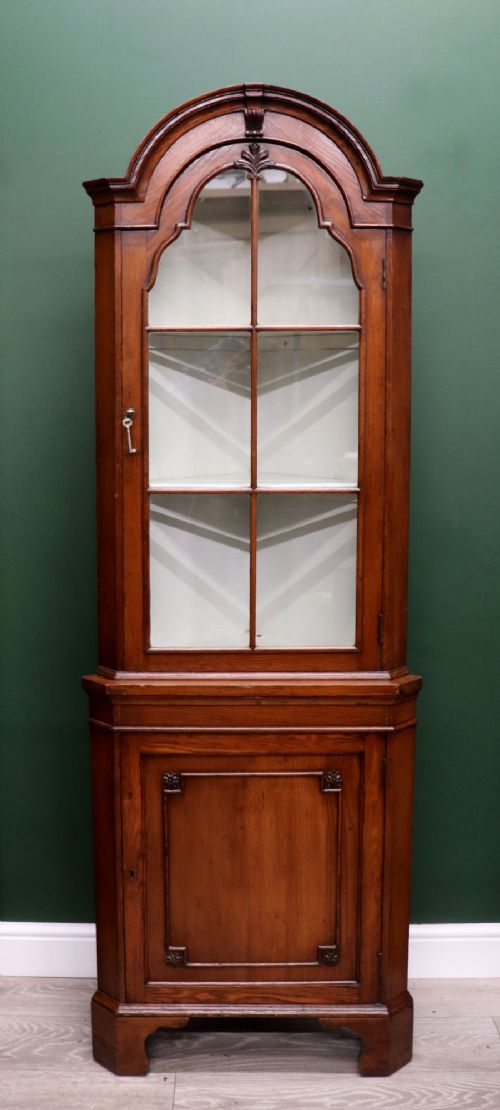


Standing Glazed Corner Cabinet
A standing glazed corner cabinet makes architectural sense of a difficult room, turning dead angles into useful display space.

Standing Glazed Corner Cabinet
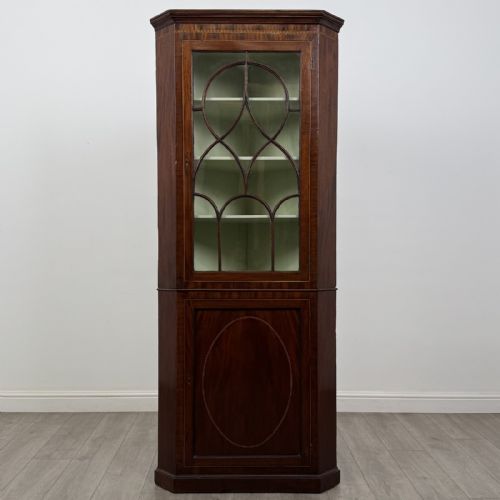
A standing glazed corner cabinet transforms an empty right angle into a focal point for displaying ceramics and glassware. These floor-standing pieces use vertical space efficiently while softening the hard geometry of a room.
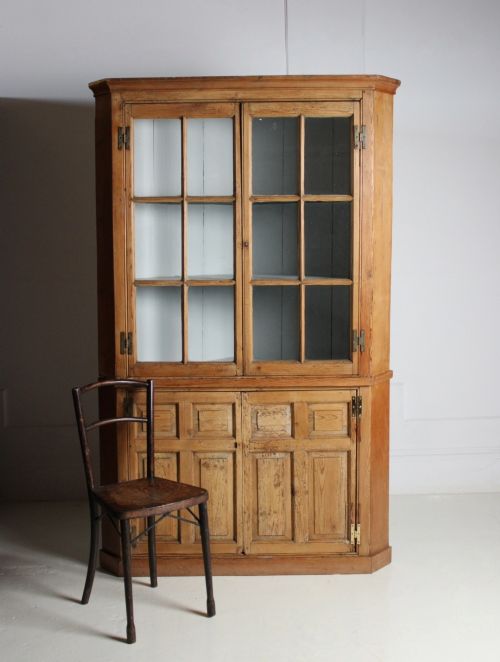
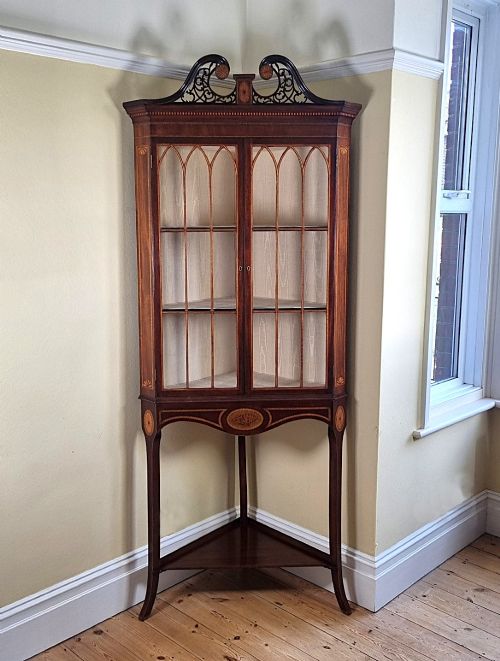
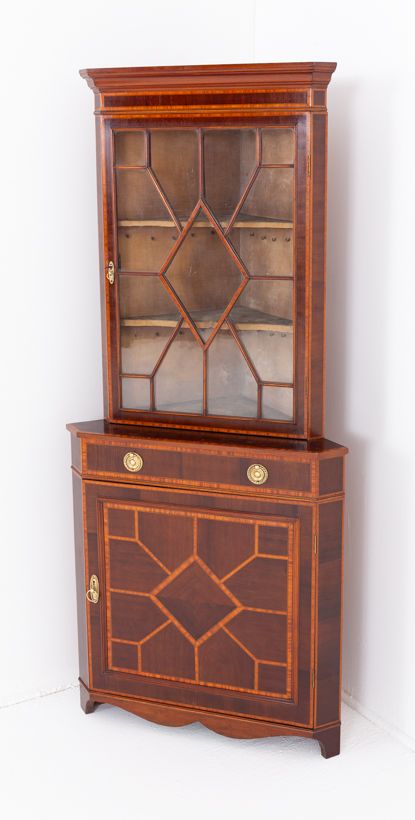
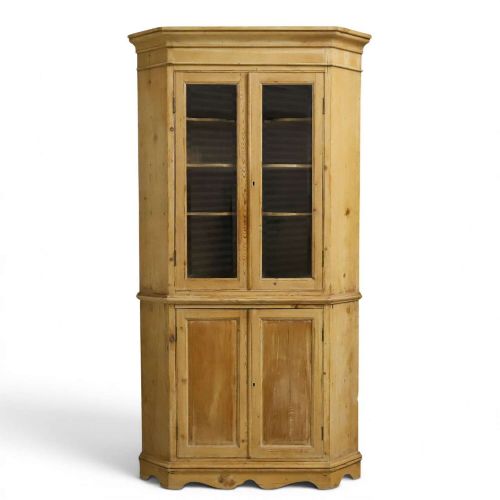
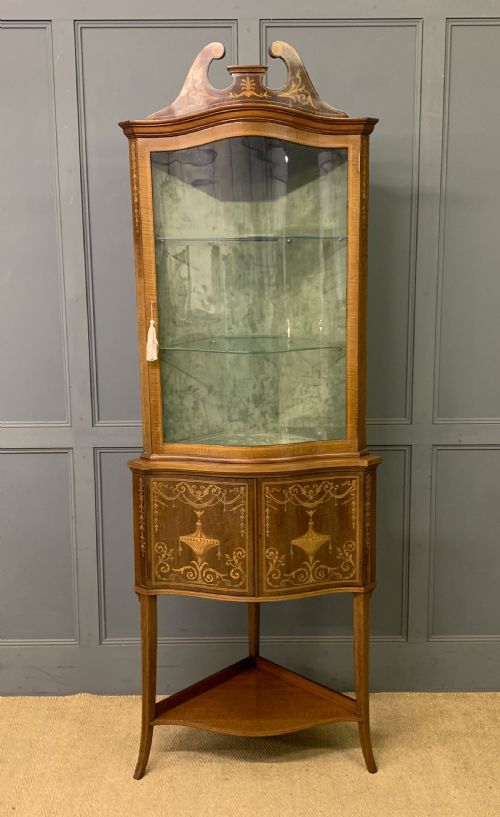
The selections span from robust 18th-century Georgian and Welsh oak examples to refined Edwardian Sheraton Revival pieces and later walnut interpretations. Mahogany versions dominate the surviving record, appearing in single-door formats, bow fronts, and towering double-height two-part constructions.
How They Were Made
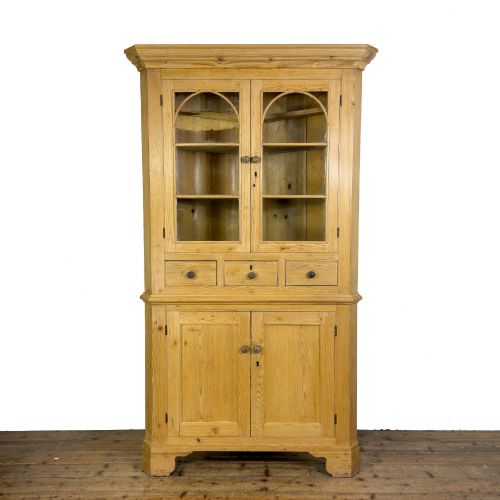
Cabinetmakers relied primarily on solid and veneered mahogany, frequently enriched with satinwood inlay, marquetry, and delicate brass hardware. Oak and walnut appear regularly, alongside pine in country pieces and occasional rosewood or lacquered surfaces.
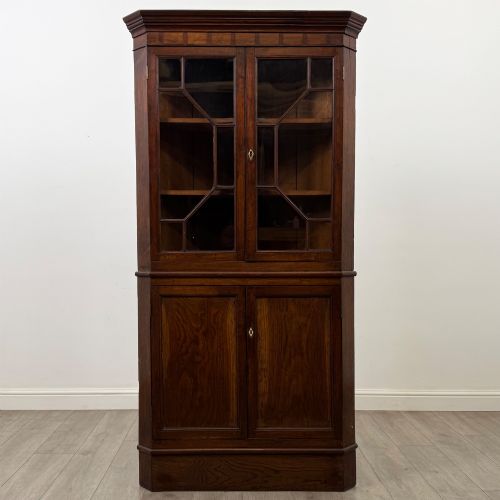
Glazing takes the form of individual glass panes held by timber bars, often arranged in astragal patterns that demand precise carpentry. Many taller iterations utilise a two-part construction, separating an upper display section from a lower cupboard base for easier transport.
Standing Glazed Corner Cabinet Retail Price Guide 2026
Typical asking prices for standing glazed corner cabinet among the pieces listed under this phrase on Sellingantiques today, from the lower quarter to the upper quarter. They describe what is for sale here now, not the wider market.
Listings feature mahogany, oak, walnut, and rosewood, spanning periods from the 18th century through the Edwardian era.
What Varies in Quality
The tier of workmanship shows in the timber selection and the crispness of the inlay. Finer pieces employ carefully matched wood grains and complex marquetry, whilst simpler utility cabinets rely on plain pine or straightforward oak boards.
Structural ambition separates standard single units from grand double-height corner cupboards with serpentine fronts. The integration of the glazed doors, proportion of the cornice, and stability of the bracket feet dictate the overall balance of the piece.
Edwards And Roberts
The Standing Glazed Corner Cabinet Glossary
- Astragal glazed
- A method where wooden bars divide the glass door into smaller geometric panes. This technique provides structural rigidity while framing the interior shelves.
- Double height
- A tall, two-part cabinet format comprising an upper display section stacked upon a lower cupboard base. These substantial pieces maximise vertical capacity.
- Bracket feet
- Simple, right-angled feet that support the base of the cabinet without extending outward. They provide a stable, traditional foundation for Georgian and Edwardian case furniture.
- Bow front
- A convex, curved front profile designed to soften corners and catch ambient light. This shaping requires expert steam bending or specialised timber cutting.
Standing Glazed Corner Cabinet: Frequently Asked Questions
How do I date an antique corner cabinet?
Dating relies on timber choice, construction methods, and decorative styles visible across the frame. Georgian pieces often feature rich mahogany with simple astragal glazing, whereas Edwardian iterations frequently display lighter satinwood inlay and Sheraton Revival motifs.
Examining internal drawer construction and backboards provides further clues. Earlier examples show hand-sawn timber marks, while 20th-century pieces utilise more uniform industrial milling.
Are these cabinets difficult to place in modern rooms?
These cabinets suit modern spaces remarkably well because they utilise awkward angles that standard rectangular furniture cannot occupy. Their vertical orientation draws the eye upward, making efficient use of floor space in smaller dining rooms or living areas.
Two-part models simplify movement between rooms during placement. Securing taller double-height units to the wall ensures stability against accidental tipping.
What is the difference between single and double height?
Single-height corner cabinets consist of one continuous unit from the floor to the top cornice, usually housing a single glazed door. They offer a modest profile suitable for standard ceiling heights.
Double-height versions use a two-part construction featuring an upper display cabinet sitting upon a separate lower cupboard base. This taller format delivers maximum vertical storage and a commanding presence.