






Brown Glazed Corner Cupboard
A brown glazed corner cupboard solves the problem of dead space while framing your collection behind glass.

Brown Glazed Corner Cupboard
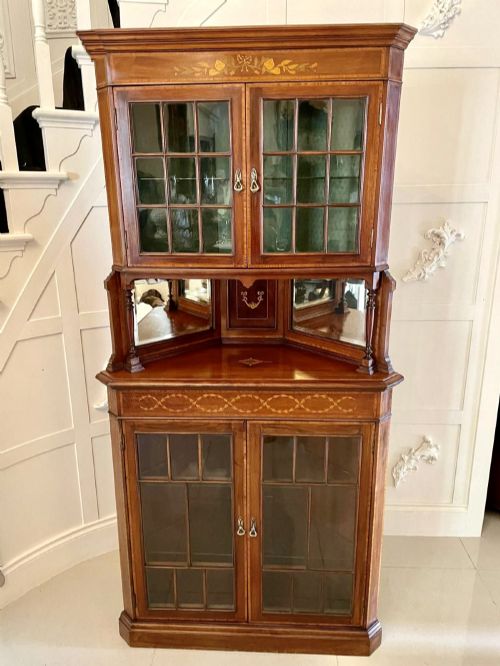
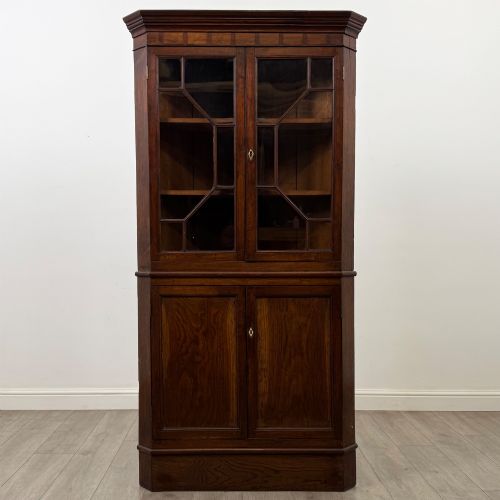
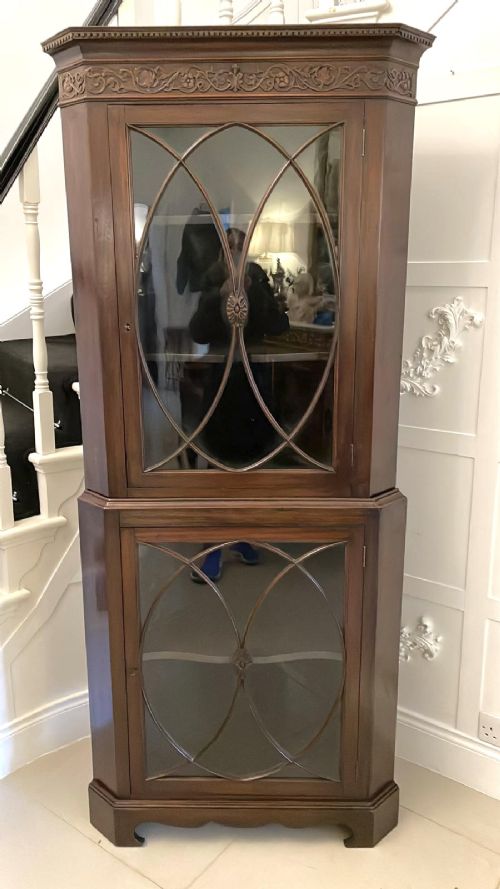
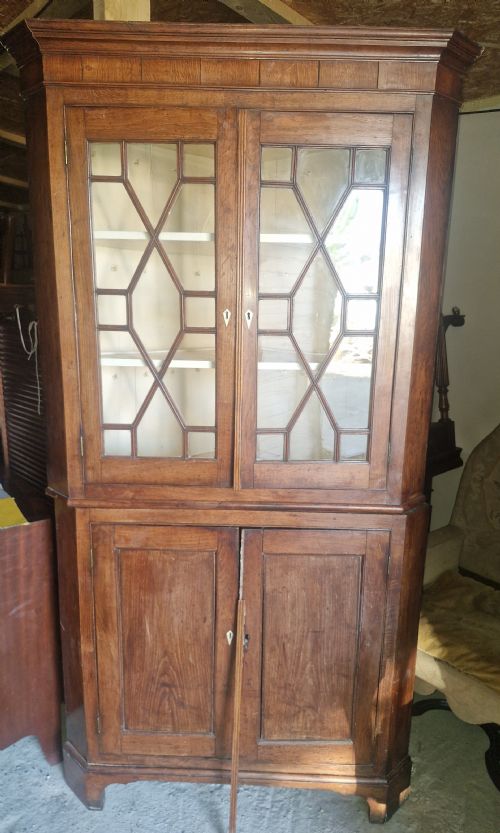
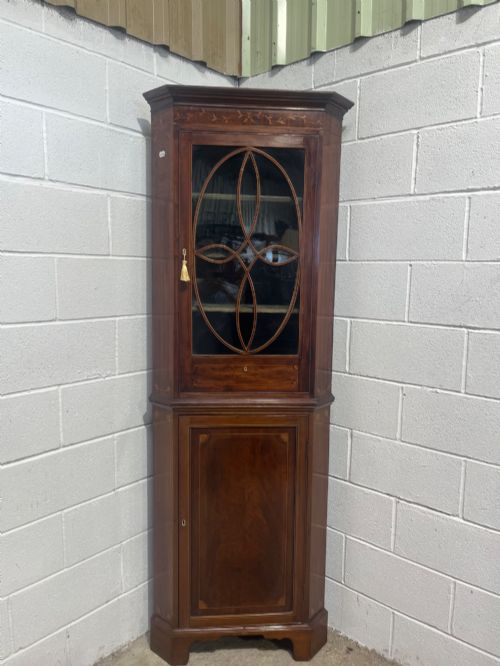
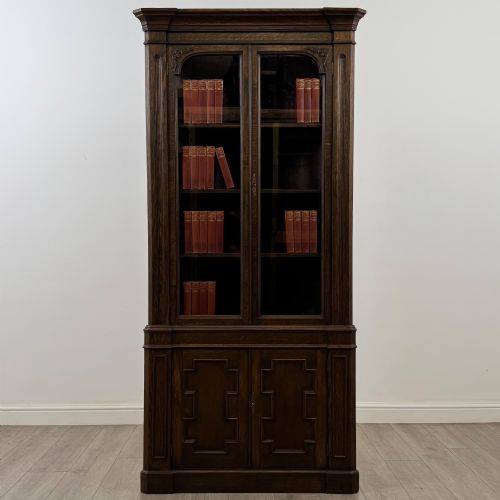
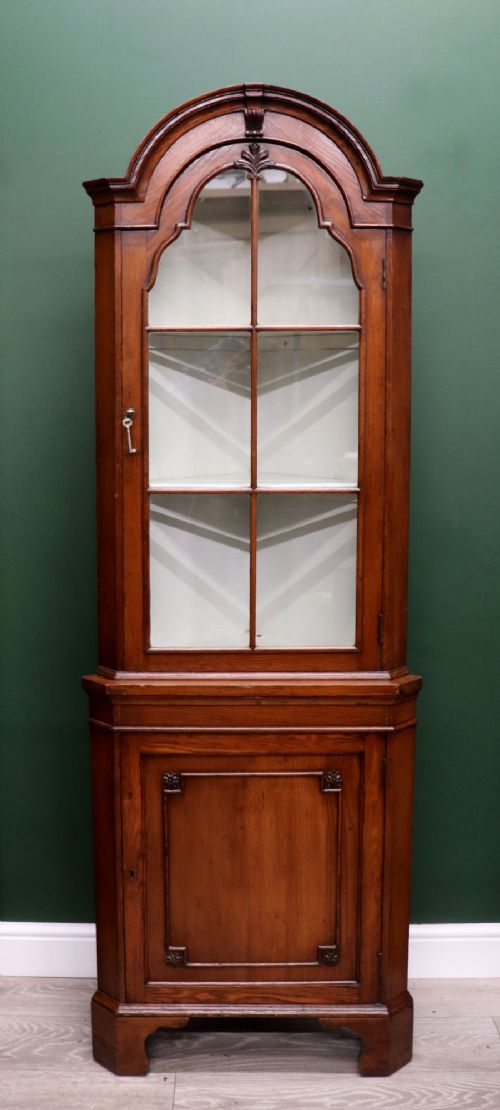
A brown glazed corner cupboard is a specialised storage piece designed to fit neatly into the right angle of a room, saving floor space while displaying contents behind a glass door. When you search for a brown glazed corner cupboard, you encounter various timber tones from rich mahogany and walnut to sturdy oak.
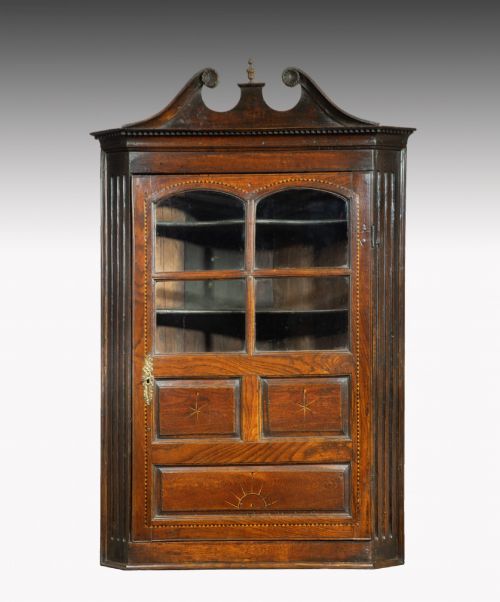
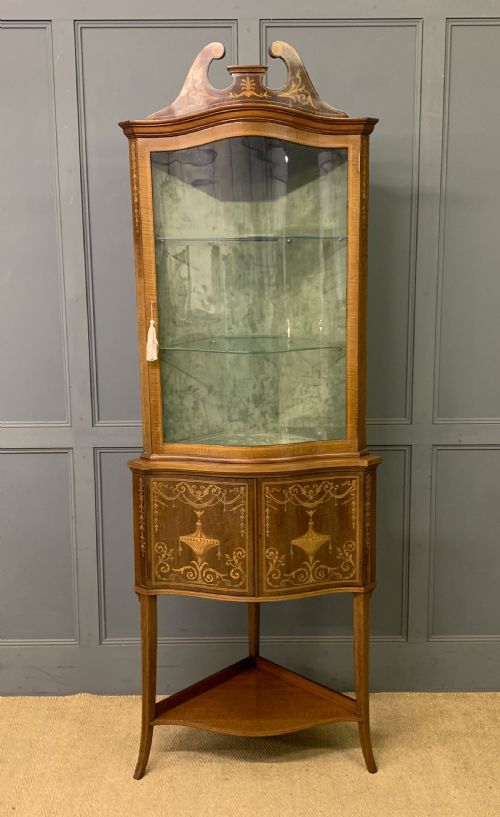
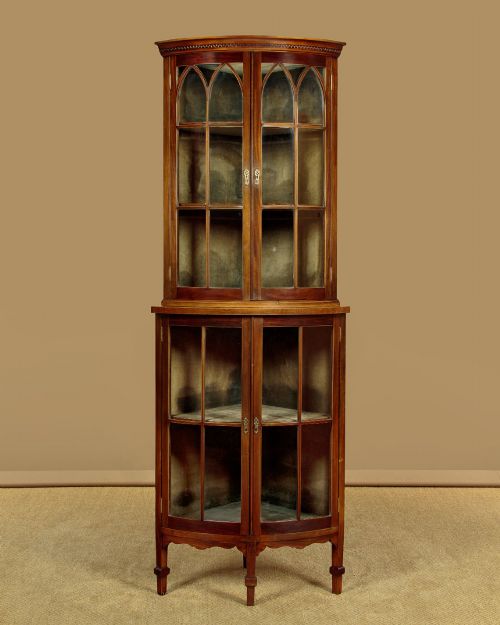
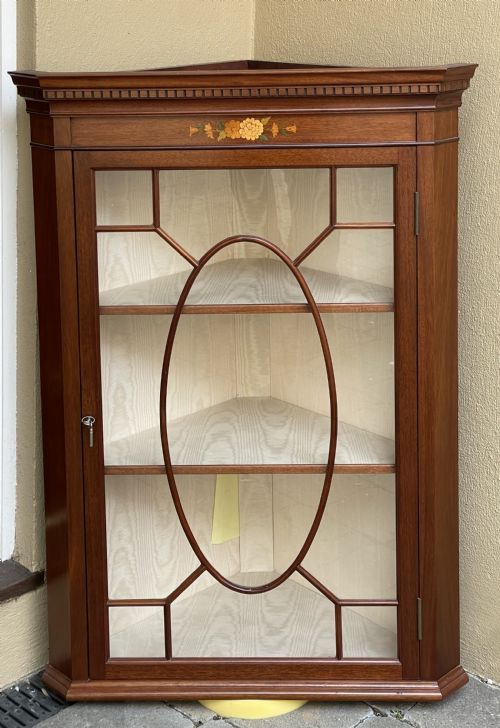
The selection ranges from compact wall-hanging units to substantial floor-standing and two-part cabinets. Many examples feature astragal bars dividing the glass, whilst others present simple single panes or bow fronts.
Origins span several centuries, with robust 18th-century Georgian country pieces sitting alongside refined Edwardian Sheraton Revival designs. These architectural items turn awkward corners into focal points.
What varies in quality
Quality rests upon the selection of timber and the crispness of the cabinetmaker's joinery, especially around the angled back corners and the fitted door frames. Richly figured grains in walnut or mahogany and fine satinwood inlay elevate certain pieces far above plain utilitarian storage.
The elegance of the glazing bars and the proportion of the cornice heavily influence the visual success of the cabinet. Finer examples display thoughtful proportions that balance the heavy wooden frame with clear visibility through the glass.
Brown Glazed Corner Cupboard Retail Price Guide 2026
Typical asking prices for brown glazed corner cupboard among the pieces listed under this phrase on Sellingantiques today, from the lower quarter to the upper quarter. They describe what is for sale here now, not the wider market.
Periods represented span from the 18th century through Georgian, Victorian, Edwardian, and Regency eras up to the 1930s.
The Brown Glazed Corner Cupboard Glossary
- Astragal glazed
- A method where wooden glazing bars divide the glass door into smaller geometric panes. This traditional technique provides structural rigidity and decorative charm to the cabinet front.
- Bow front
- A convex curved cabinet front that projects outward in a smooth arc. This shape softens the hard angles of a room and requires advanced woodworking skill to construct.
- Floor-standing
- A cabinet designed to rest directly upon the floor rather than hang from a wall. These units often provide greater storage capacity and sometimes feature a lower cupboard or drawer.
- Two-part
- A piece constructed in separate upper and lower sections that stack together. This configuration aids transport and allows for taller freestanding corner cabinets.
- Satinwood inlay
- Contrasting blonde wood inserted into the darker primary timber to form decorative lines or motifs. It is frequently seen on Edwardian and Sheraton Revival pieces.
Brown Glazed Corner Cupboard: Frequently Asked Questions
Where should I place a corner cupboard?
These cabinets fit directly into any empty room corner to utilise dead space effectively. They work well in dining rooms, living areas, or hallways.
Because they angle back against two joining walls, they maintain floor space while offering substantial display areas for glassware or ceramics.
Are these cupboards wall hanging or freestanding?
The inventory includes both wall-hanging models and floor-standing versions. Wall-hung pieces often feature lower drawers or brackets for support.
Freestanding and two-part models rest directly on the floor and frequently provide deeper storage capacities without requiring wall fixings.
What woods are commonly used?
Mahogany, oak, and walnut dominate the construction of these cabinets. Cabinetmakers often enhanced these primary timbers with satinwood inlay and wood veneer.
Brass fittings and glass doors complete the construction, varying in style from rustic country oak to refined Edwardian polished mahogany.
How do I date a corner cabinet?
Dating relies on observing construction methods, timber choices, and stylistic traits like Sheraton Revival inlay or Georgian proportions. Eighteenth-century pieces typically show heavier oak or early mahogany framing.
Edwardian and later 19th-century interpretations often incorporate lighter satinwood details and refined bow fronts while maintaining the traditional corner footprint.